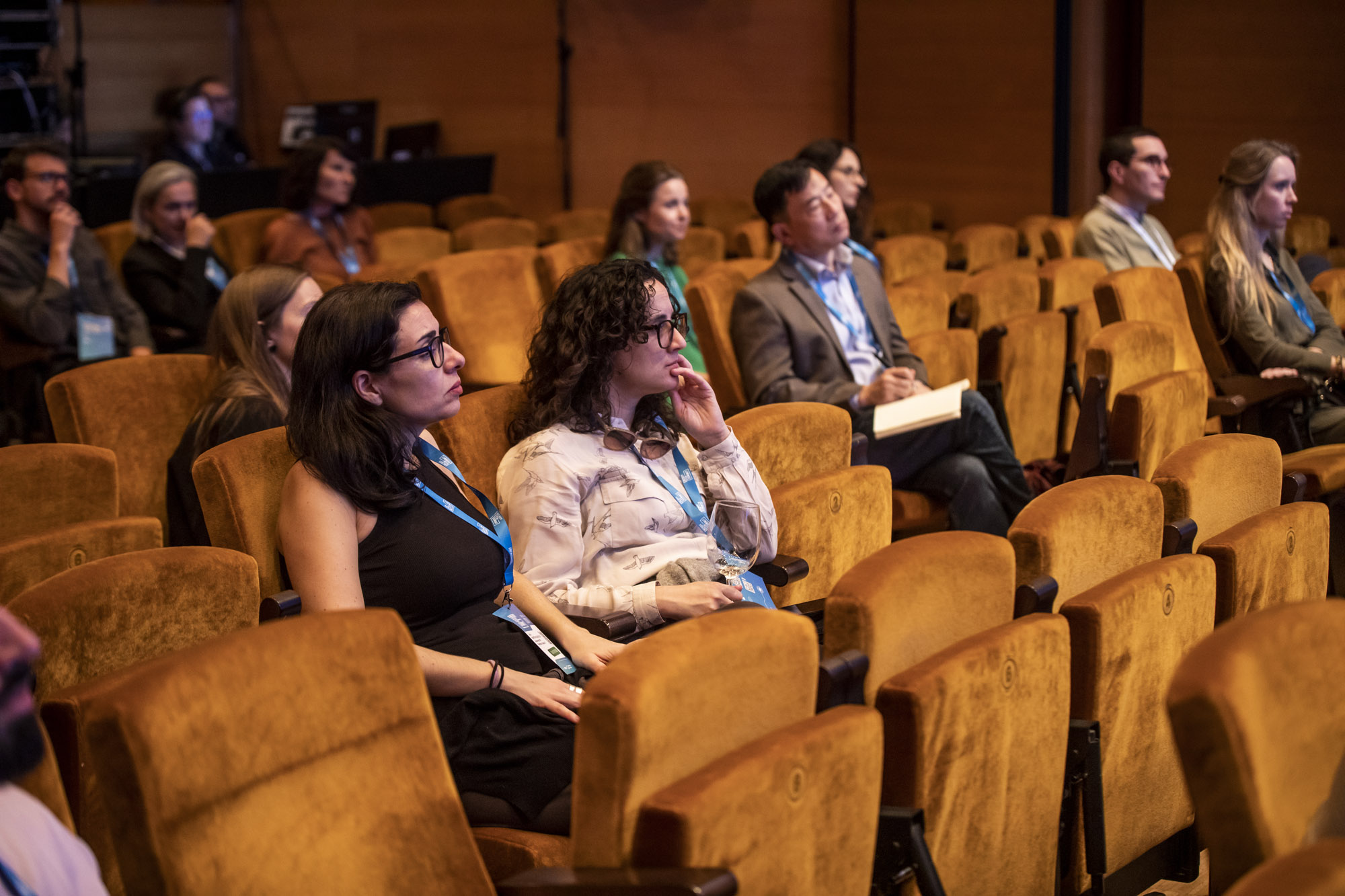
Founders and investors from Asia and Europe explained why the next generation of batteries needs clear niches, honest data and manufacturing partners.
Asia-Pacific already makes most of the world’s batteries, and China’s CATL leads global production. As next-generation solid-state batteries move from the lab towards pilot lines, the region’s manufacturing scale and fast-growing solar markets, such as India, could decide which technologies actually reach customers.
At Energy Tech Summit, a panel of founders and investors took a hard look at where solid-state technology really stands. Ian Zhu of NIO Capital moderated the discussion. He was joined by Arfa Karani, Investment Manager at Klima Energy Transition, Will Tope, CEO of LiNa Energy, Michael O’Kronley of Ascend Elements, and Casper Peeters, CEO of E-magy.
A view from China
Zhu opened with a perspective many Western audiences rarely hear. NIO Capital, a venture and growth investor, backs disruptive technologies in automotive, energy and logistics, both in China and globally.
He noted that every time he comes to the West, he senses fear and misunderstanding about China. Yet, in his view, startups that tap into what China offers can gain speed, capital efficiency and access to talent.
NIO Capital invested in CATL before its IPO and watched it grow from a small company into a global giant. However, Zhu has also seen that “after they become giants the speed of innovation also slows down.” Large incumbents have heavy investments in existing infrastructure. As a result, technologies such as solid-state, which require new infrastructure, leave room for startups.
Four companies across the battery value chain
The panel covered very different parts of the value chain. Karani invests in late-stage startups at Klima Energy Transition, a fund headquartered in Spain. A physicist by training, she previously built an energy storage thesis at a corporate venture fund.
LiNa Energy makes solid-state sodium batteries. It applies solid oxide ceramics from the fuel cell industry to an older chemistry known as ZEBRA. The goal is good performance from very low-cost raw materials, making longer-duration storage economic for solar.
Ascend Elements, based in Massachusetts, makes cathode materials from spent batteries and manufacturing scrap. As O’Kronley put it, the company aims to “convert this trash into treasure.” Before Ascend, he led corporate strategy at A123 Systems, where he invested in early solid-state battery companies.
Finally, E-magy, from the Netherlands, works on the anode. Graphite has dominated anodes for 30 years, but E-magy wants to replace it entirely with silicon. Silicon enables higher energy density, so batteries need less material, which also lowers their carbon footprint. Moreover, silicon can be sourced locally, which matters under Europe’s Critical Raw Materials Act.
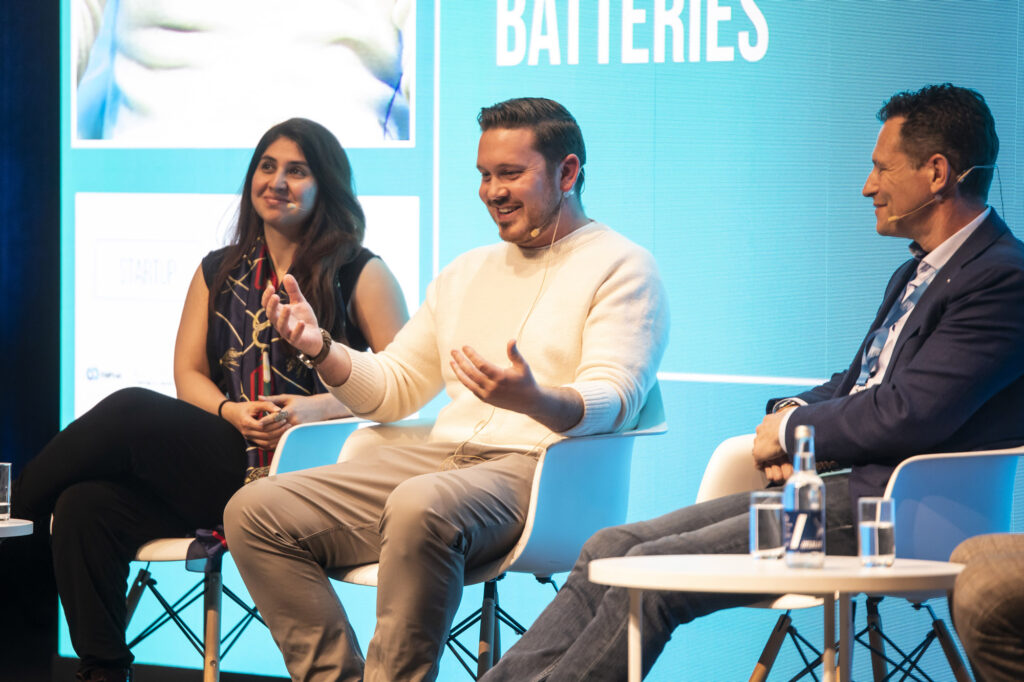
Panelists: Casper Peeters, Michael O’Kronley, Arfa Karani, Will Tope, and Ian Zhu share insights into this promising technology and its potential to transform electric vehicles, energy storage, and more.
Where solid-state batteries really stand
Zhu asked the panel what makes solid-state so exciting. O’Kronley offered a reality check. Around 2017, the promise was higher energy density, which would eventually lower costs.
Since then, progress has been slower than hoped. Solid-state has been “two to three or five years away from production for the last seven or eight years,” he said. Meanwhile, the rest of the lithium-ion industry has kept driving costs down. Ultimately, “what the market is needing is it needs lower cost batteries.”
Peeters stressed that energy density still matters for mobile uses, from EVs to phones, laptops and drones. Karani added three reasons for her excitement. First, solid-state could mean “doubling or tripling the energy density,” not just small gains. Second, safety matters, especially for indoor and stationary storage. Third, she hopes solid-state batteries can safely enter second-life use after a decade in a vehicle.
Doing what lithium can’t
Tope took a more contrarian line. “What the customers definitely don’t want is a pipe dream from a solid state battery company,” he said. Instead, “they want something to do what lithium can’t.”
LFP is an incredible technology, and its costs keep falling fast. Therefore, competing head-on makes little sense. Rather, the market is growing so large that it will segment, so startups don’t have to take on “the LFP behemoth” directly.
LiNa Energy found its niche with customers that lithium struggles to serve. One key partner, a large strategic in India, deploys solar at sites that swing from minus 20°C at night to plus 40°C during the day. Conventional batteries struggle in those conditions, and lithium-ion remains too costly for six-hour storage on its own merits.
LiNa’s high-temperature battery handles that heat and targets four to eight hours of discharge. For a two-hour system, Tope admitted he would simply buy LFP. At the time of the session, LiNa was piloting its technology in India and the Middle East. He caught himself mid-explanation: “I’m starting to sound like I’m pitching.”
Getting cell makers to say yes
For material suppliers, adoption is a major hurdle. Early on, E-magy assumed it could ship silicon powder to customers and “keep your fingers crossed.” It quickly learned otherwise.
Batteries are complex systems, so E-magy now builds its own cells to demonstrate performance and works closely with customers. Its business model is still to sell powder, but it goes “one step further” than a typical supplier.
Karani described the investor’s dilemma. Cell makers dedicate production lines to one technology for years, and qualification “can take two or three years” at minimum. As a result, component startups often need to build cell manufacturing expertise themselves. Too often, “it feels like financially it just doesn’t look feasible.”
O’Kronley sees recycling as Ascend’s disruptor. Its cathode materials perform like those from virgin ores but come from low-cost feedstock with a lower carbon footprint. In his view, more than half of all battery materials will eventually come from recycled sources, because “it’s an economic reality we have to reuse these materials.”
The recycled share depends on the input. Upgrading an old NMC 111 battery into high-nickel cathode may mean only 20–30% recycled content. By contrast, manufacturing scrap that matches the output can become almost entirely recycled material.
Earning trust with data
Tope warned that many startups underestimate the gap between lab results and commercial deals. “There’s a big gap between showing some cell data and finding someone willing to pay you to use your technology,” he said.
The answer, he believes, is transparency. Too many companies cherry-pick one KPI, such as a 400Wh/kg cell. “But if it cycles two times who cares,” he added. Instead, LiNa shared its full data, ran open techno-economic analysis with partners and gradually built trust – from paid test cells to a pilot with a large brand.
Zhu agreed. One NIO Capital portfolio company in autonomous driving even opened its source code to win carmakers’ trust. Similarly, NIO once sent 100 engineers to help a semi-solid-state battery company scale its manufacturing.
The manufacturing question
Scaling production is the next challenge. For E-magy, that means stepping from kilograms to tons, using proprietary equipment. Because it uses widely available silicon metal rather than hazardous silane gas, it has more freedom on location. A pilot line in the Netherlands works. Beyond that, labor costs and the energy mix will shape where it builds next.
At the time of the session, Ascend Elements was building a large cathode precursor plant in Kentucky and had just announced a joint venture plant in Poland. The company has since scaled back and paused parts of its Kentucky plans.
O’Kronley acknowledged that “China is able to build factories faster less expensive than really anywhere else in the world.” Government support helps offset higher costs elsewhere. In Europe, however, “the permitting process is just so cumbersome.”
Tope’s approach is to define the break-even scale first and work backwards. A pilot line is necessary, but the real prize is a venture partner that brings capital, infrastructure and know-how. As for building everything alone, his verdict was blunt: “doing it all yourself for manufacturing good luck.”
Karani added that grants and subsidies often decide where pilot lines go. In Europe, large-scale manufacturing tends to work the other way round: “it is first the site then the labor and then you figure out whatever technology you’re going to produce.”
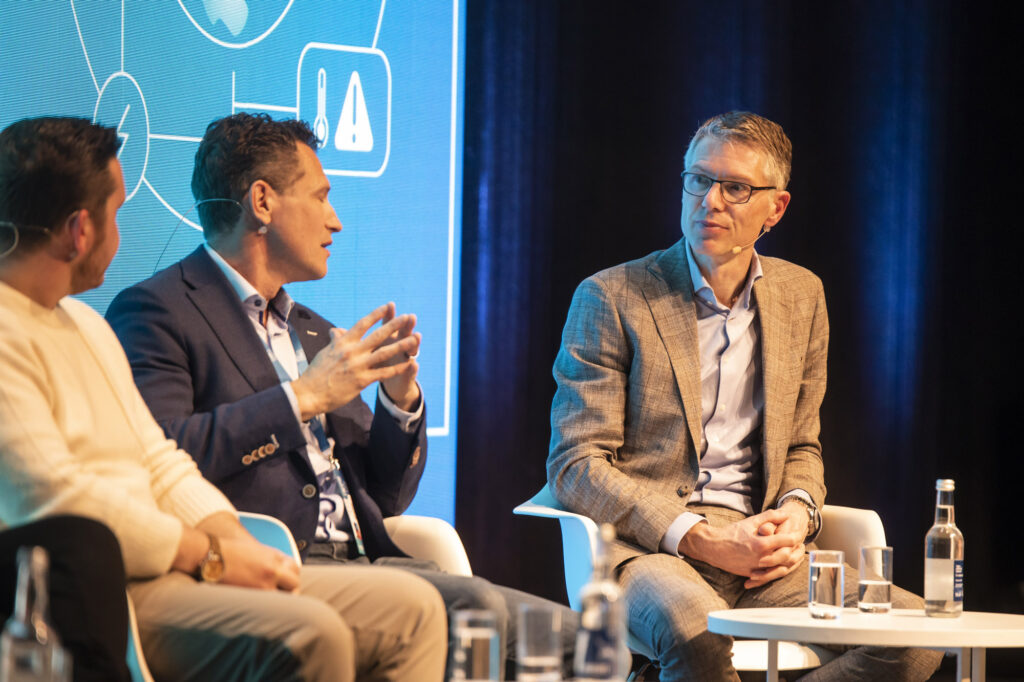
Casper Peeters, CEO, E-magy speaking at a panel.
Raising capital for battery startups
Finally, Zhu asked how startups can raise money after investors were burned by earlier battery bets. “We’re living in a world where there are way too many dreams being sold and not enough business plans,” Tope said. Moreover, “generalist battery investors I don’t think exists anymore,” so founders need investors with a clear thesis.
O’Kronley shared a lesson of his own: “I spent too much time educating and not enough time really developing relationships with investors” who understand the space. Peeters agreed that deep tech “is not for all investors,” but the upside includes huge markets and long-lasting customer relationships.
Karani ended on an optimistic note. Founders should present investors with one or two manageable variables, not five uncertain ones. Still, “the finance industry is warming up,” she said, and funds are hiring technical experts to understand batteries better.
Takeaway
Solid-state batteries won’t win by chasing energy density alone. Instead, the panel pointed to clear niches where lithium falls short, transparent data that builds customer trust, and manufacturing partners that can share the burden of scale.
For Asia-Pacific, with its manufacturing depth and fast-growing solar markets, that makes the region a natural partner for the next generation of battery innovators.
Secure your pass
Dates for the next Energy Tech Summit Asia are coming soon. In the meantime, join battery innovators and investors at Energy Tech Summit Europe 2027, the 8th edition, on 7–8 April in Bilbao, Spain.
Passes cost €1,399 until 30 November, then €1,599 from 1 December, €1,799 from 1 February 2027 and €1,999 from 1 March 2027.
Founders can join with the Founder’s Pass for €699. Use code ETS100 for €100 off.