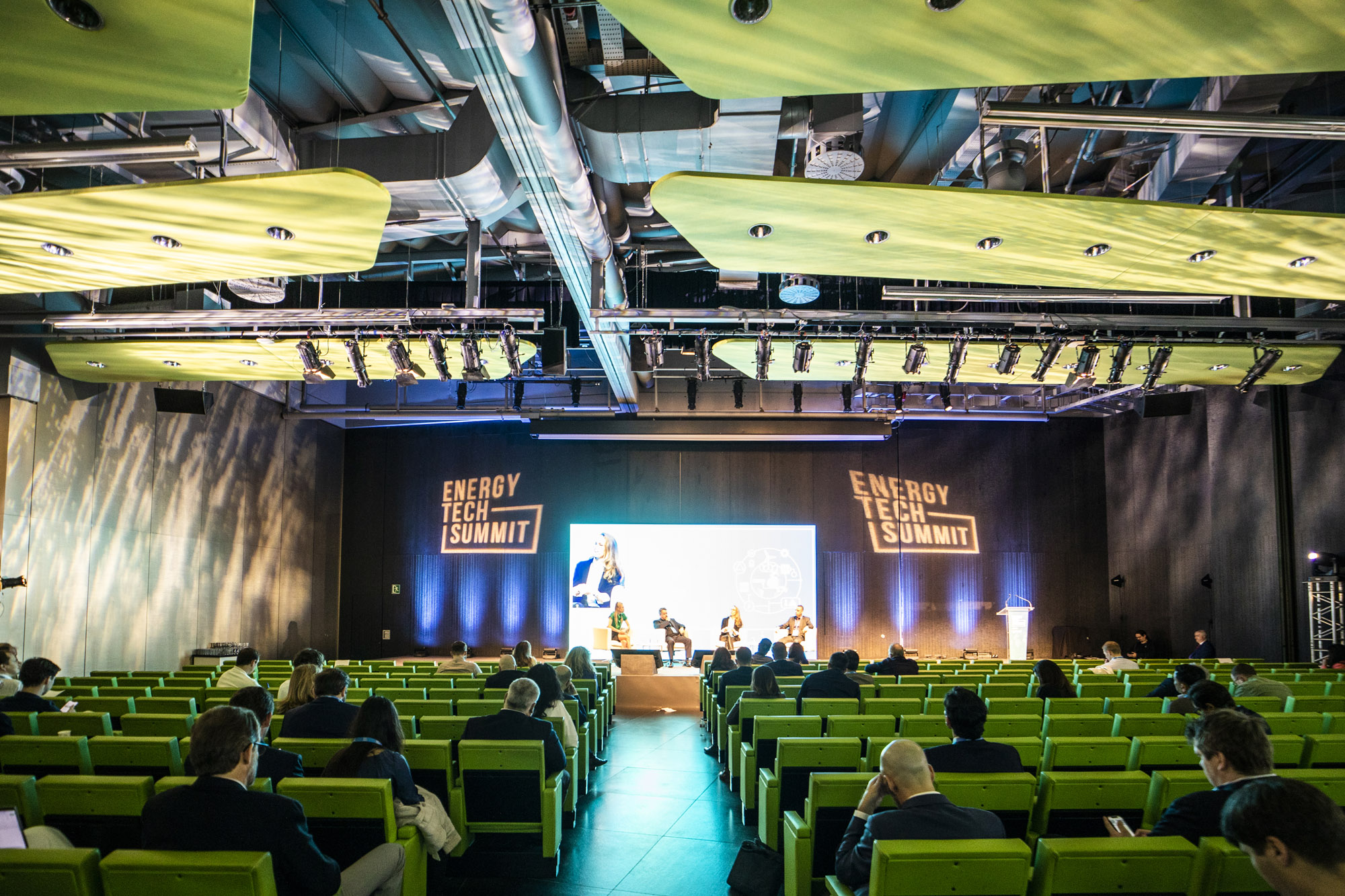
Investors and operators from Fortescue, HiiROC, Kinnevik and Eesti Energia explained what it will really take to make clean hydrogen affordable.
Hydrogen has long been called the champagne of the energy world – valuable, versatile and expensive. At Energy Tech Summit, a panel of investors and operators tackled the question that will decide its future: how to drive down the cost of low-carbon hydrogen.
Dr Charlotte Kirk, who leads technology investments at Fortescue, moderated the discussion. She was joined by Simon Morris, co-founder of HiiROC, Jessica Pedroni Thorell, Investment Director at Kinnevik, and Kaarel Kuusk, Head of Partner Relations and Hydrogen Projects at Eesti Energia.
Four very different routes into hydrogen
Each panelist came to hydrogen from a different angle. Fortescue, the iron ore producer based in Perth, Australia, sees hydrogen and ammonia across its operations. They range from fuel cell range extenders for mining vehicles to green iron and ammonia-powered trains and ships. Its ammonia-powered vessel was already sailing around Singapore at the time of the session.
HiiROC, meanwhile, produces hydrogen from hydrocarbons, including renewable natural gas, and generates solid carbon as a by-product. Morris admitted that “the bad word of hydrocarbons” raises eyebrows. However, selling that carbon could offset the cost of the hydrogen itself. At the time, HiiROC was at TRL 7, with three pilot units running in the UK with investor Centrica.
Pedroni Thorell co-leads climate investments at Kinnevik, a permanent capital investor in growth-stage companies across Europe and North America. Kinnevik invested in H2 Green Steel, now known as Stegra, which is building a hydrogen-based green steel plant in Boden, Sweden.
Kuusk represented Eesti Energia, a diversified Estonian energy company that also operates under the Enefit brand. The company has used hydrogen in its thermal power plants for decades and was running its first green hydrogen pilot. It also plans to transform its oil business into a chemicals business that will need large volumes of hydrogen.
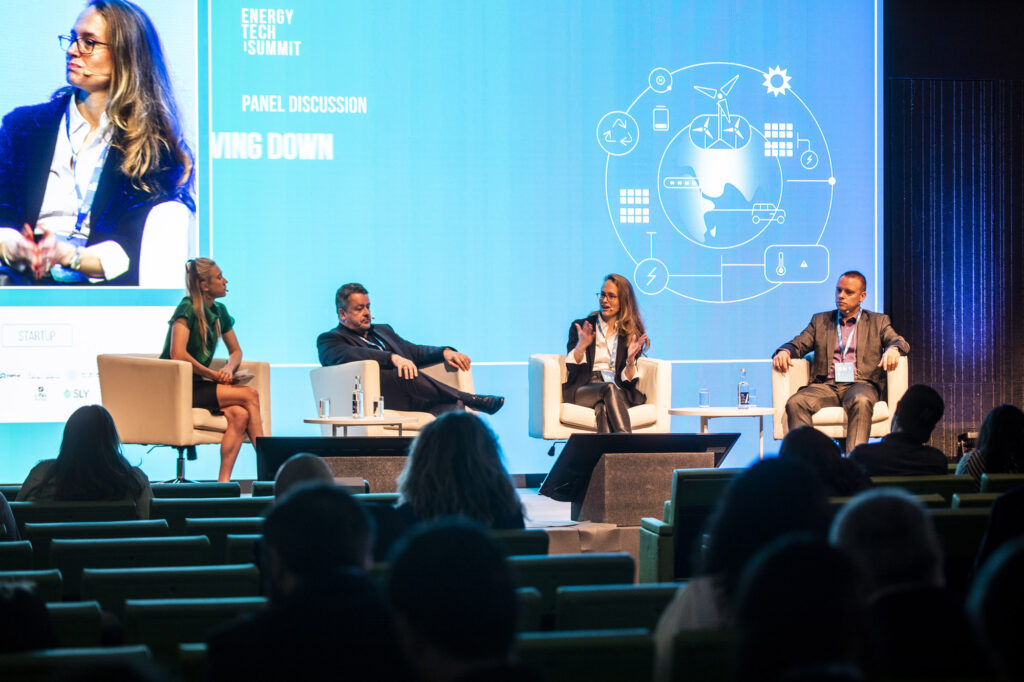
essica Pedroni Thorell from Kinnevik, Kaarel Kuusk from Eesti Energia, Simon Morris from Hiiroc, and Charlotte Kirk from Fortescue Energy to find out.
Low-carbon hydrogen needs a level playing field
Kirk opened with a basic question: what counts as low-carbon hydrogen? For Morris, the industry’s color coding has become a problem. In his view, “this ever expanding rainbow” of grey, blue, turquoise, gold, green and white hydrogen mostly confuses people.
Instead, “there’s got to be a level playing field for how hydrogen projects are costed.” The fix is simple: “you just have a number,” meaning the carbon intensity of production under standard parameters. That way, buyers can compare every technology fairly. After all, “we aren’t in competition with anyone as a hydrogen technology,” he said.
Pedroni Thorell sees this happening already in parts of the market. In steel, buyers now think in kilograms of emissions per ton, because those figures feed into their life cycle assessments. As she put it, “the buyers are actually becoming sophisticated very quickly.”
Kirk added that an internationally agreed methodology for life cycle emissions is essential. Such a system makes the value chain traceable and transparent. At Stegra, for example, offtake from buyers who wanted green steel was what underpinned the project finance.
Kuusk agreed that carbon intensity matters, but price ultimately decides deals. In the Baltics, he sees three key factors. First, renewable electricity is in short supply rather than in surplus. Second, power prices drive electrolysis costs. Third, hydrogen technologies themselves still need to become cheaper and more efficient.
How policy shapes the cost of hydrogen
The discussion then turned to policy. Kirk contrasted the supply-side tax incentives of the US Inflation Reduction Act with Europe’s demand-side approach of mandates and quotas.
Morris pointed out a practical flaw in the US system. To claim the 45V tax credit, producers model their carbon intensity using a tool called GREET. However, that tool is technology-specific, and HiiROC’s process didn’t fit its profiles. As a result, customers asked for a GREET number that the company couldn’t give.
By contrast, HiiROC qualified for the UK’s Low Carbon Hydrogen Standard with specific government support. Still, Morris called for global standardization of how carbon intensity is assessed. In his view, the US subsidy model also made projects easier to bank than Europe’s more grant-led approach.
Since then, the US picture has changed. Under the One Big Beautiful Bill Act, projects must now begin construction by 31 December 2027 to qualify for 45V, five years earlier than originally planned.
Pedroni Thorell drew a sharp line between sticks and carrots. “Europe has been really good on the stick side,” she said, pointing to the updated ETS and CBAM. Yet European incentives remain unpredictable, with long timelines and complex distribution.
In the US, a production tax credit creates predictable demand and also supports electrolyzer manufacturing. Consequently, some leading European alkaline electrolyzer players chose the US for their next plants. “If Europe doesn’t get its act together,” she warned, it risks losing the electrolyzer race. That would be a pity, given that “we’ve already lost solar and batteries.”
Kuusk added that subsidies remain necessary for both capex and opex. In an oil refinery, the base case is always fossil-based hydrogen, since it is far cheaper. Switching to low-carbon hydrogen means closing that gap.
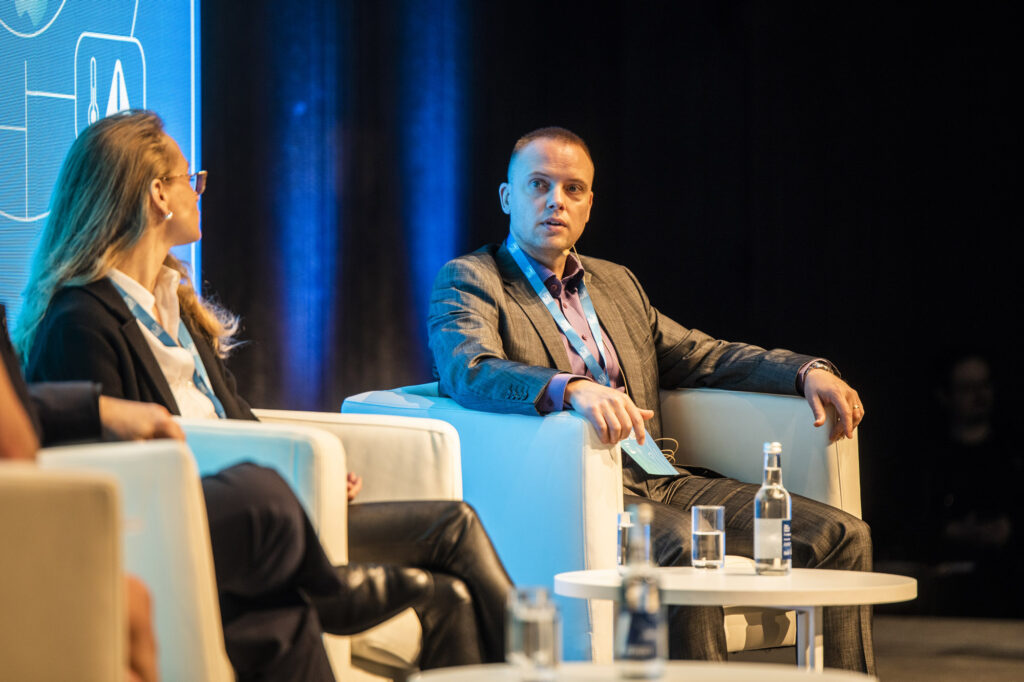
Kaarel Kuusk from Eesti Energia
Is technology the bottleneck?
Next, Kirk asked whether technology or capital is the bigger challenge. Morris, speaking as an innovator, argued that early-stage support is still too cautious. When HiiROC approached Innovate UK early on, someone asked what the precedent was. His reply: “if there was a precedent it wouldn’t be an innovation.”
Government support became much stronger once HiiROC had working pilots. The company has since been working with Cemex to decarbonize a cement plant in Rugby, UK. Even so, Morris believes “most of the solutions which are going to save us are probably still ideas at the moment.” Therefore, “governments, VCs, corporate VCs have to be a little less risk averse.”
Pedroni Thorell offered a different view. Stegra’s hydrogen side carries little technology risk; as she put it, “there’s limited or no technology risk it’s mainly an execution piece.” That was key to raising capital at scale.
In her view, many later-stage hydrogen technologies exist but haven’t been deployed widely because demand was missing. What’s needed now is funding, permitting and offtake for large projects. Only then can learning rates drive down electrolyzer costs.
The missing middle of hydrogen finance
Kirk highlighted a gap in the capital stack. Venture capital has often focused on B2B SaaS, but hydrogen is moving into infrastructure. First-of-a-kind projects may have to use proven technologies, such as alkaline electrolyzers, to stay bankable.
For corporates like Fortescue, early-stage startups can’t deliver at scale in time for near-term decarbonization targets. Fortescue has set itself a target to fully decarbonize its scope 1 and 2 emissions by 2030. As a result, Kirk sees a gap at the series B and pilot stage, calling for “infrastructure capital at venture risk.” In her words, it is “an interesting gap in the market.”
Morris then offered some honest advice to fellow founders. Hardware is capital-intensive, and “a hardware company is a big ask for a VC.” Founders should aim to raise “a lot more money than they think at a lot lower valuation than they want.” He added that he speaks from experience.
When will hydrogen get cheap?
During the Q&A, an audience member asked when low-carbon hydrogen would become affordable. Morris explained that HiiROC’s process produces around 3kg of solid carbon for every kilogram of hydrogen. If that carbon can be sold, he believes the company can reach “that magical one euro a kilogram price.”
Kuusk was more cautious. Despite modelling extreme power prices, even negative ones, Eesti Energia has never seen such low figures in its models.
Another question asked what separates green and grey hydrogen. Morris was blunt: grey hydrogen is cheap because it is produced carelessly, releasing roughly 9kg of CO2 for every kilogram of hydrogen. “Please anyone don’t do gray hydrogen,” he urged.
Kirk added that fossil hydrogen also carries price volatility tied to natural gas. Moreover, “the minute we start taxing goods based on their carbon content fossil hydrogen and all of its derivatives sort of fall away.” Renewable hydrogen, by contrast, can be produced almost anywhere, which “democratizes energy.”
Finally, Kuusk raised hydrogen infrastructure. Pipelines will be essential for large-scale production and storage. Early plans in the Baltic Sea region focus on exporting Nordic hydrogen to Central Europe. In his view, though, the region should use it locally first, since “firstly we should use it ourselves.”
Takeaway
The panel agreed that low-carbon hydrogen can get much cheaper, but not through technology alone. A single carbon intensity standard, predictable policy and capital for first-of-a-kind projects all matter just as much.
Above all, scale drives cost. Large projects with secure offtake create the learning curve that will make hydrogen affordable beyond flagship industrial plants.
Secure your pass
Want to hear investors and operators debate the future of hydrogen and green molecules in person? Join us at Energy Tech Summit Europe 2027, the 8th edition, on 7–8 April in Bilbao, Spain.
Passes cost €1,399 until 30 November, then €1,599 from 1 December, €1,799 from 1 February 2027 and €1,999 from 1 March 2027.
Founders can join with the Founder’s Pass for €699. Use code ETS100 for €100 off.