
From refining and anodes to battery swapping and second-life storage, these founders pitched new ways to make batteries cheaper, safer and more sustainable.
Asia-Pacific sits at the center of the global battery industry. The region makes most of the world’s cells, refines most battery materials and leads the shift to electric two- and three-wheelers. Every new idea in the battery value chain therefore has a natural home – and a tough benchmark – in APAC.
At Energy Tech Summit, startups in the Batteries & Value Chain track pitched solutions spanning materials, cells, packs, charging and second-life storage. Each founder had three minutes to pitch and two minutes for questions from an expert jury.
Swobbee: battery swapping for micromobility
Sinah Truffat, Chief Commercial Officer at Swobbee, explained that micromobility’s biggest cost is operations. Vans shuttle batteries between city centers and charging warehouses every day.
Swobbee’s network of multi-brand battery swapping stations lets users swap batteries on the go. With Voi, staff can start shifts at city-center stations, saving around 20% in costs, according to Truffat. Delivery riders in cities such as New York can subscribe for unlimited swaps.
Swobbee runs private stations for operators that own their batteries, and owns batteries for its subscription service, financed through a dedicated vehicle. With emerging markets adopting electric two-wheelers at scale, Truffat said, “we’ve only just begun.”
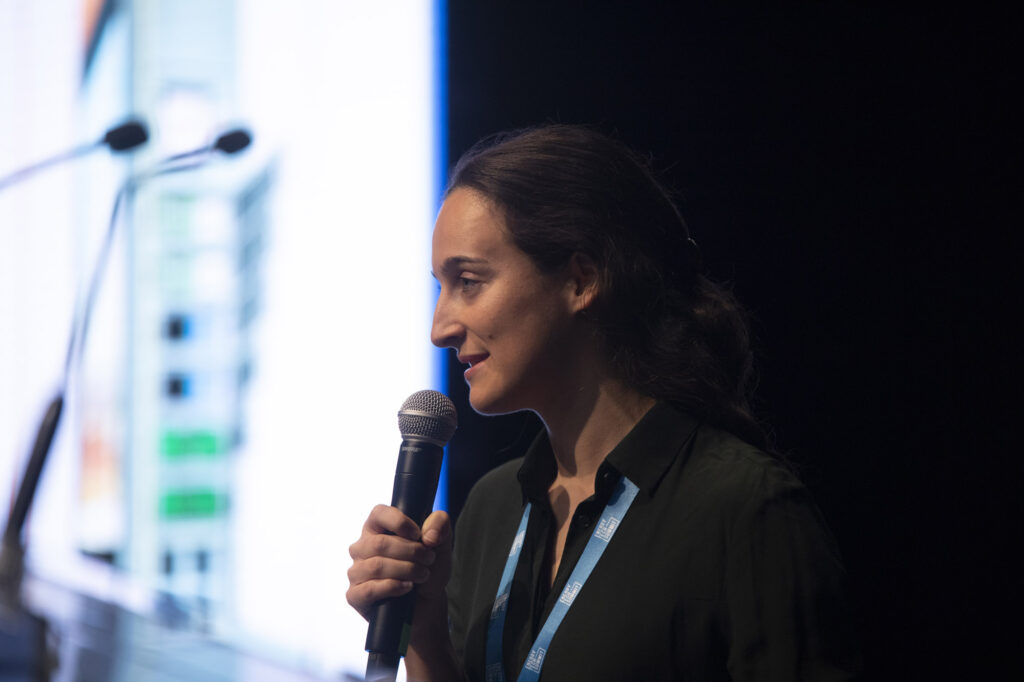
Sinah Truffat from Swobbee at Energy Tech Summit
Adden Energy: lithium metal batteries that charge in minutes
William Fitzhugh, Co-Founder and CEO of Adden Energy, started with an access problem. Many people don’t have a garage or driveway for home charging, so EV ownership remains out of reach. Adden’s vision is “making battery charging as fast as gasoline,” so drivers can rely on public chargers.
The company unveiled what Fitzhugh called “the world’s fastest charging lithium metal battery.” According to Adden, it charges fully in under ten minutes and lasts more than 5,000 cycles at that rate. The technology originated at Harvard University.
At the time of the session, Adden was delivering early samples to ten global carmakers, including four in Europe. Its cells are made on existing lithium-ion equipment. Asked about its model, Fitzhugh said the goal is to become a full cell manufacturer, though partnering with established cell makers could speed things up.
ALKEMIO: decentralizing critical metal refining
Francisco Morrone, Co-Founder and CEO of ALKEMIO, tackled a supply chain bottleneck. Feedstock from mine tailings and recycling is spread out, yet most of it must travel to large refineries, mainly in China.
ALKEMIO wants to refine metals where the feedstock is. Its three-stage process starts with bioleaching using organic acids produced by its own microorganisms. Next, custom molecules selectively capture target metals such as lithium or neodymium. Finally, a magnetic field enables fast, efficient extraction.
The company has validated the process for lithium at lab scale, reaching 95% recovery. Neodymium and dysprosium come next. At the time, ALKEMIO had signed letters of intent and was preparing tests with rare earth miners in Brazil. Its business model combines joint-venture refineries with miners and recyclers and, eventually, licensing.
CarbonX: a drop-in alternative to graphite
Rutger van Raalten, Co-Founder and CEO of CarbonX, pointed to the risk in graphite, which mostly comes from China. CarbonX combines a patented feedstock technology with a long-established carbon black process to make a one-to-one replacement for graphite in battery anodes.
The process produces material in milliseconds at lower temperatures, giving it a far lower carbon footprint than synthetic graphite, according to Van Raalten. CarbonX works with production partners that own the assets. At the time, it had access to around 40,000 tons of annual capacity across Europe and the US and had signed several non-binding offtake agreements.
On cost, he said CarbonX competes with natural graphite from China. Its biggest hurdle is procurement. “We’re not substance identified as a graphite we are a modified carbon black,” he explained, so the company must win over strategy, technical and procurement teams at the same time.
Flux Aviation: electric power for existing aircraft
Radovan Gallo, Co-Founder and CEO of Flux Aviation, opened with a clear goal: “my mission for today is to convince you that the future of flight is electric.” Flights under 500 miles account for around 20% of aviation emissions, according to Gallo.
Flux develops complete electric propulsion systems – motors, batteries and power electronics – that can be retrofitted into existing aircraft. In Flux’s view, that will make flying much cheaper and quieter, with zero emissions in flight.
The company starts with training aircraft, where regulation is simpler, before moving to larger categories. At the time, Flux had tested a full-scale prototype and was converting its own aircraft into a flying demonstrator. Asked about charging, Gallo said most small airfields already have suitable power, while megawatt charging standards are emerging for faster turnarounds.
Sirius: AI-powered sustainability data for the battery value chain
Anastasia Kuskova, CEO and Founder of Sirius, put it simply: “fossil fuel economy is powered by fossil fuels green economy is powered by metals.” As a former chief sustainability officer at a major metals and battery producer, she saw teams spend most of their time managing ESG data.
Sirius builds AI-powered sustainability infrastructure for the metals and battery value chain, so “companies are empowered by data not drowning in it.” It creates a sustainability profile for each mining or metals company that partners across the supply chain can access in any format.
At the time, Sirius said its clients covered more than 11% of the battery metals market. The software charges per query and is also working with carmakers and metal exchanges. Kuskova closed with a pun: “so let’s get serious.”
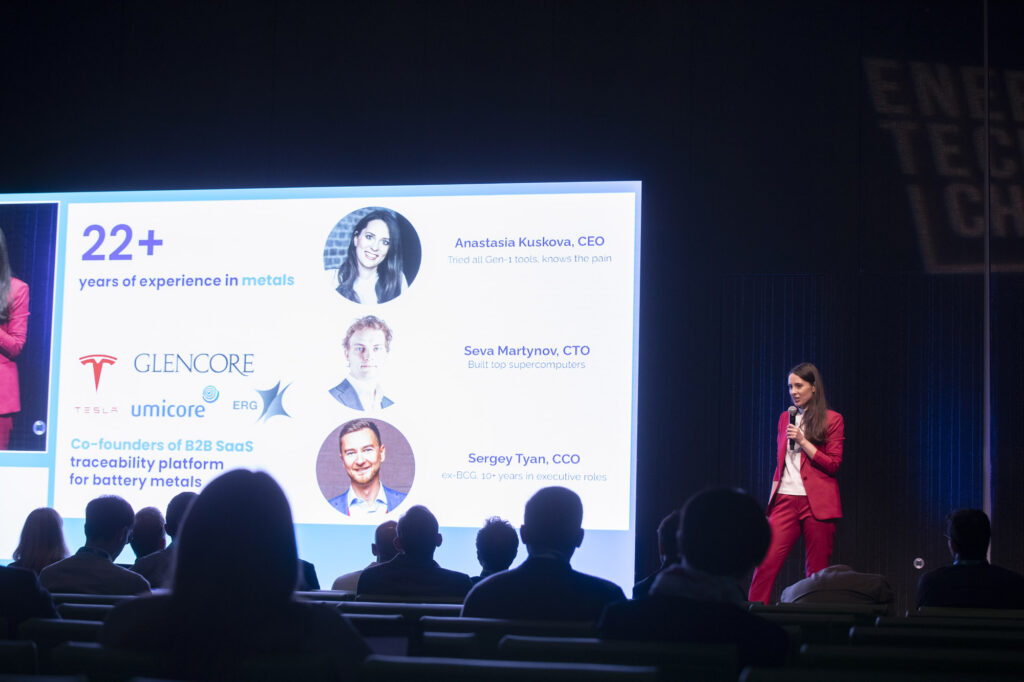
Anastasia Kuskova from Sirius pitching on stage
IONETIC: cheaper battery packs for niche vehicles
James Eaton, CEO and Co-Founder of IONETIC, focuses on niche vehicle makers such as bus, truck and supercar manufacturers. They have small development budgets, so custom battery packs are often out of reach. As one customer put it, “we don’t see any way to electrify our vehicles with what’s available on the market.”
IONETIC’s answer: “we need to make it 10 times cheaper.” Its platform combines software and hardware to design, test and manufacture packs, adapting a validated architecture to each customer. That cuts testing and allows flexible manufacturing on one line.
The team includes chairman Andy Palmer, former CEO of Aston Martin. At the time of the session, IONETIC was running a paid development program with bus maker Alexander Dennis.
Natrion: solid-state separators for existing gigafactories
Alex Kosyakov, Co-Founder and CEO of Natrion, argued that the science behind solid-state batteries is sound, but manufacturing them is the problem. Reconfiguring a gigafactory could cost almost as much as building it.
Natrion’s solid-state electrolyte separator, LiSIC, is designed to drop into existing production lines, regardless of chemistry or format. It replaces the conventional separator at a similar thickness and strength, so equipment can stay the same.
LiSIC works with today’s lithium-ion chemistries and next-generation lithium metal cells. According to Kosyakov, its lithium metal cells avoided thermal runaway at temperatures up to 250°C while keeping cost parity at cell level. Natrion has shipped cells and material to OEMs for testing and is now building its first full-size production line.
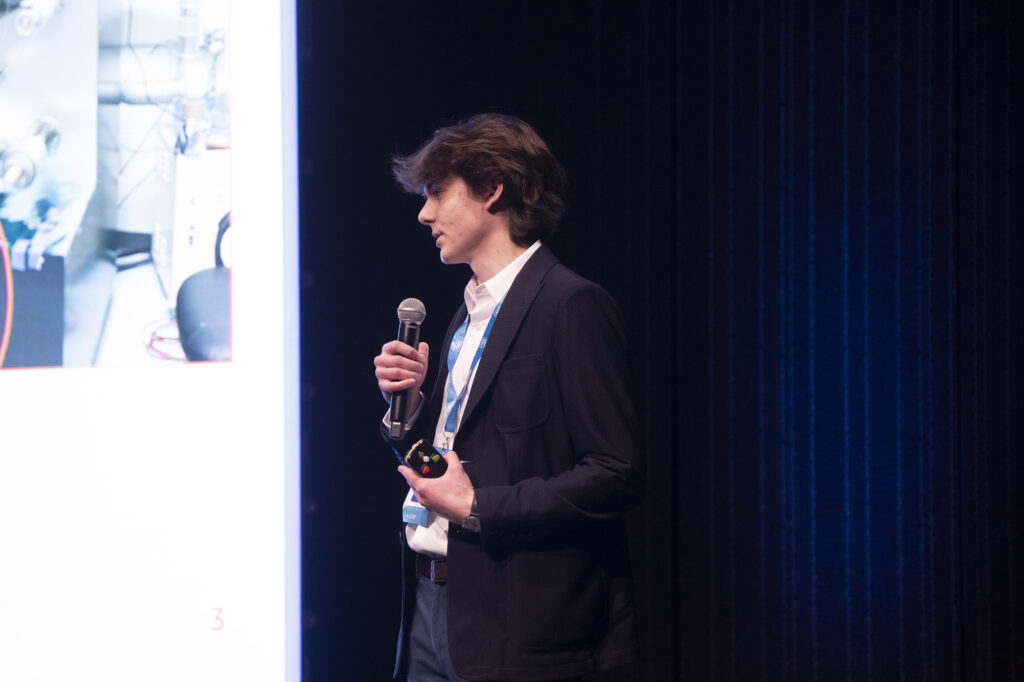
Alex Kosyakov from Natrion Inc. pitching on stage
Voltfang: second-life storage from EV batteries
David Oudsandji, Co-Founder and CEO of Voltfang, closed the session: “now you can relax I’m the last one.” Industry can decarbonize with solar and EVs, he argued, but it needs storage that is cheaper and more sustainable.
Voltfang requalifies batteries from electric vehicles and turns them into stationary storage. Its advantages include direct carmaker supply contracts, its own testing to grade batteries and an energy management system that makes storage profitable.
The model needs little capex, Oudsandji said, and automation will help it scale. Today, many of its batteries come from overproduction. In the coming years, he expects a large wave of true second-life batteries.
Takeaway
The Batteries & Value Chain track showed innovation at every step, from refining and anode materials to cells, packs, swapping and second-life storage.
For Asia-Pacific, the world’s battery manufacturing hub, these startups point to the next frontier: faster charging, cleaner materials, more flexible manufacturing and smarter use of batteries across their full life.
Secure your pass
Dates for the next Energy Tech Summit Asia are coming soon. In the meantime, meet the next generation of battery and climate tech startups at Energy Tech Summit Europe 2027, the 8th edition, on 7–8 April in Bilbao, Spain.
Passes cost €1,399 until 30 November, then €1,599 from 1 December, €1,799 from 1 February 2027 and €1,999 from 1 March 2027.
Founders can join with the Founder’s Pass for €699. Use code ETS100 for €100 off.