From wind turbine robots to smart meter analytics, energy leaders explained where AI delivers real value – and why people still matter.
AI is everywhere in today’s headlines, but what can it actually do for the energy sector? At Energy Tech Summit, a panel looked past the hype to the practical opportunities for AI – and generative AI in energy – from wind turbine maintenance to smart meters and consumer engagement.
Agnieszka Gawinek, Director of Business Development at Electrum Solutions, moderated the discussion. She was joined by Dainis Kruze, CEO of Aerones, Martin Kruus, Co-Founder and Chairman of the Supervisory Board at Sunly, and Bert Berenbroek, CEO of Net2Grid.
Why energy needs AI now
Gawinek opened with a presentation on Electrum’s Climate Tech Energy Center. It looks like a monitoring and dispatch center, but its core is an AI system that analyzes large volumes of energy data, generates forecasts and supports decision-making.
The need is growing fast. Energy systems now combine more technologies, a higher share of renewables, dynamic and even negative prices, and rising expectations for power quality. Decentralized generation, storage and microgrids also call for new management systems, since standard SCADA alone won’t be enough.
For Gawinek, the answer is a partnership. “Artificial intelligence combined with human intelligence is the perfect solution,” she said, especially for real-time optimization, predictive analytics and responding to dynamic prices.
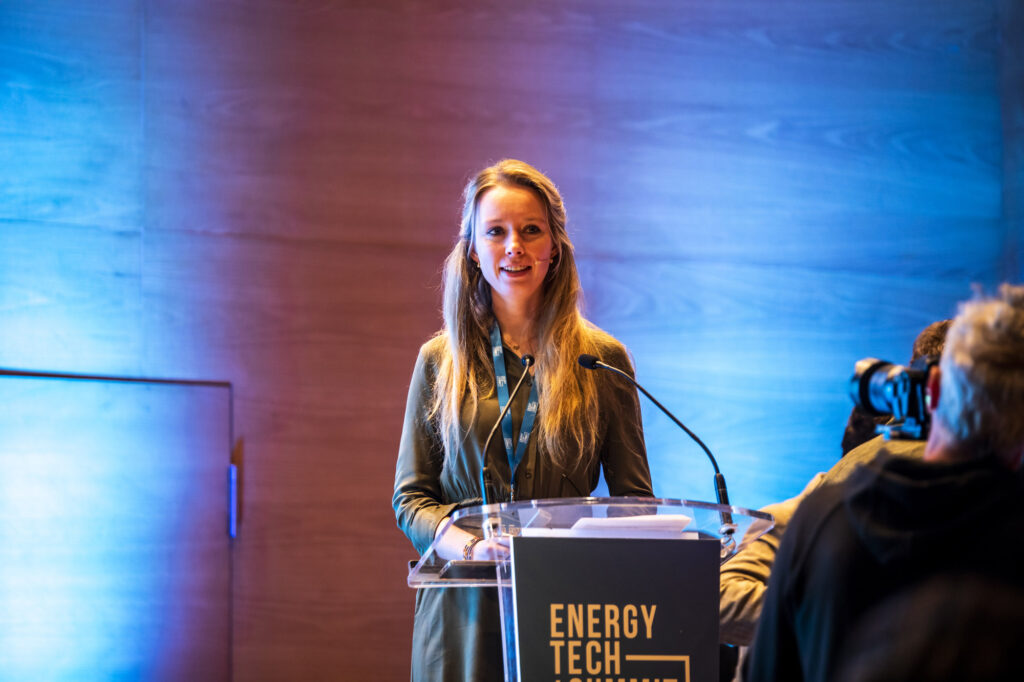
Agnieszka Gawinek, Director of Business Development at Electrum Solutions
Robots and AI for wind turbine maintenance
Kruze’s company, Aerones, builds robots that inspect, maintain and repair wind turbines. By cutting maintenance time, the robots help turbines generate more energy. According to Kruze, better maintenance can reduce CO2 emissions by up to 14,000 tons per turbine over its lifetime.
The robots also collect data that was never gathered before. Aerones uses AI to analyze that visual data, spot problems and recommend repairs, helping customers plan maintenance around energy demand.
The industry needs it. Today, most wind turbine maintenance is done by technicians hanging from ropes. The work is seasonal and risky, and there aren’t enough people willing to do it. As a result, much of the industry relies on corrective rather than preventive maintenance. In Kruze’s view, robotization and smart decision-making are the only way for wind to scale and become more competitive.
Aerones is going further, training AI to control the robots themselves. “The full autonomous maintenance of the turbines is the ultimate goal of our company,” Kruze said.
Using smart meter data to drive electrification
Berenbroek’s company, Net2Grid, applies AI on the consumption side. According to Berenbroek, electricity has made up around 20% of energy consumption for decades. To make full use of renewables, that share needs to rise sharply, which is a huge engagement challenge.
Net2Grid uses AI to extract value from smart meter data. Its models help grid planners locate distributed energy resources and design demand response programs. Those programs increasingly focus on EVs, where it matters what type of charger a household has and how often the car is driven.
Higher-resolution data is opening new possibilities. With dynamic retail contracts spreading, intraday data is becoming more valuable. Net2Grid works with Itron on new smart meters that can run software at the edge, so its AI can run on the meter itself rather than only in the cloud.
AI also helps energy retailers with staffing. Many struggle to hire call center staff – in Berenbroek’s words, it’s “more fun to flip hamburgers.” Net2Grid helps retailers reduce call volumes through digital self-service.
Generative AI in energy and the human factor
Kruus, whose company Sunly develops renewable energy, took a more holistic view. Renewables have moved beyond a demonstration phase, and the challenge now is to match production with demand. In Estonia and the wider Nordics, for instance, electricity prices regularly fall to zero.
He sees a major role for AI in educating consumers. Most people aren’t used to thinking about demand control, EV charging or hourly prices. AI could quickly design tailored solutions for each consumer, rather than generic advice.
At the same time, energy is “still very physical,” Kruus warned, and “safety comes first.” Using AI at scale can affect the whole system, not just a single heater or EV charger.
He also hopes AI can help tackle “not in my backyard” opposition by letting communities explore project simulations interactively. After all, “the technology is pretty much there,” he said. The real challenge is people.
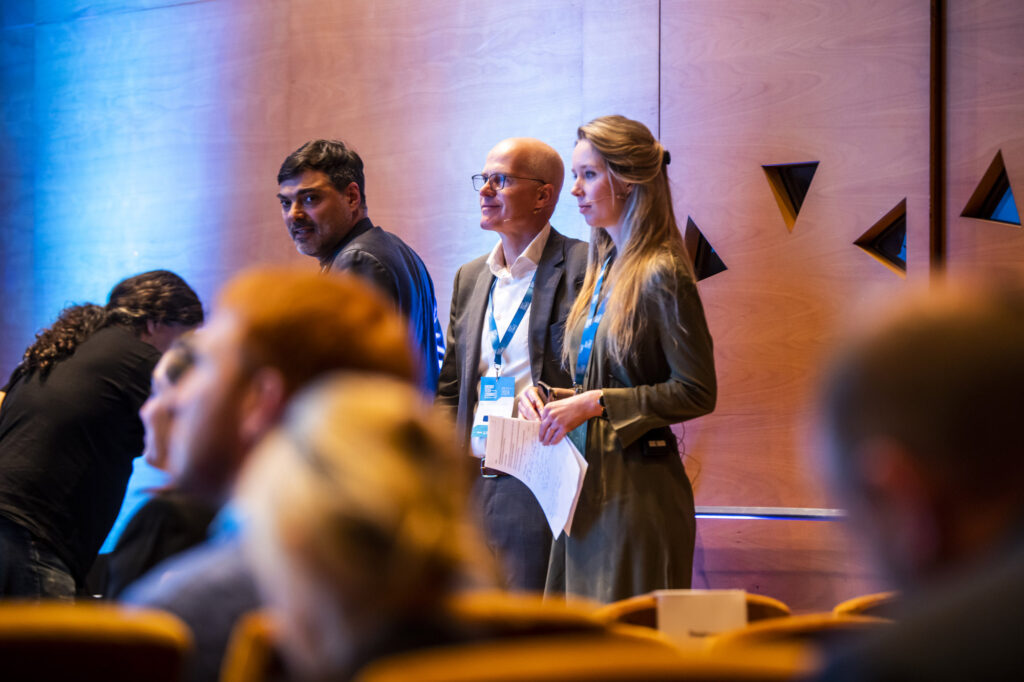
Dainis Kruze, CEO of Aerones, Martin Kruus, Co-Founder & Chairman of the Supervisory Board at Sunly, Bert Berenbroek, CEO of Net2Grid and Agnieszka Gawinek, Director of Business Development at Electrum Solutions in a panel discussion
Takeaway
AI in energy is moving beyond hype into practical use. It already helps maintain wind turbines, analyze smart meter data and support grid planning.
However, the panel agreed that AI works best alongside people. Clean data, human expertise and a focus on safety will decide how much value AI delivers to the energy transition.
Secure your pass
Want to meet the companies putting AI to work in energy? Join us at Energy Tech Summit 2027, the 8th edition, on 7–8 April in Bilbao, Spain. 
Passes cost €1,399 until 30 November, then €1,599 from 1 December, €1,799 from 1 February 2027 and €1,999 from 1 March 2027.
Founders can join with the Founder’s Pass for €699. Use code ETS100 for €100 off.