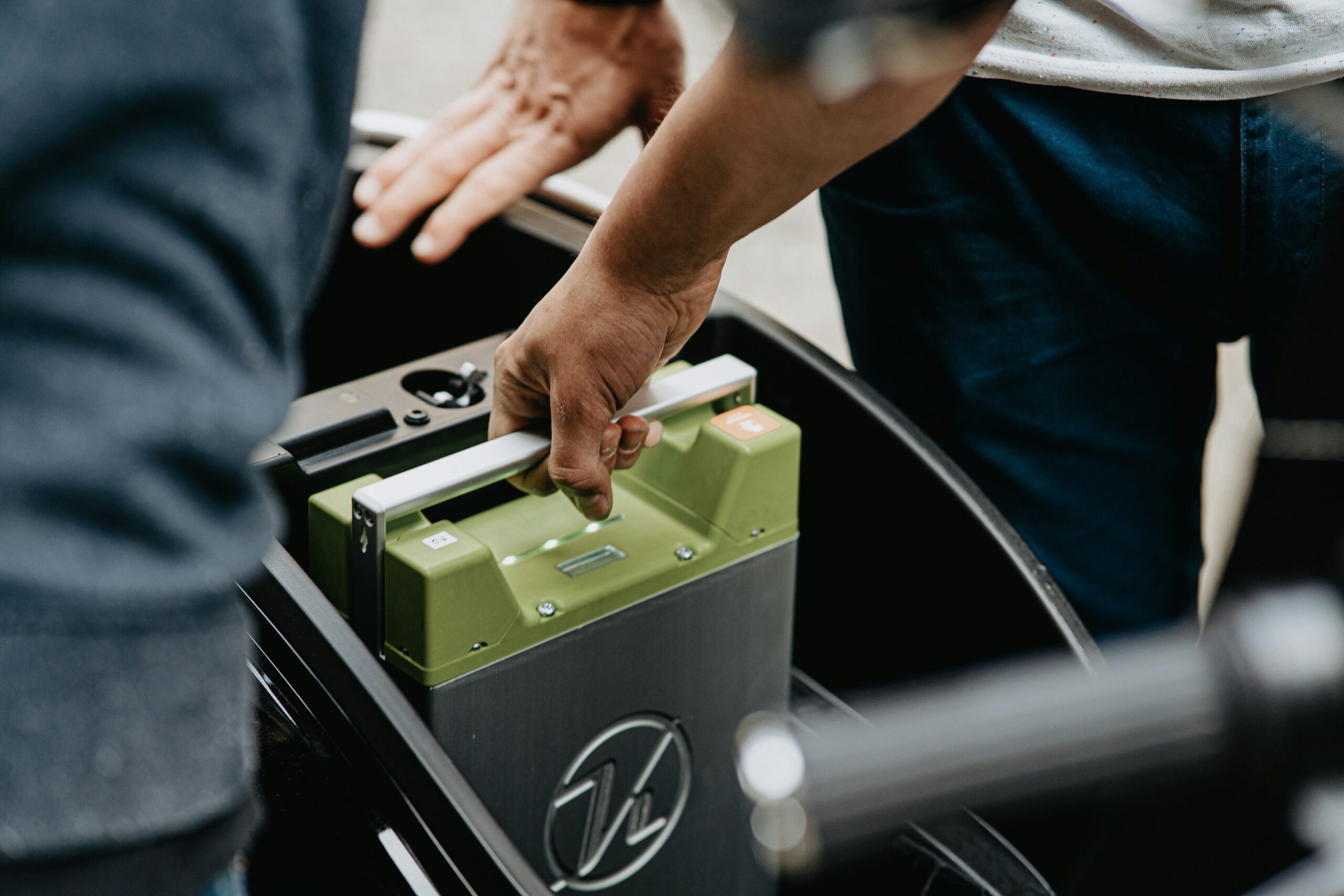
A pitch that failed, a lie told to the team on the flight home, and a strategy built on factories nobody else wants.
Asia makes most of the world’s batteries, so this conversation is really about Asian factories. Cell manufacturing sits overwhelmingly in China, Korea and Japan. Meanwhile, Southeast Asia is working out which parts of the chain it can realistically own. So the question of how a newcomer breaks into the battery industry is not abstract here. It is a question about the plants already standing.
A bold claim, and a decade later
Rokas Peciulaitis, Founder and Managing Partner at Contrarian Ventures, opened the fireside chat at Energy Tech Summit 2026 with a memory. He first met Moshiel Biton in 2017, on one of his early scouting trips to Israel. Biton told him he was going to take over the battery industry. Coming from a PhD student, that struck him as a bold claim. After all, the industry had been notoriously hard to challenge for 40 years.
Nearly a decade later, Peciulaitis had just visited the Addionics facility in Tel Aviv. He arrived at one in the morning, after drinks, and found it running. The conversation that followed traced how a physics problem nobody was working on became a company selling into the world’s largest manufacturers.
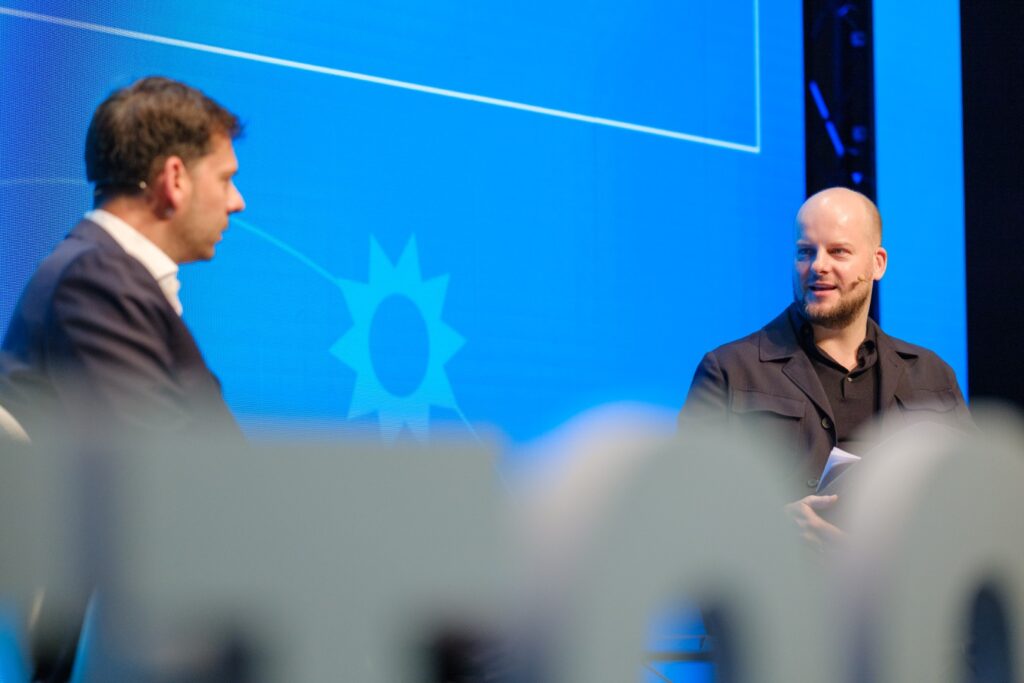
Panelists during the fire-side chat at Energy Tech Summit 2026
Choosing the least crowded part of the battery
Biton was blunt about the sector he entered. The battery industry is traditional and conservative in its thinking, which makes it difficult to disrupt. Working inside it taught him what to do. More usefully, it taught him what not to do.
He moved into batteries from semiconductors before the field became fashionable, and the culture shock was immediate. He saw very few vibrant young people in the industry. A field this consequential, he thought, should attract stronger talent.
What he noticed during his PhD shaped everything after it. Billions of dollars had gone into chemistry, and almost nothing into the architecture or the physics of the battery. Innovation concentrated on the active material components. The inactive components, meanwhile, sat untouched.
That gap became the strategy. Biton deliberately picked the most overlooked component. A less populated space with less competition, he reasoned, offers better odds. He also made a decision he has stuck to since. He did not want to build a battery company. From day one, people try to label you by which type of battery you make. His focus instead was on designing, manufacturing and integrating a physical component.
The meeting that failed
The pivotal story of the session concerns a single meeting, and Biton told it without flattering himself.
His conviction from the start was that founders must engage with the market immediately. You can build a product that is perfect for you and useless to everyone else. So he encourages founders to meet customers as soon as they have an idea, then test it against real feedback.
He therefore pursued the most senior person he could reach: the executive responsible for new technologies at LG. He took the flight. The night before, he rehearsed the pitch in front of a mirror. He also invited the executive to Korean barbecue beforehand.
The pitch itself was about bringing a semiconductor mindset into batteries. Take the current collector, a basic component unchanged in 40 years. Then replace the flat 2D metal foil with a structure that is porous, three-dimensional and, in his word, smart.
Biton left the room believing it was the best pitch he had ever given. He had fielded every question. Then his host told him it was not going to work.
The lie on the flight home
“I was speechless,” he said. What he did next is why the story matters. Rather than accept the verdict, he pushed to understand the reasoning, and the answers did not come easily. He wrote down every objection, both the technical challenges and the commercial ones.
There is a confession attached. Flying home, he told his team he had had an amazing meeting with LG. That was not true. What he actually brought back was an accurate map of an industry he had not fully understood, supplied by someone who knew it intimately. He converted each objection into a company milestone. That list then became the roadmap for working with the largest manufacturers in the world.
Why you have to walk backwards
The lesson Biton drew from that rejection reframed how the company builds. To work with a battery manufacturer, you have to walk backwards. Design first for the gigafactory. The product must be cost effective at a scale of millions of batteries a day.
Framing the disruption then matters enormously. Your pitch is a small change with a large impact. It is never a suggestion that the customer’s infrastructure is obsolete. These companies have invested billions in their facilities, so challenging that investment is a losing argument. Instead, your technology has to use their existing facilities.
The same logic governs supply chains. Do not disrupt them. Moreover, make sure the customer can always return to their existing suppliers. These are risk-averse organizations. So the work is understanding their pains and their fears, then addressing those directly.
A pilot line in the middle of the city
Peciulaitis raised something that surprises visitors. The 3D electrode pilot line sits in the heart of Tel Aviv’s financial district, rather than in an industrial zone outside the city.
Biton’s first reason was technical. The company wants to own the design of the current collector architecture for both anode and cathode, in copper and aluminium. It also wants to manufacture and integrate that component, without becoming a manufacturing company. It intends to stay a technology company that keeps innovating and keeps producing new generations. That requires constant iteration, so the first factory had to sit close to R&D. It is a one-minute walk from the main R&D building.
The second reason was talent. The site sits close to Israel’s main train station, so people can commute from the north and the south. That matters for a facility running around the clock.
The third was access. Delegations and investors visit far more readily when they do not have to commute two hours each way. “Doesn’t matter how attractive you are,” Biton said. He wanted the company to be both attractive and easy to reach.
When the customer does not know what they need
Biton’s stated principle is to build alongside customers, and never to build capacity before securing commitment. His VP of product told him he was wrong.
The argument was that customers sometimes do not know what they do not know. They cannot articulate pains they have not recognized. Biton asked what he wanted, and the answer was $2 million to work with a North American lab, the first lab that built batteries for Tesla.
The budget request was refused. Addionics does not build batteries and has no assembly line, not even for coin cells, because the product goes to customers who build the cells themselves. Biton offered $100k instead and asked what could be done with it.
The proposal was to duplicate results the company had achieved with a prestigious automotive customer, so those results could be shared with others. Biton approved that. The collaboration then produced something nobody had planned: a route into one of the largest space companies.
Why satellites are the hardest battery application
The space anecdote was the most technically interesting part of the conversation. It also explains why a niche buyer went looking for a startup’s component.
A satellite orbits the earth roughly ten times a day. It has solar panels, plus a storage battery that runs the satellite and its communications through every dark period. Roughly a third of each orbit is dark. Over a five-year mission, the cycle count becomes enormous, more aggressive than any application on earth.
The requirements compound. This is not stationary storage that must last 20 years. So the battery has to be light, demanding high energy density by weight rather than by volume as automotive does. On top of that, it needs very long cycle life.
When space companies approach the major manufacturers for customized cells, volume gets them turned away. At the same time, those buyers want to work with established leaders rather than new startups. So some decided to vertically integrate and build their own batteries. They went, as the VP of product had, to the first lab built for Tesla. That lab told them that long cycle life at low weight meant using Addionics’ product.
Customization, defense and the battery as a weapon
Asked where the company goes next, Biton pointed to a shift in what the market wants. Batteries were traditionally built for mass production in automotive and stationary storage, not for specific applications. AI, humanoids, robots and data centers each need something particular. So he expects considerably more customization than the industry has seen.
Defense and drones are the sharpest version of that. Recent conflicts have made the point that longer flight time changes outcomes. That reframes the battery as something close to a weapon, rather than a commodity input. Defense companies had treated batteries as commodities, Biton said, and are now investing seriously. They build the drone around the battery rather than the other way round, because the battery is the limiting factor.
Scaling into other people’s dead assets
The strategic answer to scale was the most contrarian idea in the session. It turns a market problem into an advantage.
There is significant overcapacity and oversupply, much of it from China, and a wave of company failures and bankruptcies as a result. That overcapacity means manufacturing facilities are sitting idle. They are dead assets that nobody wants to hold.
Addionics built its technology specifically to retrofit existing facilities. Plants originally built to produce copper foil, now losing the competition with Chinese producers, become available capacity. So rather than raising hundreds of millions for a greenfield gigafactory, the company scales gradually into existing sites, in line with actual market demand.
Peciulaitis summarized it neatly. You control your destiny rather than your capacity.
Where the company wants to be in 2030
Biton’s answer had three parts. Addionics already leads on designing new architectures, and it keeps building successive generations. It links architecture to battery performance and properties using AI, design and manufacturing. He claims the company understands that link better than anyone.
The harder ambition is owning integration on the customer side, which he acknowledged is a challenge. Customers are experts, and they will not accept being told how to integrate a product. So the approach is to supply a manual and make sure integration goes smoothly, rather than to take over.
Design, manufacturing and integration as a single package is the destination. Biton described it as the company’s barrier to entry.
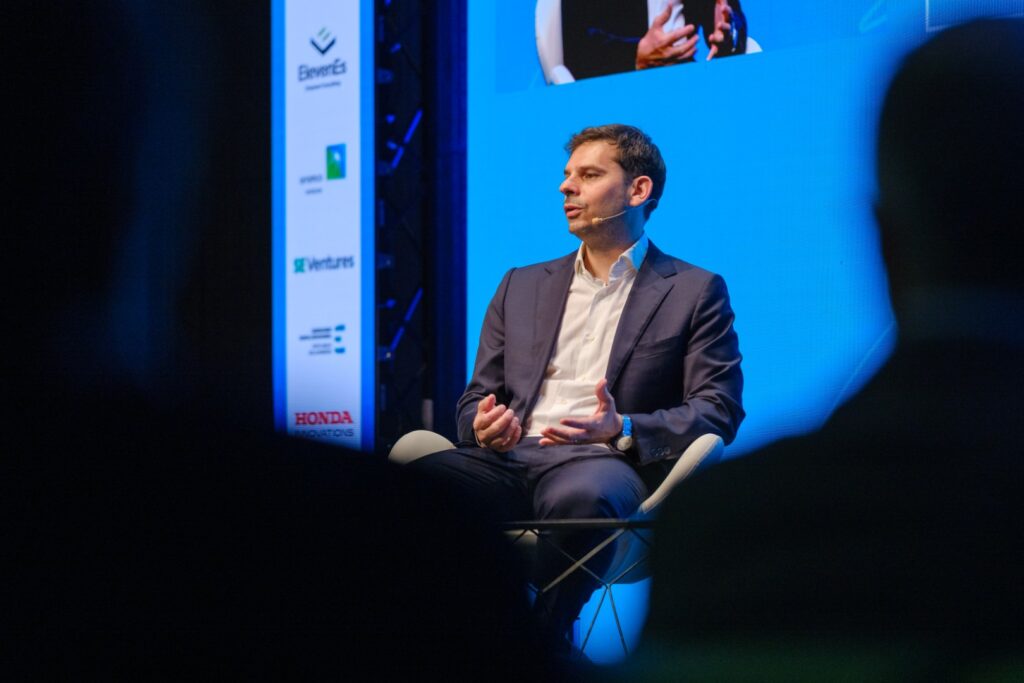
Dr. Moshiel Biton, CEO and Co-founder of Addionics at Energy Tech Summit 2026
Takeaway
The most useful thing in this conversation is not the technology but the method. Biton picked the part of the battery nobody was researching. Then he took his rejection from the industry’s gatekeeper and converted it into a product roadmap. Finally, he built a scaling strategy around facilities the market had already written off. Every one of those moves works with the battery industry’s conservatism rather than against it. Disruption here does not mean telling incumbents their infrastructure is obsolete. It means making a small change to a component nobody has touched in 40 years, then making sure it drops into everything they have already built.
Energy Tech Summit Asia comes to Kuala Lumpur on September 29–30, in the region where most of those factories already stand.