
A hummingbird load connected to an elephant grid, 20% of power wasted before a GPU starts, and why the industry is drifting toward smaller sites it never wanted.
Asia-Pacific is where much of this question gets settled in practice. Southeast Asia now hosts one of the fastest-growing data center markets anywhere, and Malaysia sits close to the centre of it. Meanwhile, the grids absorbing that load vary enormously from one market to the next. So the centralized-or-distributed choice is not academic here. It is a siting decision being made right now.
The question the panel could not solve
Powering giga-scale data centers is a grid planning problem as much as a computing one. James Lockyer, Director of the Climate Innovation Fund at Microsoft, opened a panel at Energy Tech Summit 2026 by acknowledging the obvious. Demand for compute is rising sharply. That brings opportunity for innovation and productivity. It also brings complexity for grid planning and long-term sustainability goals.
The question he put to the panel was structural. Large, efficient centralized deployments, or modular decentralized local environments? He also set expectations early. He did not expect a solvable answer by the end of the session.
Who was on stage
Andreas Aepli is CFO of Reverion, which builds modular fuel cell-based power plants. He gave three characteristics. They deliver 74 to 80% net electric efficiency, turning natural gas or biogas into power. They are also reversible, so surplus power can generate methane and, in future, hydrogen fed back into the grid. Finally, they remove all the CO2 during the process, so they operate carbon neutral.
Irena Spazzapan is Founder and Managing Partner of Systemiq Capital in London. She started it around eight years ago, after more than 20 years in power covering asset-backed financing and power trading.
Paul Bogers leads technology strategy and ventures at GE Vernova, which he described as a 130-year-old startup. His shorthand for the company was memorable. Anything that does not fly and did not end up in a hospital ended up at GE Vernova. Ver for green, nova for new. That covers large gas-fired generation, aeroderivatives, nuclear, hydro, and onshore and offshore wind. It also covers the equipment that makes the grid run, with a bias toward transmission.
Tomas Kemtys is a General Partner at Contrarian Ventures, a climate and energy focused VC fund of a similar vintage. When the fund started, he said, he would not have expected compute and data centers to become this central.
Lockyer’s own fund launched in January 2020 and invests in energy, industrial and natural systems. It runs what he called a hardcore invest-to-procure mandate. The technologies it backs, it also buys and deploys across Microsoft’s operations where possible.
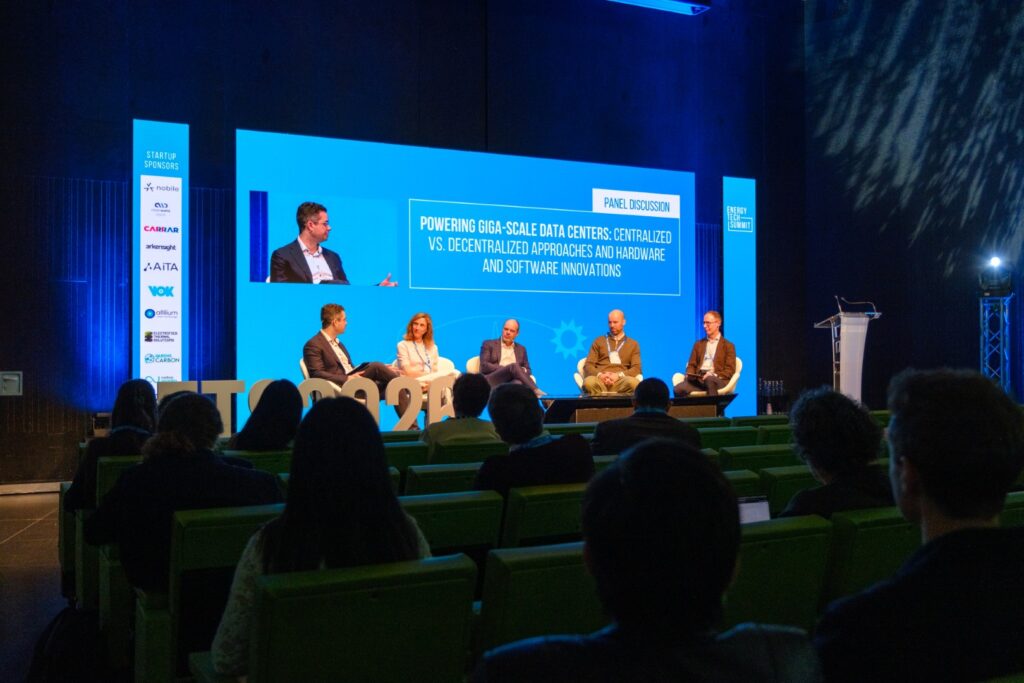
Panelists at Energy Tech Summit 2026
Centralized is better, and it is not happening
Spazzapan gave the cleanest statement of the trade-off. If you could, you would always go fully centralized. It is more efficient for high density GPU stacks, and more efficient for cooling.
The workload split matters here too. Training can happen anywhere, but inference is where the action is, accounting for around 90% of AI demand today. She referenced a bank report putting the cost of inference per token down by 99.7% over two years. That is the kind of curve that changes where compute physically sits.
The obstacle for distributed sites is power usage effectiveness, which is simply worse at smaller scale. That is a hardware problem. Better designs have to bring PUE down in smaller distributed facilities. Hyperscalers have tried to avoid this direction, because it is not the obvious choice. In Spazzapan’s reading, the realities of the grid and of community engagement will push the industry toward a distributed world of 30, 40, 50 and 100 megawatt sites regardless.
What makes the big sites harder now
Aepli agreed that large sites still make sense, then pointed out what has changed. They were far easier when grid connections and electrical equipment were both available. Grid connection delays now run from two to as much as 10 years. The projects are also complex, requiring large volumes of transformers and switchgear. Moreover, the engineering capacity to build at that scale is missing in Europe, and to a lesser extent in the US.
The distributed advantage, in his view, is flexibility in how you source power. Options include behind-the-meter solutions and stranded power assets cobbled together. Flexibility portfolios are another route, of the kind Octopus Energy has assembled, reaching down to residential supply. Assembling power that way is very difficult at giga-scale. At smaller scale, by contrast, it is considerably easier.
Bogers added two arguments for decentralization. The first is a telecoms parallel. That industry began about as centralized as possible, with switchboards and operators connecting calls one by one. Then it became distributed, both for lower latency and for resilience in network coverage.
The second is data sovereignty. Where data physically resides is becoming important to governments. So that pressure pushes toward less consolidation, independently of any grid constraint.
Where the hardware innovation is
Kemtys described a wide search across hardware and software, conducted mostly in Europe while watching risks from the US. The fund looked closely at chip manufacturers, neuromorphic chips and photonics. That deep tech excites him. Even so, it raises an uncomfortable question about what right a European startup has to win against incumbent US players.
Spazzapan framed her answer around a single number. Before you have even started using a GPU, roughly 20% of the power is already wasted. So the name of the game is reducing heat loss.
Her first area is DC-to-DC power conversion. Grids run on alternating current, while EVs, batteries and solar all use direct current. The DC world was a dead end in power for a long time. Now it has become interesting again inside data centers, because four or five conversion steps sit between the grid connection and the GPU. Doing those more intelligently, including in-rack DC-to-DC, is where Systemiq has invested.
The second is eliminating copper. Systemiq has backed a company working on co-packaged optics. A query travels optically until it reaches the data center, where it converts to copper for the last stretch. That conversion generates substantial heat. Keeping the optical signal all the way to the GPU removes it.
Why power electronics became the bottleneck
Her broader claim was that Moore’s law now runs through power electronics, because the constraint is density. Getting rid of heat loss and managing power density is, in her words, by far the most interesting problem. All of it sits behind the meter.
Aepli picked behind-the-meter generation as his hardware focus, then pushed back on the sector’s default framing. The narrative has been renewables plus storage on one side, and build more grid on the other. That, he thinks, is too binary. What is needed are assets that integrate with the grid and use renewable power when it exists. Rather than sitting idle whenever renewables run, they should feed back and help stabilize the grid.
On software, his answer was flexible workload allocation and more load following. The obstacle is data. Doing this well requires information that sits inside utilities and is not easily available. So data integration is what unlocks the software efficiencies.
Bogers agreed on power conversion, and highlighted solid state transformers. These collapse several inefficient low-voltage steps into a single device. Everything inside the data center, in his view, is due a new reference architecture.
He then added what he cheerfully accepted was a fringe innovation. If waste heat signals inefficiency, it can also do useful work. A GE spin-out turns waste heat into high quality water. Low-grade heat drives a process that draws in atmospheric air, dries it, collects the water and repeats. Even a closed loop cooling system needs considerable makeup water. So for sites in water-stressed regions, that matters. You cannot eliminate all the waste. Instead, make the heat do something useful.
A hummingbird connected to an elephant
Asked what helps data center operators and utilities coordinate, Bogers gave the image that anchored the session.
The same problem recurs at every scale. It appears in gigawatt-scale behind-the-meter generation in a remote location, and in a much smaller distributed site. You are coupling something with the heartbeat of a hummingbird to an energy grid with the heartbeat of an elephant. Chip-level activity moves extremely fast, and loads shift constantly. Voltage and frequency control, meanwhile, govern the grid.
Coupling them is not trivial, and an unpredictable load can do real damage. His historical comparison was instructive. Nobody building a steel mill with an electric arc furnace would have been permitted to connect it straight to the grid without extensive controls. So how data centers interface with the grid is a genuinely interesting engineering question. Plenty of technical solutions exist, and plenty of ways to come unstuck by not thinking it through.
Beyond safe connection sits the more ambitious goal. Can data centers become good grid citizens? That means more than playing nicely. It means taking on load management and becoming grid reinforcing rather than a burden. A great deal of software work is going into that.
Aepli added an underappreciated asset. Europe has a large biogas base, with more being built, and nobody has seriously considered it as an energy source for data centers. For decentralized provision it is attractive, because power can be secured independently of index pricing. That brings stability. Much of that infrastructure is also underutilized, with assets not running at full capacity.
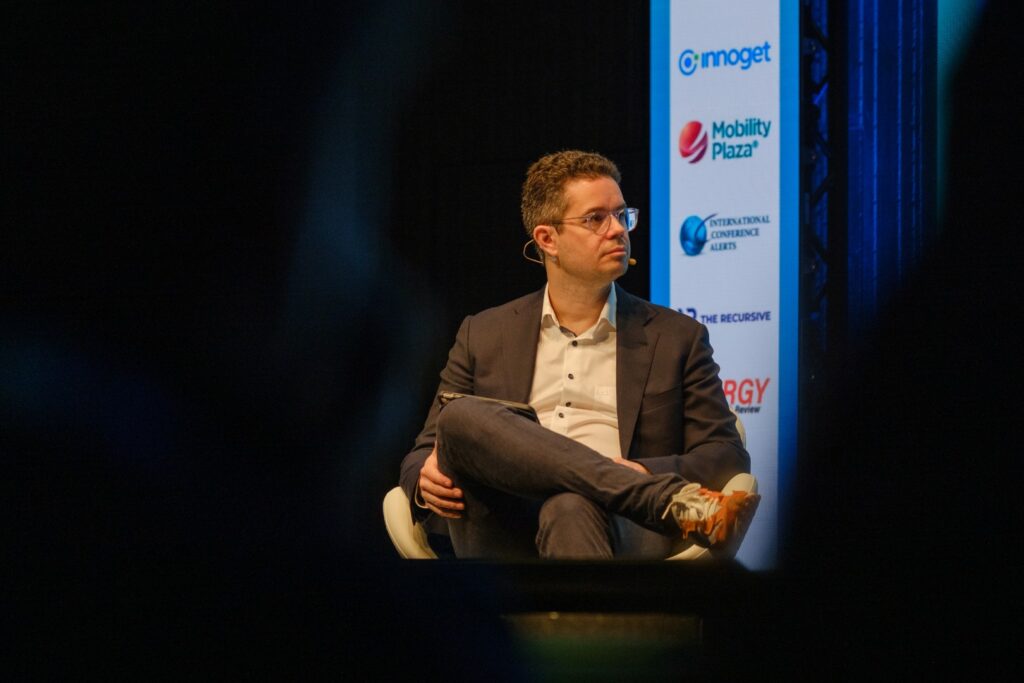
Andreas Aepli, CFO of Reverion during a session at Energy Tech Summit 2026
Partnerships, offtake and getting tested
On what accelerates access to reliable power, Aepli started with committed offtake. Long-term structured offtake agreements give technology scale-ups the visibility they need. They also help funding and lower the cost of capital, which is often the prohibitive factor for innovation.
He also suggested building more flexibility into PPAs. Speed to power is the priority, so a buyer might pay a premium in the initial phase for faster access. Then, as grid connection improves, the structure could shift. The buyer would feed more into the grid and pay less under the PPA later.
Kemtys took partnerships in a different direction. For early stage startups, working with a company like Microsoft is extremely valuable, because testing in real conditions is hard. He mentioned a colocation provider running a dedicated sandbox data center. There, startups can trial liquid cooling or chips in real-world cases.
Lockyer expanded on how Microsoft supports portfolio companies as investor, buyer and go-to-market partner. Companies get access to Microsoft startup programs and additional credits, alongside test deployments and purchases. He cited a recent project deploying high temperature superconducting technology inside a data center, delivering several megawatts directly to server hardware. He also mentioned ongoing partnership work with a dynamic line rating company. Each portfolio company’s path differs. Some have investment plus an offtake agreement, while others go further into commercial channels.
Public funding, and who it actually suits
Aepli spoke from Reverion’s own experience rather than a portfolio view. The company has maintained close to a 50/50 split between venture equity and grants, which he called extremely helpful in getting innovation to market.
Beyond that, he thinks these programs help bridge the road to project finance. Appetite now exists among project equity providers, and project finance is available. Even so, programs help cover the missing middle until projects de-risk enough for it. He named several European instruments the company has used, including the EIC Accelerator.
Why route to market beats grant chasing
Spazzapan was frank that this does not apply to her fund, which avoids first-of-a-kind factory risk. Her interest is go-to-market. She then made a sharp point about route to market for equipment startups. Transmitting or generating power is less risky than selling the equipment that represents the major cost inside a data center. The idea that a startup will suddenly sell large volumes of electronics equipment directly to a hyperscaler is never going to work.
So the question becomes which channel to use. Options include semiconductor distributors and the large industrial and electrical players. Software-side architects and integrators are another. An open source route is a fourth, though it takes longer. That, rather than chasing public money, is where her fund concentrates.
Aepli offered a bridge between the two positions. Some programs are hard for startups to access alone. A consortium, however, can be considerably more successful, particularly for later stage implementation in larger programs. Bringing in a grid operator, an EPC company or a data center operator is what makes the difference.
Lockyer added that several hyperscalers work with a European institute focused on helping data centers de-risk technologies for future deployment. Microsoft, Google and major equipment vendors are involved. He also praised the convening role funds play in bringing LPs and startups together, which is what makes events like this useful.
Quickfire: which innovation excites you most?
Aepli picked reversible power plants as grid assets, with fuel-flexible generation capacity.
Spazzapan picked power density, which she called the industrial Moore’s law.
Bogers wants to fundamentally change the reference architecture inside the data center, through more efficient DC-to-DC conversion using new solid state and power electronics.
Kemtys considered saying data centers in space, then chose something more down to earth. Cooling, where a great deal still needs doing and a great deal of energy could be saved.
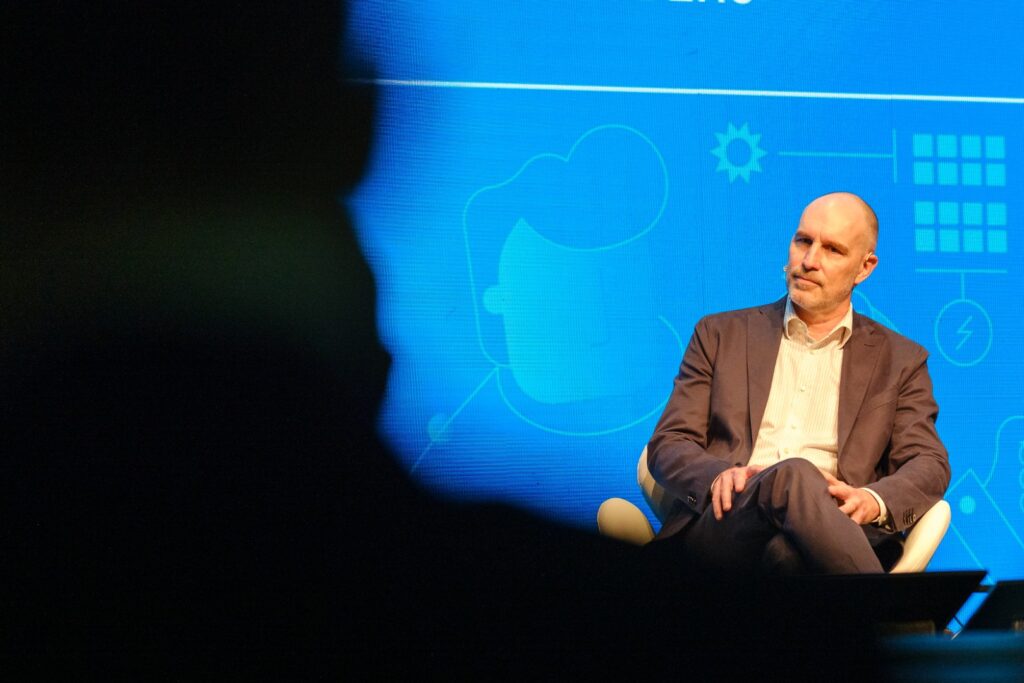
Paul Bogers, Director Technology Strategy & Ventures at GE Vernova during a session at Energy Tech Summit 2026
Takeaway
Nobody on this panel argued that decentralization is technically preferable. Centralized giga-scale data centers are more efficient for dense GPU stacks and for cooling, and nobody disputed that. What they did dispute is whether anyone can deliver them. Interconnection queues run to years. Transformers are scarce, engineering capacity is thin, and communities are increasingly unwilling to host these sites. So the industry appears to be drifting toward a distributed model it did not choose. That is precisely why the innovation the panel found most exciting sits behind the meter: power conversion, power density and cooling. Those are the things that make a 50 megawatt site perform closer to a 500 megawatt one.
Energy Tech Summit Asia comes to Kuala Lumpur on September 29–30, in a region building both models at once.