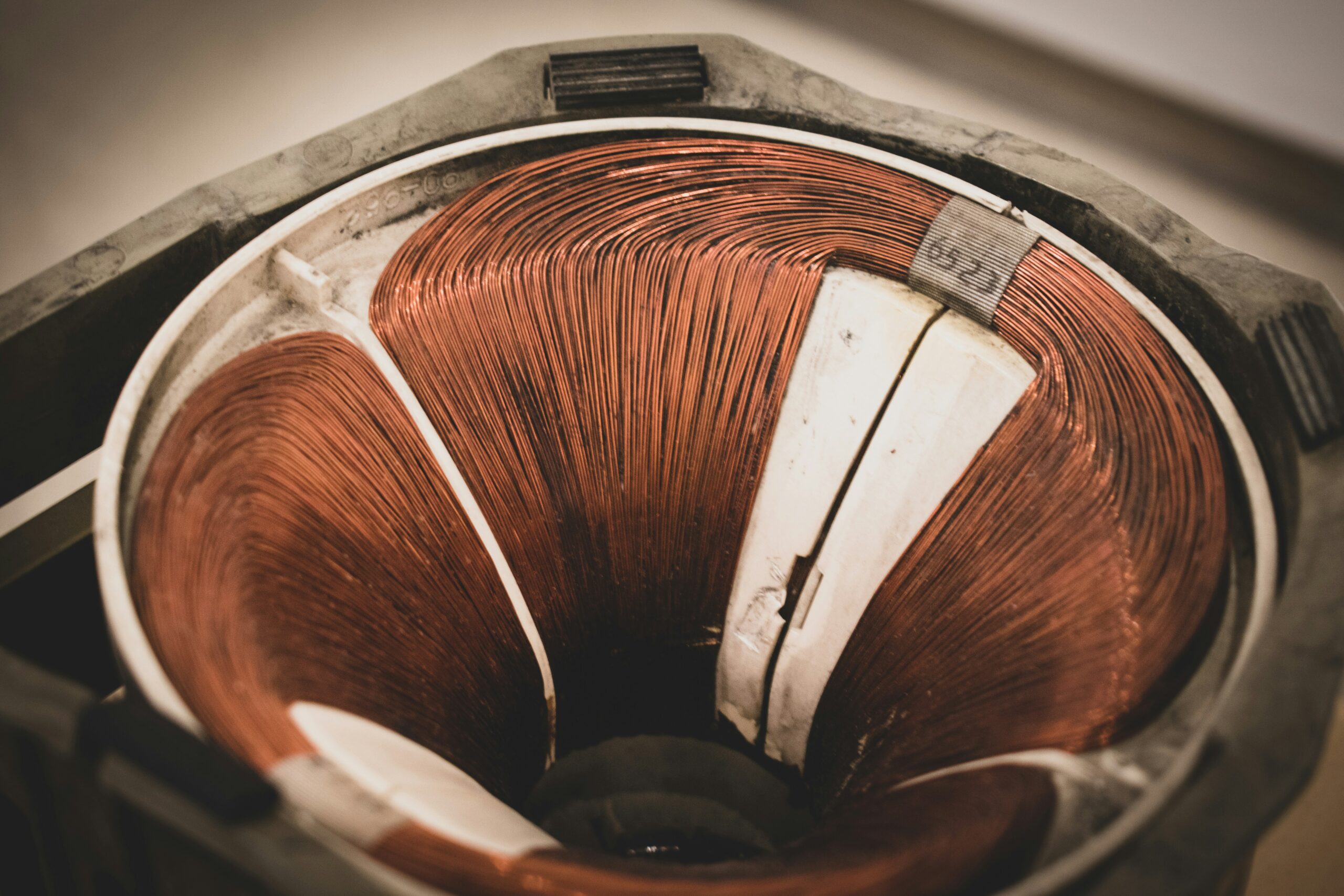
Steel went through three paradigm shifts in a century. Electrochemistry has been waiting since 1963.
Asia refines and manufactures much of what electrodes actually make. Chlor-alkali plants, metals refineries and battery supply chains cluster across the region. Meanwhile, Southeast Asia is pushing to process more of its own minerals rather than shipping ore abroad. So a change in the layer beneath all of that lands here first. Electrode technology sits under trillions of dollars of industry, and it has barely moved since 1963.
Two images, and a paradigm shift
Leon Giovanni Rizzi, CEO of Jolt, opened his keynote at Energy Tech Summit 2026 with two images. Wrought iron sat on one side, Bessemer steel on the other. The dividing line was 1834. What separated them, at the level of microns, was a paradigm shift.
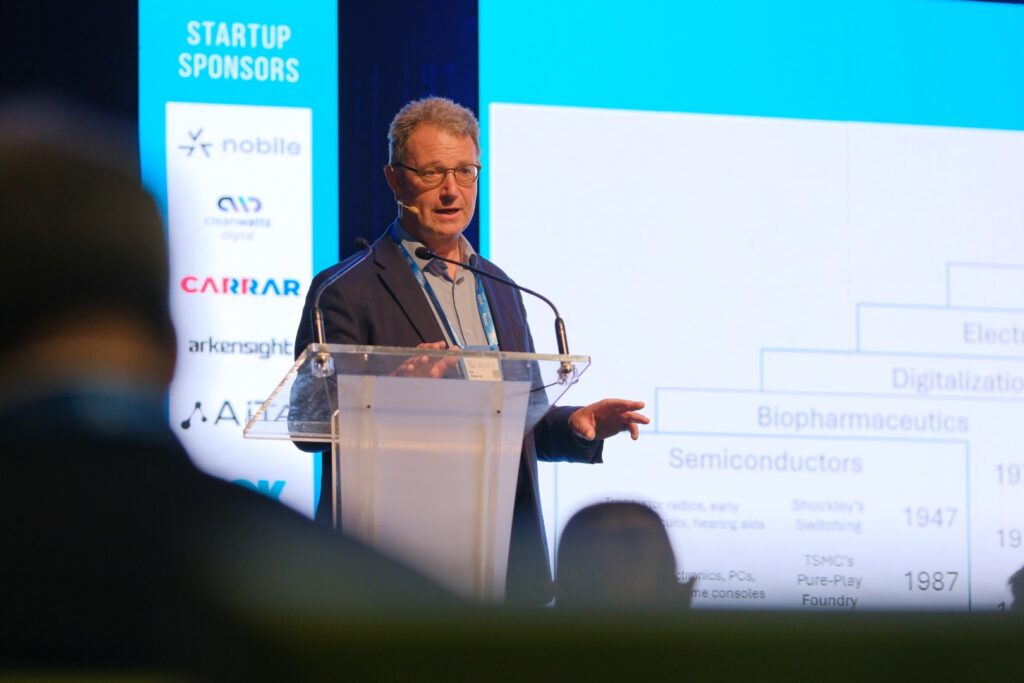
Leon Giovanni Rizzi, CEO of Jolt speaking at Energy Tech Summit 2026
Improve what exists, rather than replace it
Steel did not evolve gradually, Rizzi argued. It went through three paradigm shifts in under a century. Each one moved technology and civilization forward.
Moreover, that pattern is not unique to steel. Electromagnetics, petrochemistry, electrochemistry, digitalization and pharmaceuticals have all followed the same arc.
From that, he drew a conclusion aimed squarely at investors in the room. Back innovation that wants to replace the world with a new system, and you are missing the point. Look instead for solutions that improve existing systems, because that is where fast impact comes from. Every shift he had described improved something that already existed.
The distinction he drew is worth keeping. There is a considerable difference between betting on an innovation to win, and betting on the foundational science that inevitable industries require in order to exist.
What an electrode actually does
Jolt works at the foundational layer of electrochemistry. Rizzi framed its purpose as removing the limitations that have kept electrochemistry out of sectors it could not previously reach. The company has developed a new process for improving catalysts and coating them onto industrial-scale electrodes.
For most people, he acknowledged, an electrode is a black box. So he defined it plainly. Electrodes convert molecules into electrons, and electrons back into molecules. “So we make matter and energy,” he said. “It couldn’t be more fundamental than that.”
Those electrodes power the equipment layer, and trillions of dollars of derivatives depend on them annually. It is an inverted pyramid resting on a very small point.
The invisibility is the problem. Electrochemistry has existed since the 1880s, and it has become like a tap you switch on without thinking. Yet clothing, paper, chlorinated drinking water, PVC and solar panels all depend on humble electrodes making molecules.
Whoever makes the best electrodes decides who wins
That was Rizzi’s boldest claim, and he applied it across established and emerging sectors alike. It covers electrolyzers for chlor-alkali and oxygen production, plus newer categories such as advanced batteries and supercapacitors.
The reason is that this is a bottom-up business. Venture investors tend to focus top-down on who has the best equipment design. However, if that equipment relies on 65-year-old electrode technology, the effect is like putting a 1920s engine into a new sports car.
Meanwhile, incumbent electrode producers are defending twentieth century technology, and there are not many of them. That constrains both existing industry and the scale of emerging electrochemical sectors.
To convey the scale of the traditional sector alone, Rizzi cited around 600 terawatt hours of electricity consumed globally per year.
Two dimensions to three
Jolt came out of an institute ranked among the top five globally for fundamental catalysis and electrolysis research. Around 40 to 45% of the company are electrochemists.
The capital efficiency claim came next. Rizzi said the company’s first line for hydrogen and chlor-alkali cost 2 million, against the 50 to 200 million he cited as typical for a first-of-a-kind line. The best technologies, he added, are always very simple.
The technical difference is dimensional. Existing catalyst layers are two-dimensional, while Jolt’s are three-dimensional. That yields higher energy efficiency, lower or zero use of precious metals, and longer durability. Together, those let you control the economics from the bottom up, at the electrolyzer, battery or supercapacitor layer and everything derived above it.
One electrode a minute
Manufacturing is where Rizzi claimed the sharpest break with incumbents. Existing production is batch work taking between one and three days per electrode. Jolt produces one a minute, fully automated and continuous.
The capital requirement, he said, is hundreds of times lower. Furthermore, the company has reduced the energy needed to make an electrode by 99.8%, and its Barcelona factory runs on its own solar panels.
The comparison he drew was between the traditional paint-and-bake process developed in 1963 and the company’s own production method.
The compounding data advantage
The speed difference produces something beyond throughput, and this was the most interesting part of the pitch.
Running a one-minute coating process rather than a two-to-three-day one generates enormous quantities of valuable experimental data. Four years ago, the company began building its own data management system for inorganic chemistry, because none existed. It then moved that system off the cloud onto its own servers, and layered machine learning and reinforcement learning on top.
The result, in Rizzi’s account, is a self-compounding moat. The company runs at roughly 200 experiments a day, against one for competing labs. On that basis he argued that a single year at Jolt equates to decades for competitors. Even knowing the coating process, he said, would not let a rival catch up.
He was explicit that the company wants to push further still, from 200 experiments a day toward several thousand.
Hydrogen, then chlorine, then metals
On traction, Rizzi described a deliberate sequence through markets.
Hydrogen came first, inherited from the founding institute. He considers that box ticked, with a major Italian energy company using Jolt electrodes in what he described as the largest electrolyzer factory in southern Europe. The company is parking hydrogen for now, on the view that the sector is in correction and will reach its impact phase from 2030. At that point, he said, Jolt will be ready.
Chlorine and oxygen came next, in 140-year-old markets with very large addressable value. The company started in the smallest available segment, pool disinfection, approaching the two leading companies. It sent samples four months after starting and achieved validation five months later. Capacity from the demonstration line is pre-sold to one of them, with industrial production planned from 2028.
Against the incumbent electrode in that market, Rizzi claimed a third less energy consumption, 36% more chlorine production, and 50% less ruthenium in the catalyst. That last metal, he said, has risen sharply in price.
Why metals refining is the bigger prize
The third market is metals refining. There, the company has signed binding letters of intent in the Democratic Republic of Congo to replace lead electrodes in cobalt, manganese dioxide and copper refining.
That opportunity has several layers. Around a million such electrodes are in use, representing substantial annual sales. Beyond the hardware, Rizzi claimed roughly 60% lower electricity consumption, with the company taking a share of the savings.
Most consequentially, removing lead contamination would let refining happen in-country rather than shipping ore abroad. The commercial logic follows the contamination. Copper used as wire is being drawn ever thinner for batteries and EVs, and lead causes those wires to short and break. So Jolt takes a percentage of the increase in metal value that removing it creates.
Improve what exists, rather than replace it
Steel did not evolve gradually, Rizzi argued. It went through three paradigm shifts in under a century. Each one moved technology and civilization forward.
Moreover, that pattern is not unique to steel. Electromagnetics, petrochemistry, electrochemistry, digitalization and pharmaceuticals have all followed the same arc.
From that, he drew a conclusion aimed squarely at investors in the room. Back innovation that wants to replace the world with a new system, and you are missing the point. Look instead for solutions that improve existing systems, because that is where fast impact comes from. Every shift he had described improved something that already existed.
The distinction he drew is worth keeping. There is a considerable difference between betting on an innovation to win, and betting on the foundational science that inevitable industries require in order to exist.
What an electrode actually does
Jolt works at the foundational layer of electrochemistry. Rizzi framed its purpose as removing the limitations that have kept electrochemistry out of sectors it could not previously reach. The company has developed a new process for improving catalysts and coating them onto industrial-scale electrodes.
For most people, he acknowledged, an electrode is a black box. So he defined it plainly. Electrodes convert molecules into electrons, and electrons back into molecules. “So we make matter and energy,” he said. “It couldn’t be more fundamental than that.”
Those electrodes power the equipment layer, and trillions of dollars of derivatives depend on them annually. It is an inverted pyramid resting on a very small point.
The invisibility is the problem. Electrochemistry has existed since the 1880s, and it has become like a tap you switch on without thinking. Yet clothing, paper, chlorinated drinking water, PVC and solar panels all depend on humble electrodes making molecules.
Whoever makes the best electrodes decides who wins
That was Rizzi’s boldest claim, and he applied it across established and emerging sectors alike. It covers electrolyzers for chlor-alkali and oxygen production, plus newer categories such as advanced batteries and supercapacitors.
The reason is that this is a bottom-up business. Venture investors tend to focus top-down on who has the best equipment design. However, if that equipment relies on 65-year-old electrode technology, the effect is like putting a 1920s engine into a new sports car.
Meanwhile, incumbent electrode producers are defending twentieth century technology, and there are not many of them. That constrains both existing industry and the scale of emerging electrochemical sectors.
To convey the scale of the traditional sector alone, Rizzi cited around 600 terawatt hours of electricity consumed globally per year.
Two dimensions to three
Jolt came out of an institute ranked among the top five globally for fundamental catalysis and electrolysis research. Around 40 to 45% of the company are electrochemists.
The capital efficiency claim came next. Rizzi said the company’s first line for hydrogen and chlor-alkali cost 2 million, against the 50 to 200 million he cited as typical for a first-of-a-kind line. The best technologies, he added, are always very simple.
The technical difference is dimensional. Existing catalyst layers are two-dimensional, while Jolt’s are three-dimensional. That yields higher energy efficiency, lower or zero use of precious metals, and longer durability. Together, those let you control the economics from the bottom up, at the electrolyzer, battery or supercapacitor layer and everything derived above it.
One electrode a minute
Manufacturing is where Rizzi claimed the sharpest break with incumbents. Existing production is batch work taking between one and three days per electrode. Jolt produces one a minute, fully automated and continuous.
The capital requirement, he said, is hundreds of times lower. Furthermore, the company has reduced the energy needed to make an electrode by 99.8%, and its Barcelona factory runs on its own solar panels.
The comparison he drew was between the traditional paint-and-bake process developed in 1963 and the company’s own production method.
The compounding data advantage
The speed difference produces something beyond throughput, and this was the most interesting part of the pitch.
Running a one-minute coating process rather than a two-to-three-day one generates enormous quantities of valuable experimental data. Four years ago, the company began building its own data management system for inorganic chemistry, because none existed. It then moved that system off the cloud onto its own servers, and layered machine learning and reinforcement learning on top.
The result, in Rizzi’s account, is a self-compounding moat. The company runs at roughly 200 experiments a day, against one for competing labs. On that basis he argued that a single year at Jolt equates to decades for competitors. Even knowing the coating process, he said, would not let a rival catch up.
He was explicit that the company wants to push further still, from 200 experiments a day toward several thousand.
Hydrogen, then chlorine, then metals
On traction, Rizzi described a deliberate sequence through markets.
Hydrogen came first, inherited from the founding institute. He considers that box ticked, with a major Italian energy company using Jolt electrodes in what he described as the largest electrolyzer factory in southern Europe. The company is parking hydrogen for now, on the view that the sector is in correction and will reach its impact phase from 2030. At that point, he said, Jolt will be ready.
Chlorine and oxygen came next, in 140-year-old markets with very large addressable value. The company started in the smallest available segment, pool disinfection, approaching the two leading companies. It sent samples four months after starting and achieved validation five months later. Capacity from the demonstration line is pre-sold to one of them, with industrial production planned from 2028.
Against the incumbent electrode in that market, Rizzi claimed a third less energy consumption, 36% more chlorine production, and 50% less ruthenium in the catalyst. That last metal, he said, has risen sharply in price.
Why metals refining is the bigger prize
The third market is metals refining. There, the company has signed binding letters of intent in the Democratic Republic of Congo to replace lead electrodes in cobalt, manganese dioxide and copper refining.
That opportunity has several layers. Around a million such electrodes are in use, representing substantial annual sales. Beyond the hardware, Rizzi claimed roughly 60% lower electricity consumption, with the company taking a share of the savings.
Most consequentially, removing lead contamination would let refining happen in-country rather than shipping ore abroad. The commercial logic follows the contamination. Copper used as wire is being drawn ever thinner for batteries and EVs, and lead causes those wires to short and break. So Jolt takes a percentage of the increase in metal value that removing it creates.
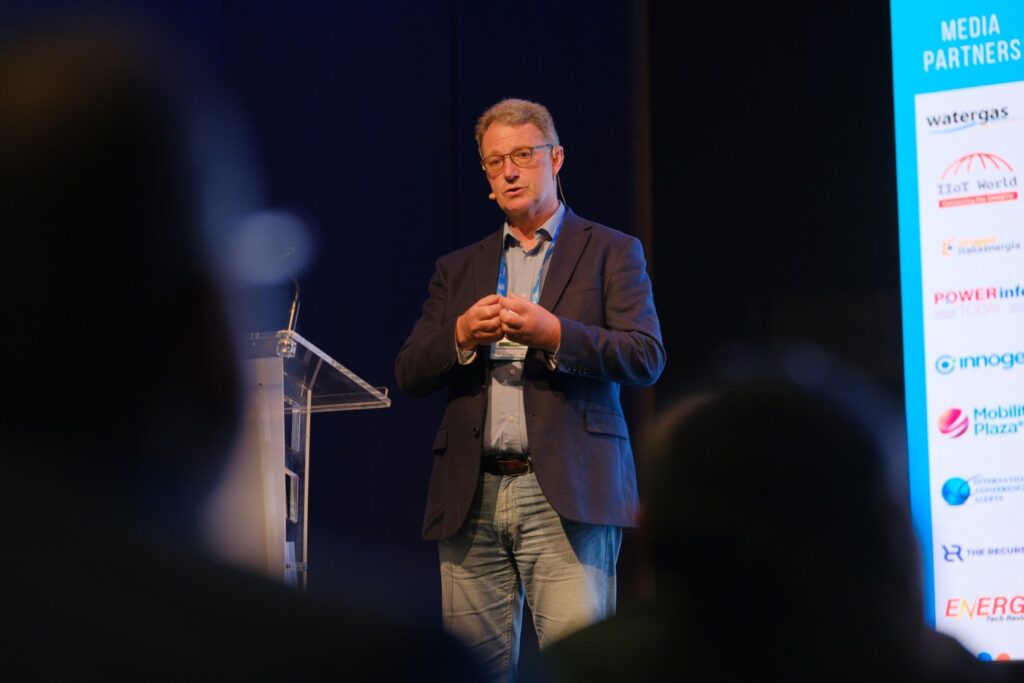
Leon Giovanni Rizzi, CEO of Jolt delivering his keynote at Energy Tech Summit 2026
Takeaway
Rizzi’s closing argument returned to where he started. The most valuable ventures have historically been built by those betting on the foundational science that entire inevitable industries require. Electrode technology is about as foundational as it gets. It sits beneath chlorine, copper, hydrogen, batteries and drinking water alike, and the dominant production method dates from 1963. What makes the pitch interesting is not the three-dimensional catalyst itself. Rather, it is the second-order effect. Making electrodes a thousand times faster does not just cut cost. It turns the factory into an experimental engine that compounds. Whether the incumbents can respond to that is a different question from whether they can copy the coating.
Energy Tech Summit Asia comes to Kuala Lumpur on September 29–30, where the hardware question meets the region that builds most of it.