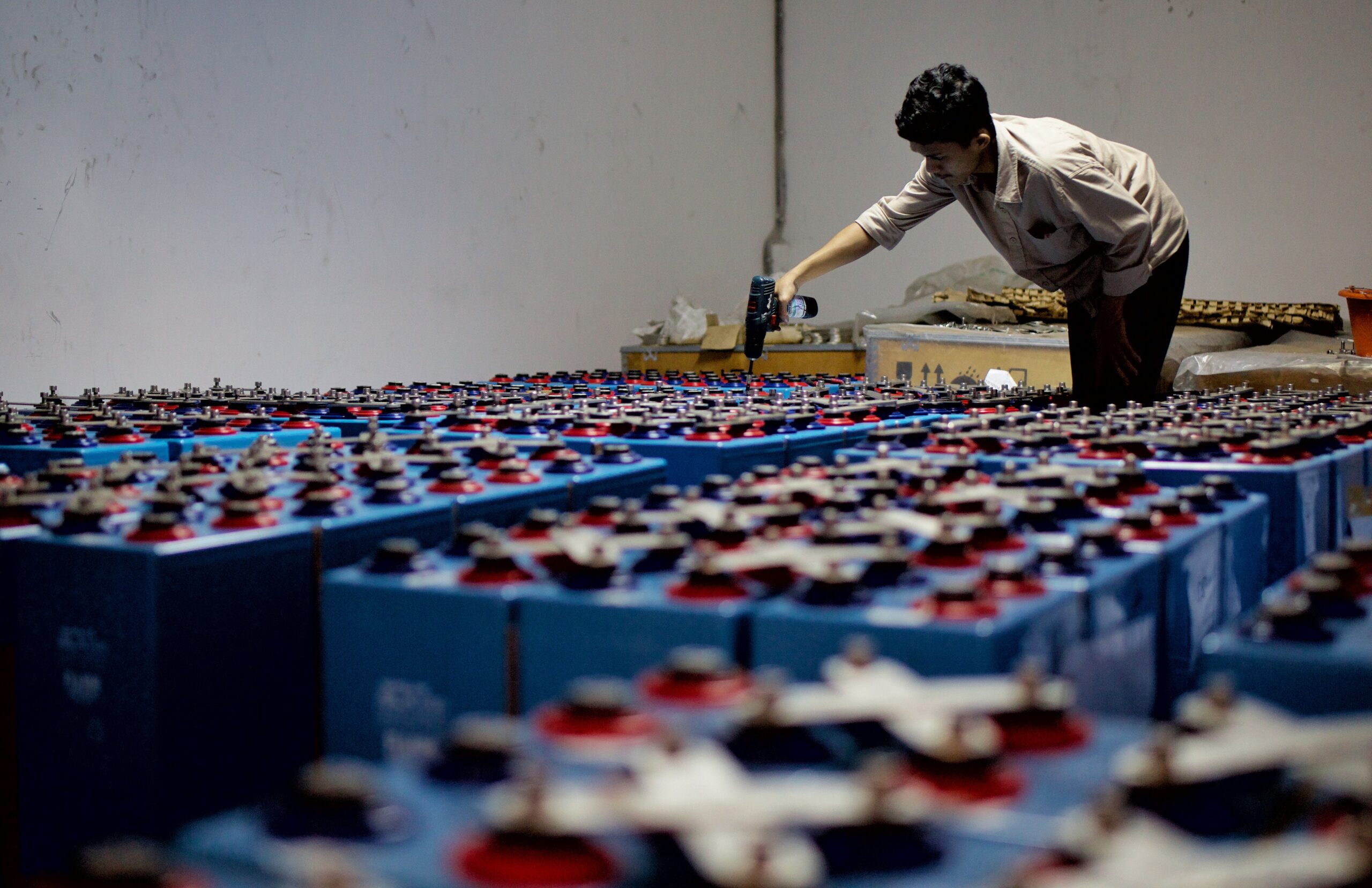
Investors and founders explained why winning in batteries now depends on unit economics, fit-for-purpose chemistries and bankability.
Asia-Pacific sits at the heart of the global battery supply chain. According to the IEA’s Global Critical Minerals Outlook 2025, China is the leading refiner of 19 out of 20 key energy minerals, with an average market share of around 70%. Meanwhile, China and Indonesia have driven most of the recent growth in battery metal refining.
As Europe and the US try to build their own supply chains, new chemistries, components and business models are emerging. For APAC manufacturers, investors and utilities, that means new partners, new competitors and new markets.
At Energy Tech Summit, a panel explored what that diversification really takes. Robina von Stein, Investor at Contrarian Ventures, moderated the discussion. She was joined by Ines Kolmsee, General Partner at Matterwave Ventures, Moshiel Biton, CEO and Co-founder of Addionics, Eloisa de Castro, CEO of Enerpoly, and Marc Bouchet, Investment Associate at TDK Ventures.
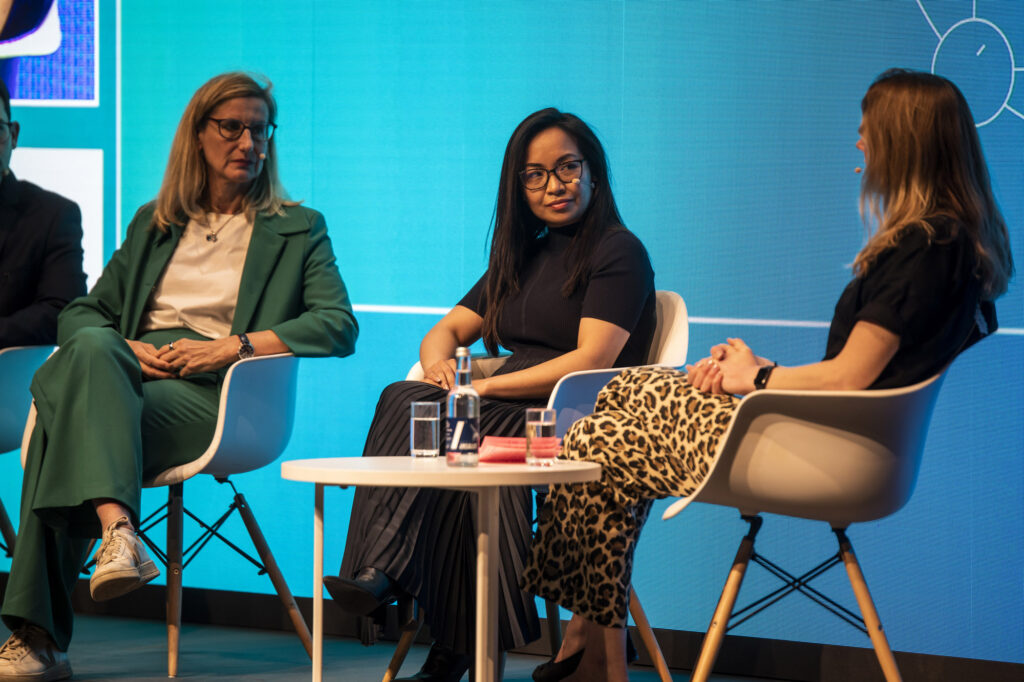
Eloisa de Castro, CEO of Enerpoly, speaking during a panel session at Energy Tech Summit 2024
How Asia came to own the battery supply chain
Von Stein opened by noting that the energy transition is also a materials transition. Access to critical minerals has therefore become a geopolitical question.
Kolmsee brought a long view. She spent 12 years on the board of Umicore, the Belgian materials company. When she joined, rechargeable battery materials were an emerging business, and the supply chain was entirely Asian – first Japanese and Korean.
Later, China entered the market as it built up its EV industry. It quickly became so industrially strong that it brought costs down in a way Japanese and Korean players couldn’t match. As a result, China took over much of that Asian supply chain.
At the time, nobody thought much about geopolitics. Instead, it was simply the cheapest option in an era of globalization. That changed only once European and American carmakers entered the EV market and geopolitical tensions rose.
Today, the industry is “absolutely” new in Europe and the US, while it is well established in Asia. In other words, “we are looking at old technologies in a way but a new place.”
Why batteries are a tough case for venture capital
Kolmsee was candid about the investment challenge. Battery materials will be a large-scale, low-margin business, and “that’s not something that usually VCs like to invest in.” Consequently, VCs need to choose areas where they can help large players become cheaper and more efficient. For her, it is “not an easy case for VC.”
Bouchet agreed that “competing on economics is incredibly difficult in the material space.” For that reason, TDK Ventures looks for companies with “a very deep unit economic advantage” from novel technology or processes.
He pointed to Ascend Elements as an example. Its direct-to-cathode recycling process skips the steps of returning materials to metal salts and resynthesizing them. At the time of the session, the company was expanding into Europe. Similarly, TDK Ventures backed Peak Energy in sodium-ion and AM Batteries in dry electrode coating.
When a startup rethinks core processes with that kind of impact, “you can get away with a venture investment.” However, strong operators matter just as much. With Peak Energy, the team had already built gigascale battery manufacturing in several regions. At that stage, “it’s almost not a technology question.”
Enerpoly’s bet on zinc-ion batteries
De Castro leads Enerpoly, a Stockholm-based company building zinc-ion batteries for medium- to long-duration stationary storage. Asked how Enerpoly plans to win against lithium, she smiled: “maybe we can ask me again after we’ve won.”
Her approach has two parts: “know your customer” and “know yourself.” Early adopters are customers who can assess new battery technologies and care about safety and sustainability. Large utilities, by contrast, buy at scale, so cost matters far more.
Materials make up a large share of battery costs. By using abundant materials, Enerpoly cuts its bill of materials significantly. On top of that, “the operational excellence absolutely has to be there,” from high yield and throughput at small scale to planning for industrialization.
Europe also offers a natural advantage. The company was founded in Sweden because its technology came out of PhD research at Stockholm University. Moreover, zinc-ion batteries use the same materials as non-rechargeable alkaline batteries, so an established supply chain and recycling infrastructure already exist. That gives the company a head start on circularity and lowers lifetime project costs.
Addionics and the overlooked current collector
Biton described a different strategy: betting on the battery race, not on a single chemistry. Nobody knows which chemistry, process or cell format will win. Therefore, Addionics built a platform that works across all of them.
The company focuses on a component that had been overlooked: the current collector. This metal foil has barely changed since lithium-ion batteries were invented. Addionics replaces it with porous 3D metal structures that hold more active material, making batteries denser.
Crucially, it produces those structures at lower cost than conventional foil. That matters because copper, as Biton put it, is “becoming like the new gold” in the electrification era. According to Biton, EVs contain three times more copper than conventional vehicles.
Addionics works from recycled copper scrap, acting as “a copper mine but in a reverse way.” Biton said the approach can reduce the copper and aluminum in a battery by up to 60%. Still, cost reduction alone isn’t enough – customers also need performance gains and supply chain support.
What carmakers and cell makers really want
Biton works closely with automakers and cell manufacturers. In his view, there is real urgency to build a stable supply chain outside China. However, “you won’t be able to compete with China by just copy paste.”
At the same time, automakers are conservative, with long qualification cycles. “The sweet spot is to be able to bring technology that will make a big impact but the change will be small,” Biton explained. That is why Addionics designed a drop-in solution that fits existing production lines.
Bouchet then pushed the debate further. Lithium iron phosphate (LFP) and NMC chemistries were developed for EVs, and China may already be winning that race. “Maybe we just say China’s won EVs and batteries,” he suggested. Instead, early-stage investors should look for new applications that create demand for a “fit for purpose battery chemistry.”
Commercial and industrial sites facing volatile energy prices could use zinc-ion behind the meter. Meanwhile, utility-scale renewable firming in the US represents a major new market. As Bouchet put it, “I want to go find the next zinc battery.” De Castro added that, by her estimate, Europe’s zinc mines could support hundreds of gigawatt hours of zinc-based storage.
Bankability is the real bottleneck
What else does a new chemistry need to scale? Kolmsee’s answer was one word: “bankability.” Banks and financing institutions have become very comfortable with NMC and LFP batteries. However, “as long as you don’t have that there will be no mass deployment.”
De Castro described two layers of bankability. First, the company itself must be able to finance operations at a lower technology readiness level than mature rivals. Second, the infrastructure it builds must be bankable over a long asset lifetime.
Grants help bridge that gap. Enerpoly has secured grants from the European Commission’s EIC Accelerator and the Swedish Energy Agency to support its first manufacturing capacity. Yet building a gigafactory takes at least five years, so “you need to work with the people that know what they want in five to 10 years.”
Bouchet noted that corporate VCs and strategic investors often help here. In mining and materials, companies frequently act as both investor and first customer for startups. Von Stein agreed that corporate VCs play a bigger role in climate tech than a decade ago, since financial investors often can’t underwrite novel chemistries alone.
De Castro also shared a key pivot. Enerpoly first planned to license its technology to battery makers. However, system integrators needed deep, hands-on support to adopt a new chemistry. As a result, “the licensing method was not really something that we could do with such a new technology.”
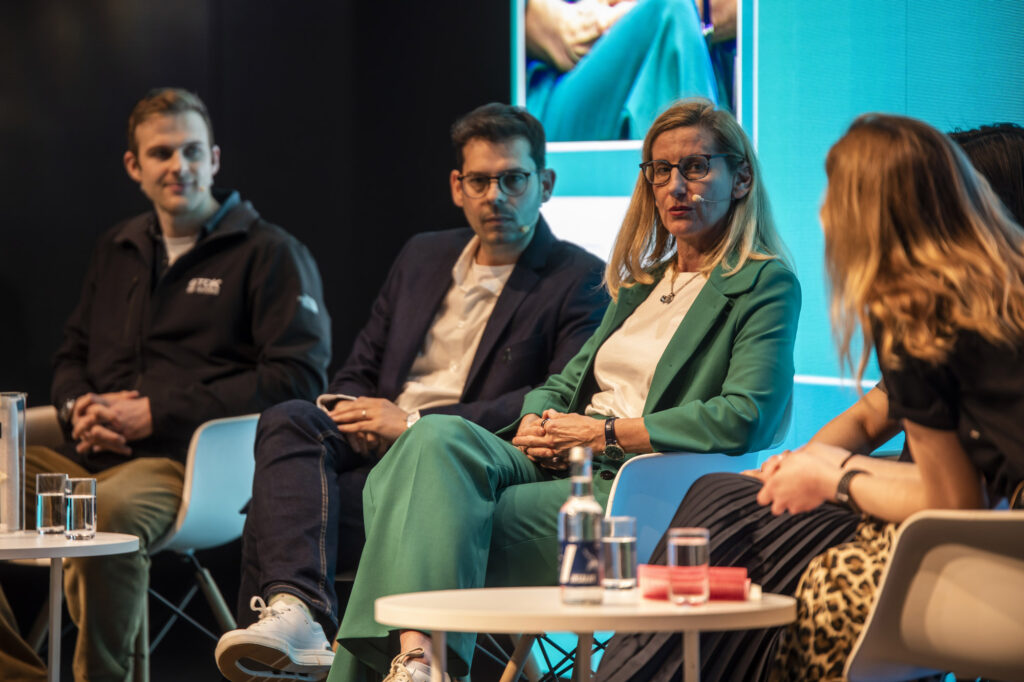
Panel session on battery supply chain at ETS2024 in Bilbao, Spain
Sustainability as a source of innovation
An audience member asked how startups handle ESG traceability in the battery supply chain. De Castro said zinc already offers a low-carbon advantage, and Enerpoly expects its factory to be among the lowest-carbon in Europe. She also pointed to emerging certifications such as the Zinc Mark.
Kolmsee added that the industry is only now waking up to supply chain ESG. Cobalt has drawn attention because of child labor, and nickel mining in Indonesia is now under scrutiny too. In her view, “this is driving innovation,” from urban mining to cobalt-free chemistries.
Bouchet agreed that regulation can create room for startups. If incentives reward low emissions and sustainable sourcing, battery manufacturing in Europe “has to be fundamentally lower carbon emissions otherwise it’s just not acceptable.”
What excites the panel most
In closing, each speaker named a priority. Bouchet suggested that better transmission and distribution could change how much storage is needed. In Kolmsee’s view, “Europe will need less storage because we have better transmission systems to start with.” She also highlighted “dirty secrets” such as sulfates from recycling and precursor production, which still lack good solutions.
Biton is most excited about the inactive components: electrolytes, binders, current collectors and separators. As production scale plateaus, he sees material savings as the next way to cut costs.
Finally, De Castro called for Europe to build on its strengths. In particular, she wants to see innovation in engineering, cost-optimized production and operations across the whole value chain.
Takeaway
Diversifying the battery supply chain isn’t about copying Asia’s model. Instead, the panel pointed to technologies with deep unit economic advantages, chemistries matched to new applications, and drop-in components that existing factories can adopt.
Above all, bankability decides what scales. Strategic investors, grants and knowledgeable early customers will play a central role in turning new battery materials into financeable assets.
Secure your pass
Dates for the next Energy Tech Summit Asia are coming soon. In the meantime, join investors, founders and corporates at Energy Tech Summit Europe 2027, the 8th edition, on 7–8 April in Bilbao, Spain.
Passes cost €1,399 until 30 November, then €1,599 from 1 December, €1,799 from 1 February 2027 and €1,999 from 1 March 2027.
Founders can join with the Founder’s Pass for €699. Use code ETS100 for €100 off.