From mining waste to nuclear reactors and aerogel paint: the six startups that came out on top in Kuala Lumpur.
Energy Tech Challengers came to Asia for the first time at Energy Tech Summit Asia 2026 in Kuala Lumpur. Over two days, more than 94 startups pitched to an investor jury across six tracks. Each track then sent one winner to the superfinal on 30 September, with ABB supporting the competition as Startup Innovation Partner.
The winners show how wide the field is for climate tech startups in Asia and beyond. Between them, they recover metals from mining waste, build nuclear reactors, watch over worksites, run buildings on autopilot, turn crop waste into carbon removal and make aerogels affordable. Here’s a closer look at each of them, plus iSensPro, winner of the PETRONAS Tech Challenge Special Prize.
The winners at a glance
- Overall winner: SiTration, Inc.
- Green Energy Infrastructure: Cosysense
- AI for Energy: Invigilo AI
- Energy for AI: Blykalla
- Climate Hardware X: SiTration, Inc.
- Climate Software X: Reclimate Sdn Bhd
- Climate X – Wild Card: Krosslinker
- PETRONAS Tech Challenge Special Prize: iSensPro
More about Energy Tech Challengers
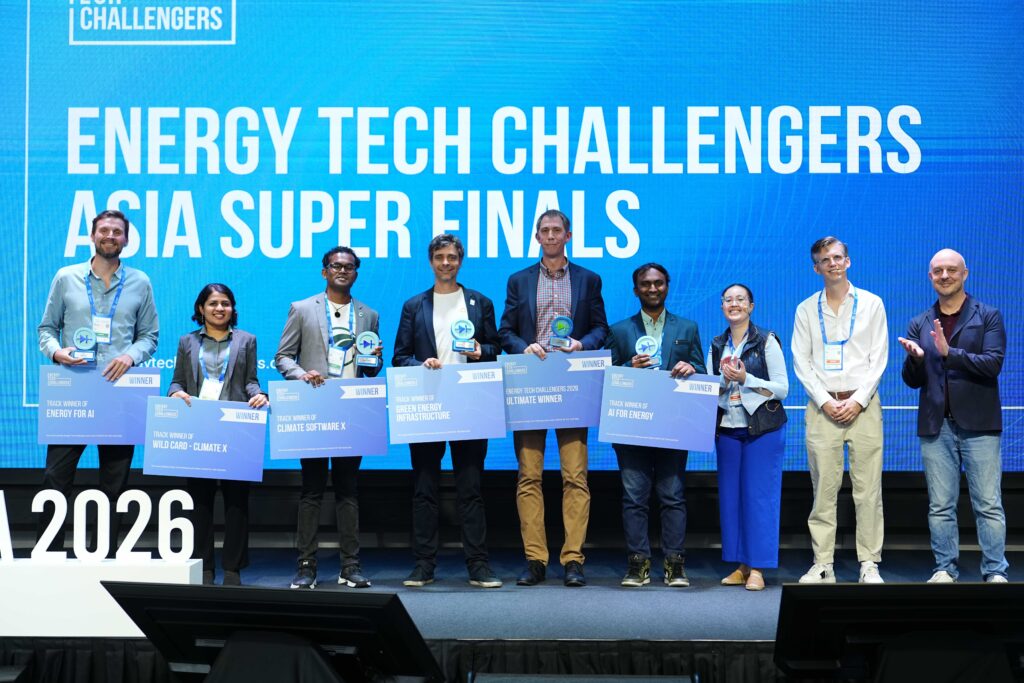
Finalists at Energy Tech Challengers Asia
Overall winner: SiTration, Inc.
Mining has a waste problem, and inside it sits a supply problem. SiTration estimates that $3.4 trillion worth of valuable metals is currently locked in mining waste, while demand for copper and other critical minerals keeps climbing.
The MIT spin-out’s answer combines silicon nano-filtration with silicon electro-extraction. The process runs on electricity with no added chemicals, and it pulls metals from even the most dilute and complex streams. As a result, waste turns into LME-grade copper, precious metals and rare earth concentrates.
The technology is now moving from lab to mine. In a trial with BHP and Copper South Australia, SiTration recovered copper at 99.9% purity from residual waste liquids. Then, in August 2026, the two companies launched a pilot at a historic BHP mine site in Arizona.
For Asia-Pacific, where mining and refining underpin entire economies, the case is clear: more metal from existing operations, with less waste left behind. Brendan Smith pitched that case all the way to the top spot.
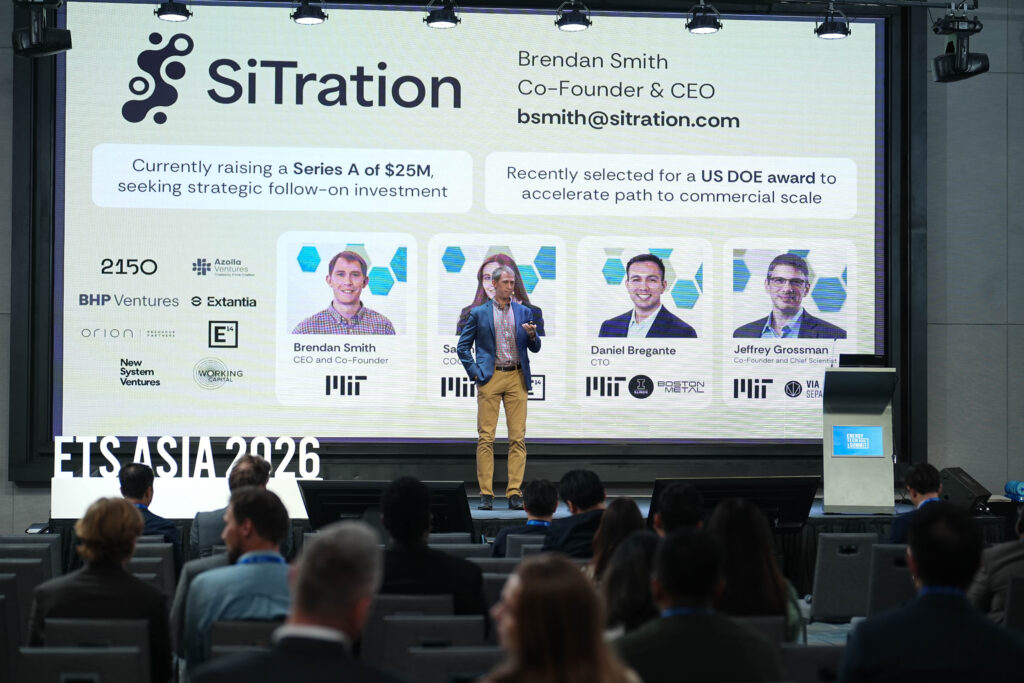
Brendan Smith of SiTration pitching at Energy Tech Challengers Asia 2026
Energy for AI: Blykalla
Data centres need power every hour of the day, and ideally they need it close by. Blykalla is building nuclear reactors designed for exactly that.
Its SEALER is a 55 MWe lead-cooled small modular reactor. Lead has been used as a reactor coolant for more than 60 years, but it corrodes conventional steel. Blykalla’s founders solved this through more than 25 years of research, developing a self-healing, aluminium-alloyed steel that keeps the lead and the steel apart.
Because the reactors are compact and passively safe, they can be built in factories and sited close to the industries they serve. Blykalla has already applied to build reactor parks at Norrsundet and Tierp in Sweden, and it has offices in New York and Austin.
On stage in Kuala Lumpur, Jon Christensen summed it up: “Small enough to be built in a factory, big enough to power data centres.”
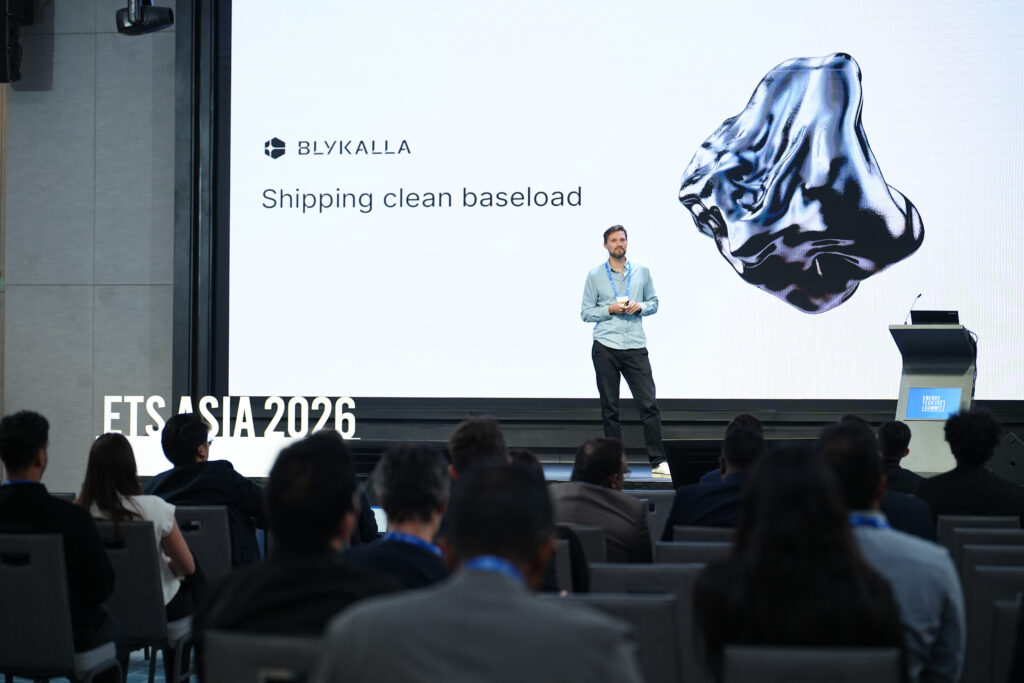
Jon Christensen of Blykalla pitching for the Energy for AI track at Energy Tech Challengers Asia 2026
AI for Energy: Invigilo AI
On a large industrial site, a safety officer can only be in one place at a time. Invigilo AI watches everywhere at once, using the CCTV cameras a site already has.
Its platform detects more than 40 workplace safety risks in real time, from missing harnesses to workers under suspended loads. Alerts reach safety teams in under a second via WhatsApp, Teams or email. On top of detection, autonomous layers run spot checks, assign and close corrective actions, and even write the morning safety briefing.
Invigilo now runs on close to 200 sites across construction, oil and gas, mining, manufacturing and logistics. Its customers include Saipem, Hyundai E&C and Lendlease. At a public housing construction project in Singapore, safety incidents fell by 60% within 12 months.
For energy infrastructure, where a single mistake can cost lives, that kind of coverage matters.
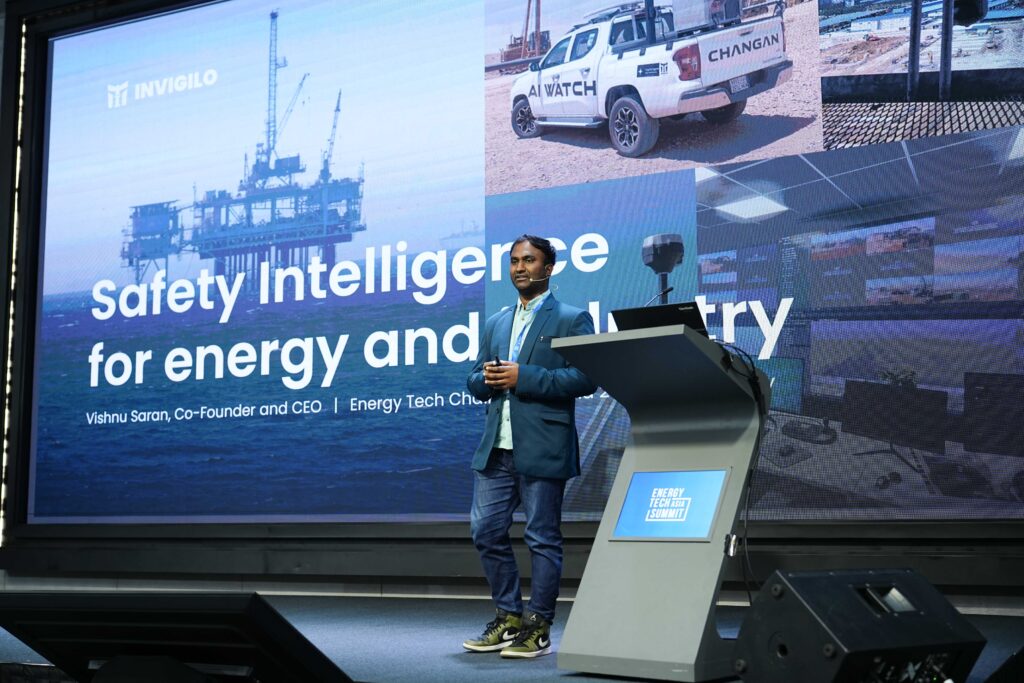
Vishnu Saran Udayagiri of Invigilo AI pitching for the AI for Energy track at Energy Tech Challengers Asia 2026
Green Energy Infrastructure: Cosysense
Heating, ventilation and air conditioning is the largest operating cost in most commercial buildings. Yet many buildings still run on fixed schedules and outdated controls. Cosysense wants to change that with CosyOS, which it describes as a nervous system for buildings.
CosyOS plugs into existing building management systems and equipment in under a day, with no rewiring. It learns how each piece of equipment behaves, then adjusts HVAC, chillers, boilers and lighting automatically while keeping occupants comfortable. Across its clients, Cosysense reports verified HVAC savings of 27–38%.
The business model takes the risk off the customer, too. There are no upfront costs, and clients pay only a share of the savings. Cosysense raised £1.5 million in 2025 and won a BCIA 2026 award for technical innovation. Its mission is to make 1 million buildings autonomous by 2035.
With cooling demand rising fast across Asia-Pacific, smarter buildings are one of the quickest wins available.
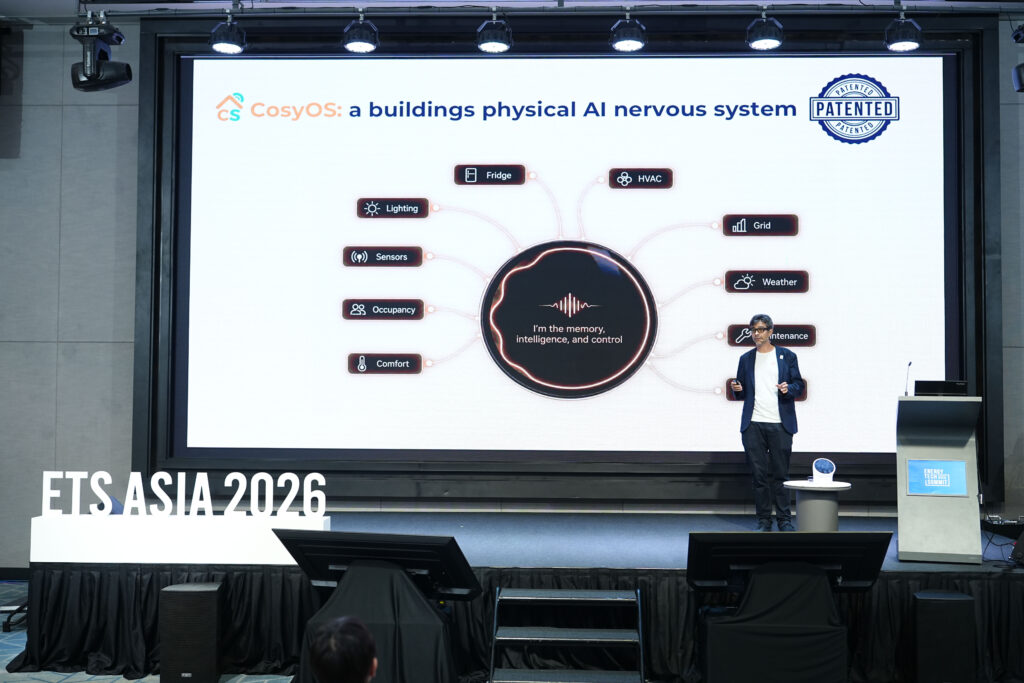
Matias Acosta of Cosysense pitching for the Green Energy Infrastructure track at Energy Tech Challengers Asia 2026
Climate Software X: Reclimate Sdn Bhd
Across Asia, crop residues often end up burned, sending a season’s worth of captured carbon straight back into the air. Reclimate turns that residue into biochar instead.
Heated without oxygen, palm oil mill waste, rice husks and forestry residues become a stable form of carbon that stays locked away for centuries. The biochar then goes back into the soil, where it helps hold water and nutrients on tired farmland.
Reclimate runs the whole chain itself: project deployment with local partners, digital monitoring, reporting and verification, and access to carbon markets. Mills and farms get an on-site unit with no capital outlay and a share of the carbon revenue. Meanwhile, its projects are audited by CERES-CERT, registered under Carbon Standards International and rated by Sylvera.
The company started with a single biochar project in Malaysia and now works across the Global South. Winning in Kuala Lumpur made it a home victory.
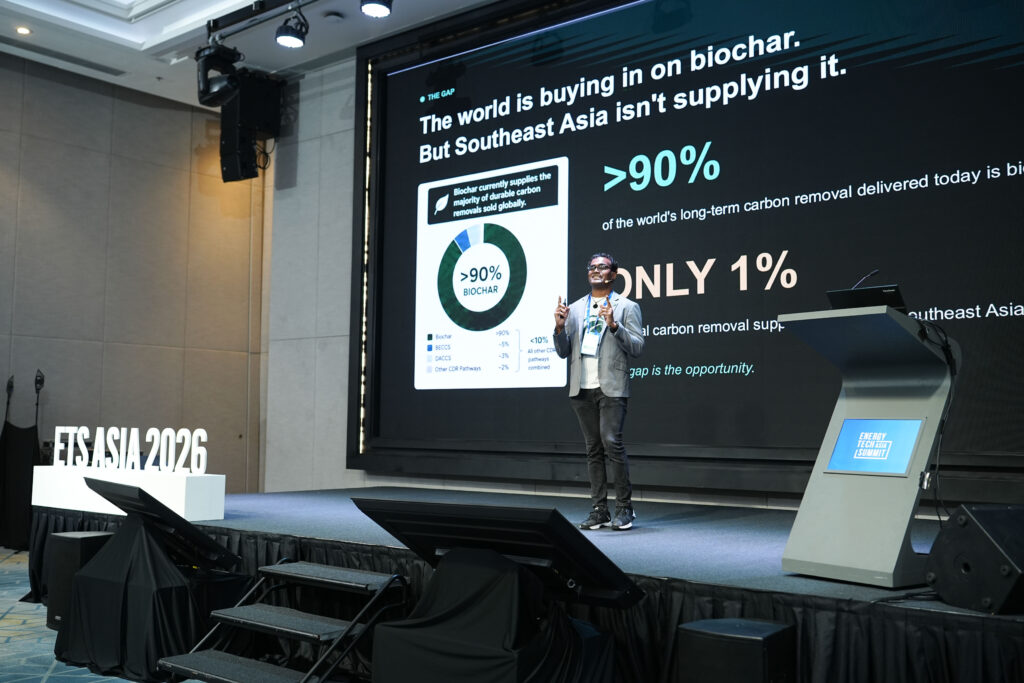
Yovindra Kanezin of Reclimate receiving pitching for the Climate Software X track at Energy Tech Challengers Asia 2026
Climate X – Wild Card: Krosslinker
Aerogels are the most insulating solid in the world, but they have long been too expensive for everyday use. KrossLinker’s ASPIRE platform changes the economics, with a water-based formulation and fast, low-energy manufacturing.
The Singapore deep-tech company already has several products on the market. Its Cryar® aerogel boards protect vaccines and other temperature-sensitive pharmaceuticals in transit. KrossShield SR Pro™ is an aerogel-powered cooling paint that helps buildings stay cooler and use less energy. QuintAero® is an ultra-light aerogel powder for other applications.
In a warming region, passive cooling is a climate solution in its own right. That’s why the jury handed Gayathri Natarajan the Wild Card title, which recognises solutions in markets you don’t usually associate with climate tech.
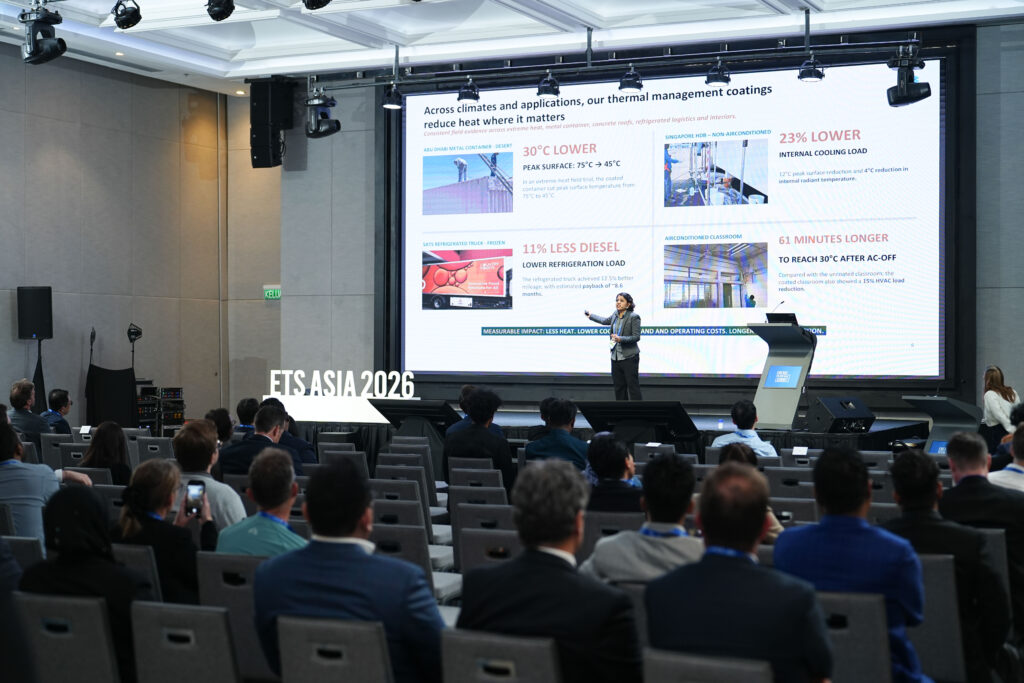
Gayathri Natarajan of Krosslinker pitching for the Climate X Wild Card at Energy Tech Challengers Asia 2026
PETRONAS Tech Challenge Special Prize: iSensPro
Alongside Energy Tech Challengers, we also collaborated with Petroliam Nasional Berhad (PETRONAS), our Innovation Partner and a leading global energy company committed to delivering responsible and sustainable energy solutions that drive societal progress.
Through its corporate accelerator programme, PETRONAS works with high-potential technology innovators to identify, validate and scale breakthrough solutions for real-world industrial applications. Startups get the chance to pilot their technologies in operational environments, accelerate commercial adoption and open pathways to global markets with PETRONAS and its industry partners.
At Energy Tech Summit Asia, eight startups pitched in the PETRONAS Tech Challenge. The focus was on PETRONAS’ current innovation priorities: industrial energy efficiency and decarbonisation, particularly waste heat recovery, advanced cooling systems, smart heat tracing and next-generation insulation.
Biggest congratulations go to the iSensPro team, winners of the PETRONAS Tech Challenge Special Prize. The company tackles corrosion under insulation, a hidden threat in which moisture trapped beneath insulation slowly eats into pipes and tanks. Left undetected, it leads to leaks, plant shutdowns and unsafe working conditions.
iSensPro’s non-intrusive sensors sit on top of the cladding, so there’s no need to remove insulation or stop operations. They continuously track moisture, coating degradation and corrosion around the full circumference of a pipe or tank. The CORIA platform then turns that data into timely maintenance decisions. The win opens a path for iSensPro to pilot its technology in PETRONAS’ operations.
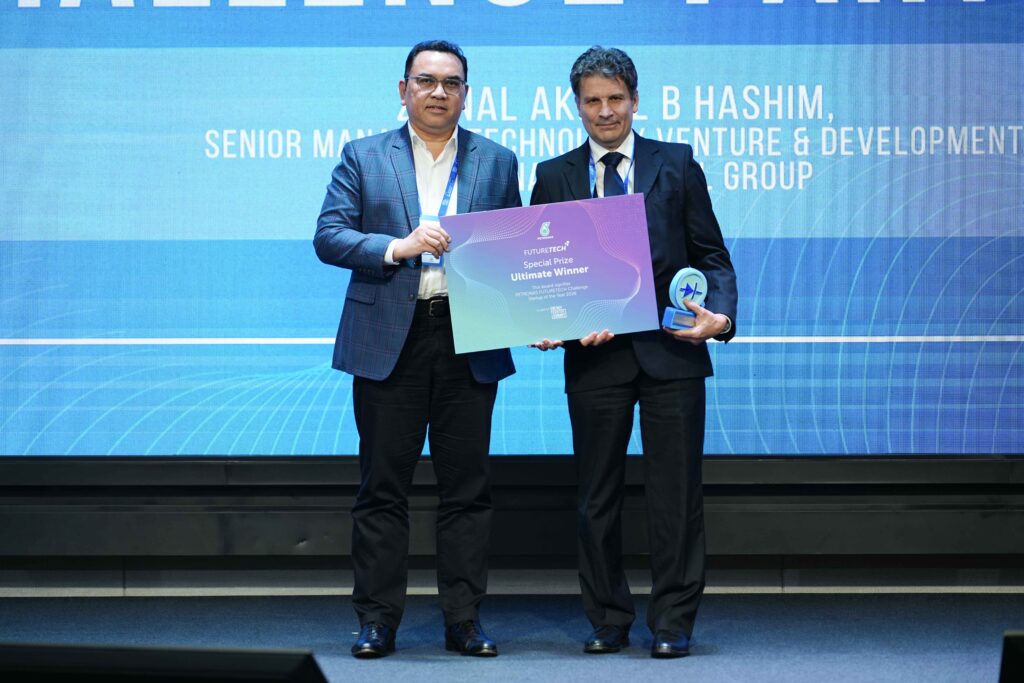
Yves Desmet of iSensPro receiving the PETRONAS Tech Challenge Special Prize at Energy Tech Summit Asia 2026
Takeaway
This year’s winners have one thing in common: they solve problems industry is already paying for. Whether it’s mining waste, worksite safety, building energy or crop residue, each one turns a cost into an opportunity. That’s exactly the kind of climate tech Asia-Pacific needs to grow and decarbonise at the same time.
See you in Bilbao – and back in Asia soon
Plans for the next Energy Tech Summit Asia are already under way, and we’ll share dates as soon as they’re confirmed.
Until then, the conversation continues at Energy Tech Summit Europe 2027 on 7–8 April in Bilbao, Spain. It’s the 8th edition of the summit, bringing climate tech founders, investors and corporates together for two days of pitches, panels and 1:1 meetings.
Passes are €1,399 until 30 November. Founders can join with the Founder’s Pass at €699, and code ETS100 takes €100 off.