
Annual accounting lets a company match summer solar against winter demand. Renewabl’s case for procurement measured hour by hour.
Hourly energy matching matters more in Asia-Pacific than the region’s reporting rules currently suggest. Many corporates here meet renewable targets with unbundled certificates, often bought from a different market than the one where they consume. Meanwhile, the data centres driving new demand run flat around the clock, while solar output does not. So the gap between an annual claim and a physical one is often wider here than in Europe. The question is how long annual accounting stays acceptable.
Why hourly energy matching is more than accounting
On paper, the idea sounds like an accounting detail. Juan Pablo Cerda, CEO and co-founder of Renewabl, used his Energy Tech Summit 2025 keynote to argue otherwise. In his view, it is the difference between a renewable claim being true and being a rounding exercise.
He opened with demand. The world’s hunger for data is pushing energy consumption up at a remarkable pace, and AI compute is compounding it. That growth will outpace capacity in many countries. So staying on a 1.5-degree path means the majority of new demand has to come from renewables.
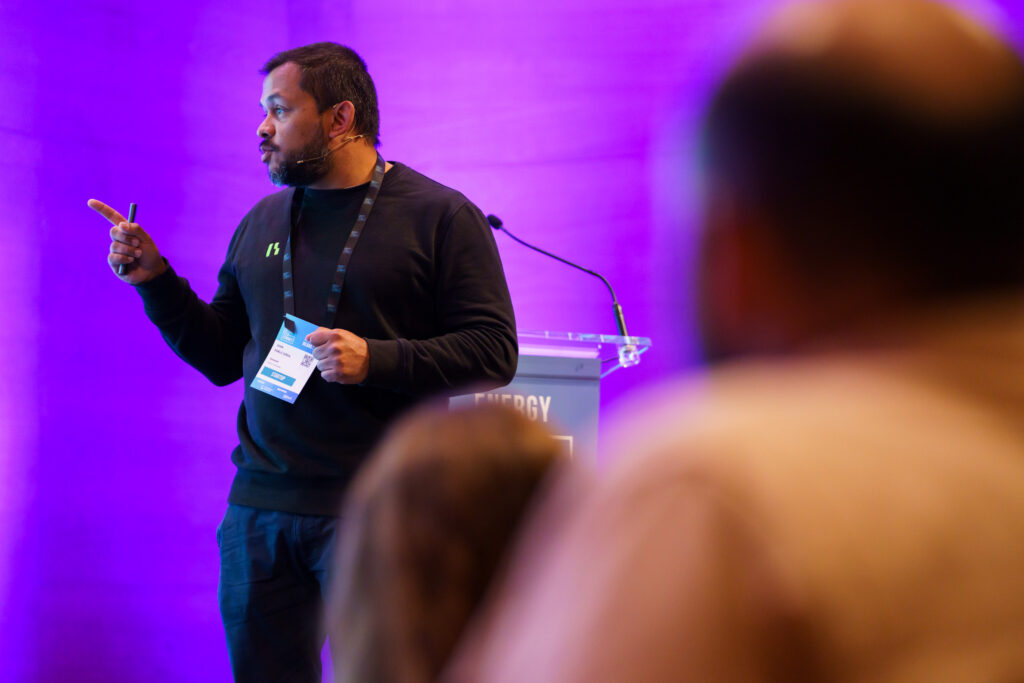
Juan Pablo Cerda, CEO & Co-founder of Renewabl
What annual matching hides
His demonstration of why hourly energy matching matters was the strongest part of the keynote. It works because it is visual.
Start with a customer consuming steadily around the clock, such as an industrial site or a data centre. The status quo is to offset that consumption with certificates or PPAs on an annualised basis. That produces a tidy 100% renewable claim.
Then apply reality. Wind does not blow constantly, so a wind profile does not match that flat line. The sun does not always shine either, particularly in the UK. In short, corporate energy needs simply do not align with renewable production hour by hour.
Geography compounds it. Many corporates buy certificates from countries with an abundance of cheap ones, with Norway the standard example, while consuming somewhere else entirely. A company in Spain, for instance, needs certificates sourced considerably closer to home.
Consumption itself, moreover, is not flat. It moves hourly.
Put those together, as hourly energy matching does, and the picture changes shape. There are excess solar certificates in some hours and uncovered gaps in others, with PPAs and green tariffs layered unevenly across the day. That produces Cerda’s central claim. Most companies claiming to be 100% renewable are not.
What the hourly energy matching platform does
Renewabl tracks the impact of every contract and every wind and solar asset connected to it. It links directly to smart meters, then produces a carbon-free energy score that functions as a decarbonization index.
Reporting is built to match the initiatives corporates already answer to. Cerda’s argument is that hourly energy matching is moving from voluntary to mandatory. That means reporting energy on an hourly basis, and knowing the impact of each contract. Where does it come from, and does it carry genuine additionality?
The product splits in two. One side measures how well existing contracts match hour by hour, and what each actually delivers. The other side sources energy, tendering and contracting the most traceable, local and cost-efficient supply available.
His framing of the timeline was the commercial point. This is not an optional refinement. It becomes a requirement between now and 2030.
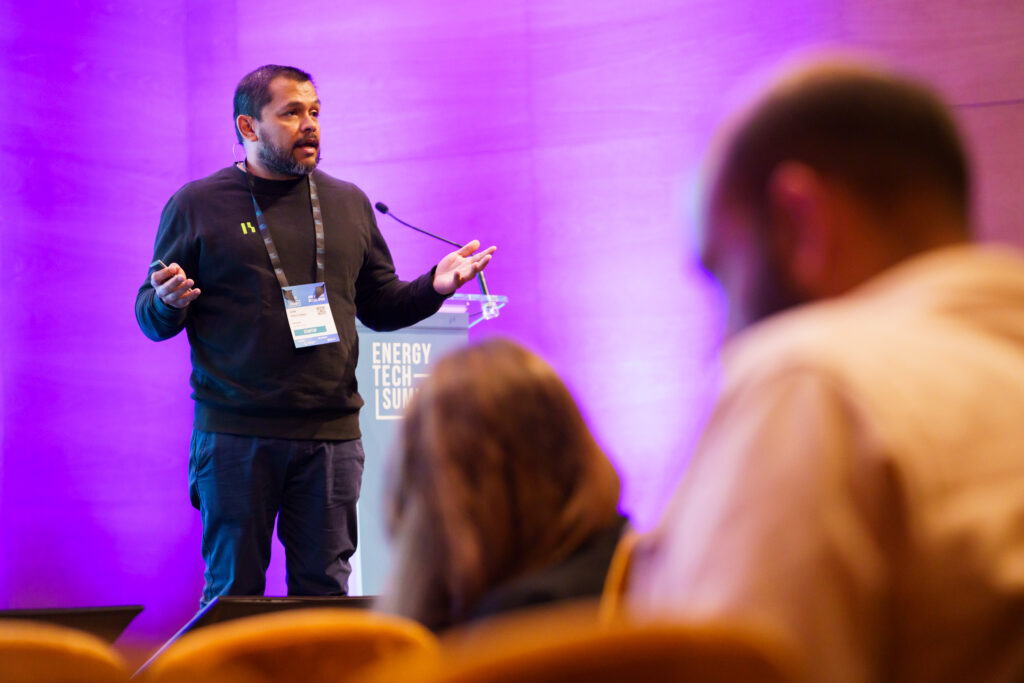
Juan Pablo Cerda, CEO & Co-founder of Renewabl
Takeaway
Hourly energy matching reframes a claim companies believe they have already settled. Annual accounting made renewable procurement tractable when the alternative was nothing. However, it permits matching that does not exist in physical time, such as summer generation against winter load, or Nordic certificates against Iberian consumption. Granular matching removes that slack, which is uncomfortable for anyone currently reporting 100%. It also makes the claim mean something, and that is why the reporting frameworks are moving toward it.
Energy Tech Summit Asia comes to Kuala Lumpur on September 29–30, where data centre demand and clean procurement meet. Founder’s Pass is €549, fixed.