Millions of EVs could strain grids at peak time. Gridio wants to turn them into a flexible, revenue-generating resource instead.
EV smart charging solves a problem Asia-Pacific is walking straight into. EV adoption across the region is climbing fast, and evening charging peaks tend to land exactly when demand already tops out. Meanwhile, rooftop solar output peaks at midday, when few cars sit at home plugged in. So the same mismatch Europe is working through appears here, often on grids with less headroom. The model below is European, but the arithmetic travels.
A gigawatt at the click of a mouse
Braeden Holmes, VP of Business Development at Gridio, opened his Energy Tech Summit 2025 keynote with a thought experiment. “Imagine if you could turn on or off with a click of a mouse a gigawatt of electricity.” For Gridio, that is the promise of EV smart charging. In short, millions of home vehicles can shift from a grid problem to a source of flexibility, without extra cost for utilities.
Why gas plants cannot carry the EV boom
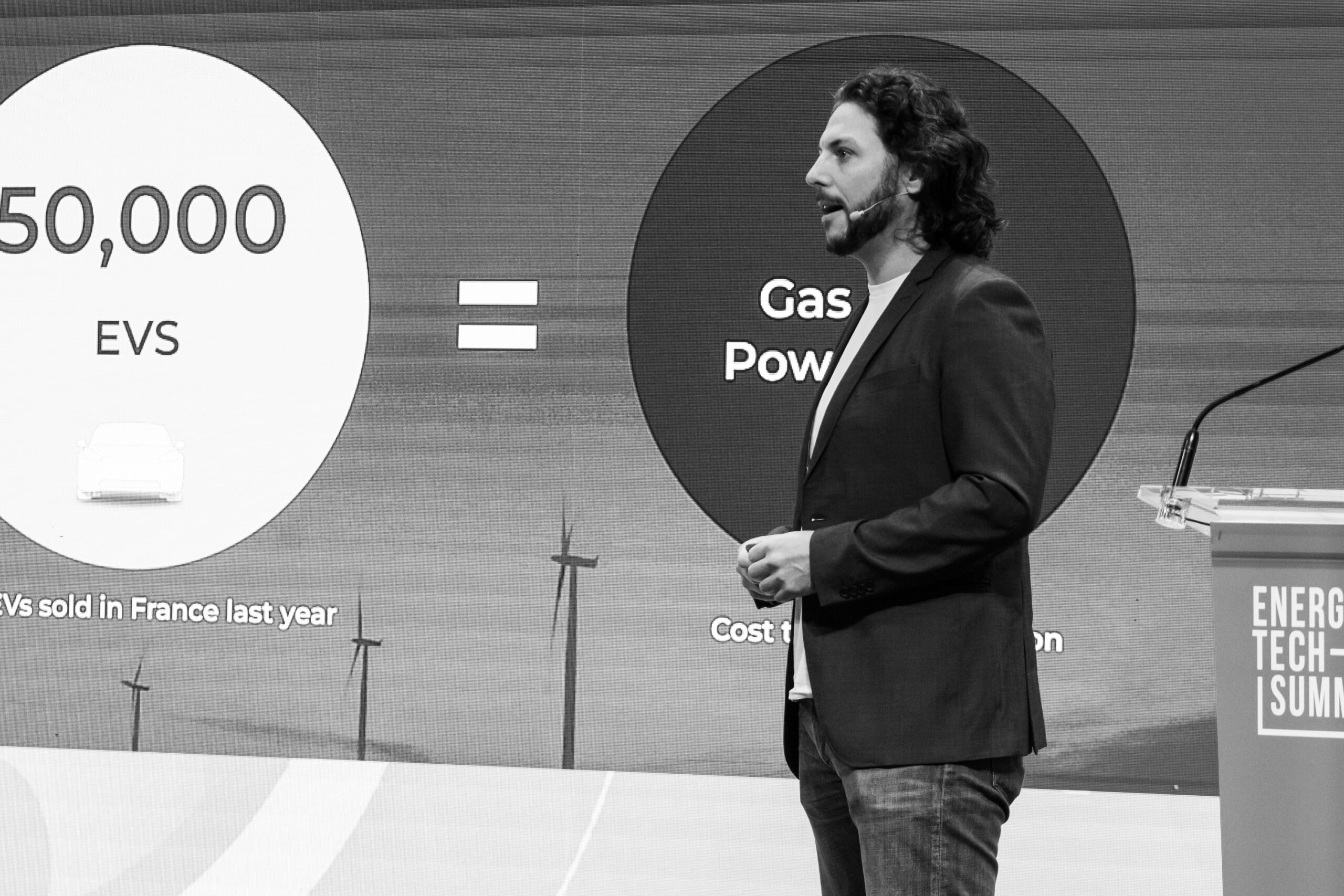
Today, flexibility usually comes from gas-fired power plants. According to Holmes, an average plant costs around a billion dollars to build, and covers peak charging for only about 50,000 EVs. That makes gas an expensive way to add flexibility.
Meanwhile, the scale ahead is far larger. Around 70 million EVs could be on EU roads by 2032. At peak, they would need roughly as many gas-fired plants as the EU operates in total.
At the same time, many EV owners will also have rooftop solar. Holmes estimated that some 20 million EV households will have solar panels, adding about 100 gigawatts of generation. Much of that output otherwise goes to waste. Gridio therefore uses EV smart charging to harness both assets at household level.
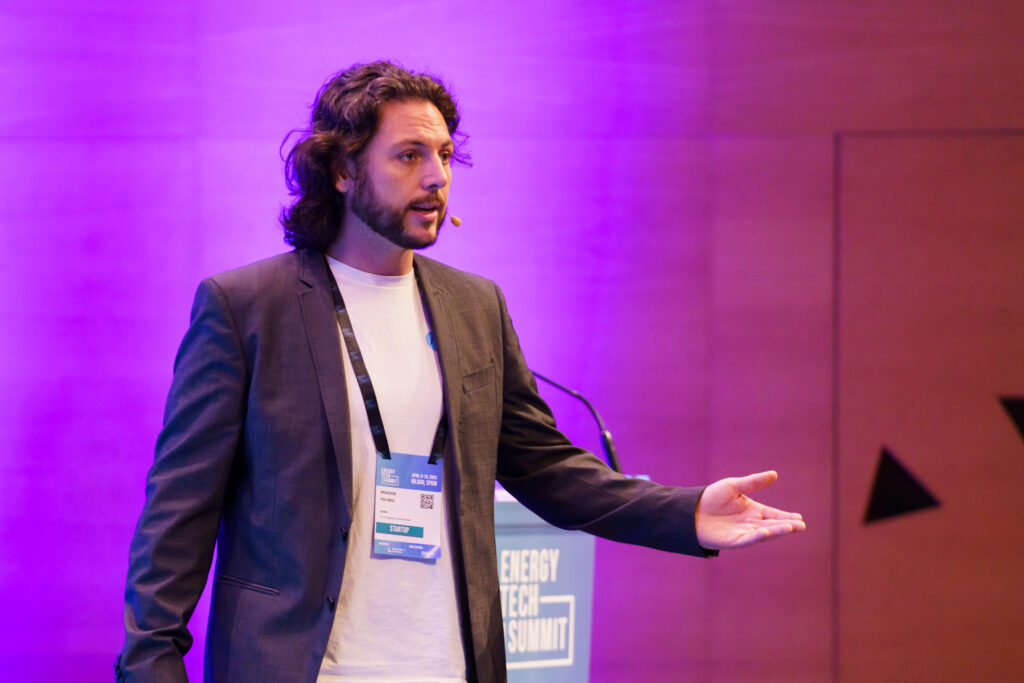
Braeden Holmes, VP of Business Development at Gridio
How EV smart charging works for drivers
The core idea is simple. Most drivers plug in when they get home in the evening, just as demand peaks and gas plants ramp up. Instead, Gridio shifts charging to overnight hours or to periods of solar generation, when power is cleanest, cheapest and most abundant.
Crucially, Gridio delivers EV smart charging “with no additional hardware”. Gridio connects directly to car manufacturers through APIs, then runs its algorithms in the cloud. Drivers download the app, choose their vehicle and connect in about a minute. Next, they set a departure time and a target charge level. From there, the app waits for low tariffs and makes sure the car is ready on time.
Solar owners can also link their inverter, or enter its capacity manually if no native integration exists. Many solutions only switch to solar once output is high enough for a full charging rate. Gridio, by contrast, can use solar down to near-trickle levels, so it captures more of the day’s generation. Holmes described Gridio as the first on the market to offer intelligent solar charging. Looking further ahead, vehicle-to-grid could make this even more valuable.
From consumer app to utility partner
Gridio started as a consumer app and grew largely through word of mouth. The company has more than 35,000 users, who pay €3.75 a month and save around €200 a year on average, a cost reduction of about 34%.
Now the focus is shifting to utilities. Every utility has a portfolio of customer EVs whose flexibility goes unused. Rather than start with a slow, resource-heavy API integration, Gridio begins with a white-label app in the utility’s branding. Gridio launched TotalEnergies’ Smart Charge+ app this way in four weeks, piloting it with employees before a wider rollout.
From there, the EV smart charging model moves through three stages: pilot, customer adoption and, finally, profitable flexibility. Some utilities charge customers a subscription, while others offer the app for free to drive uptake. Either way, they gain flexibility along with data on when and how customers charge. That data helps them forecast EV demand on their networks. It also supports acquisition and retention, because “EV customers are very profitable”.
Why focus matters
Holmes contrasted Gridio with competitors that target the whole home. As he put it, “We are laser focused on EVs”, covering smart charging, intelligent solar charging and home batteries. For utilities, that focus means fast launches, new revenue and fewer gas plants switched on at peak. Gridio is expanding across the Nordics, Germany and the UK.
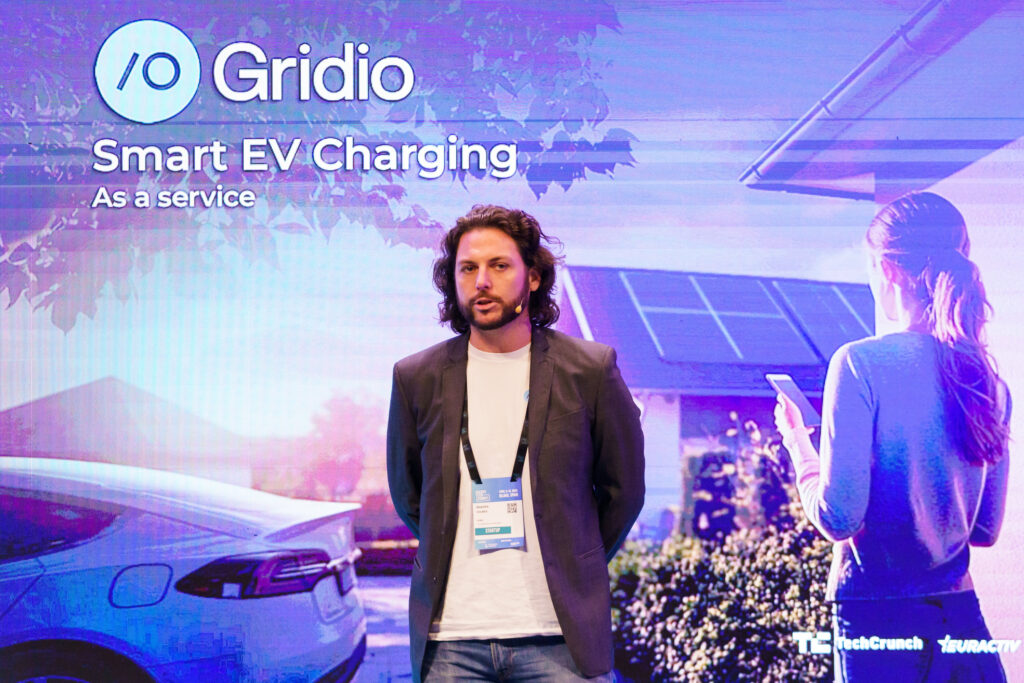
Braeden Holmes, VP of Business Development at Gridio
Takeaway
EV growth does not have to mean grid stress. With EV smart charging, the same vehicles that push up peak demand can become a distributed source of flexibility. Because the approach relies on software rather than new hardware, it can scale quickly. That gives drivers, utilities and grids a shared reason to charge smarter. For solar-rich Asian markets adding EVs onto tight grids, the case is arguably stronger still.
Energy Tech Summit Asia comes to Kuala Lumpur on September 29–30, bringing together the startups making grids more flexible. Founder’s Pass is €549, fixed.