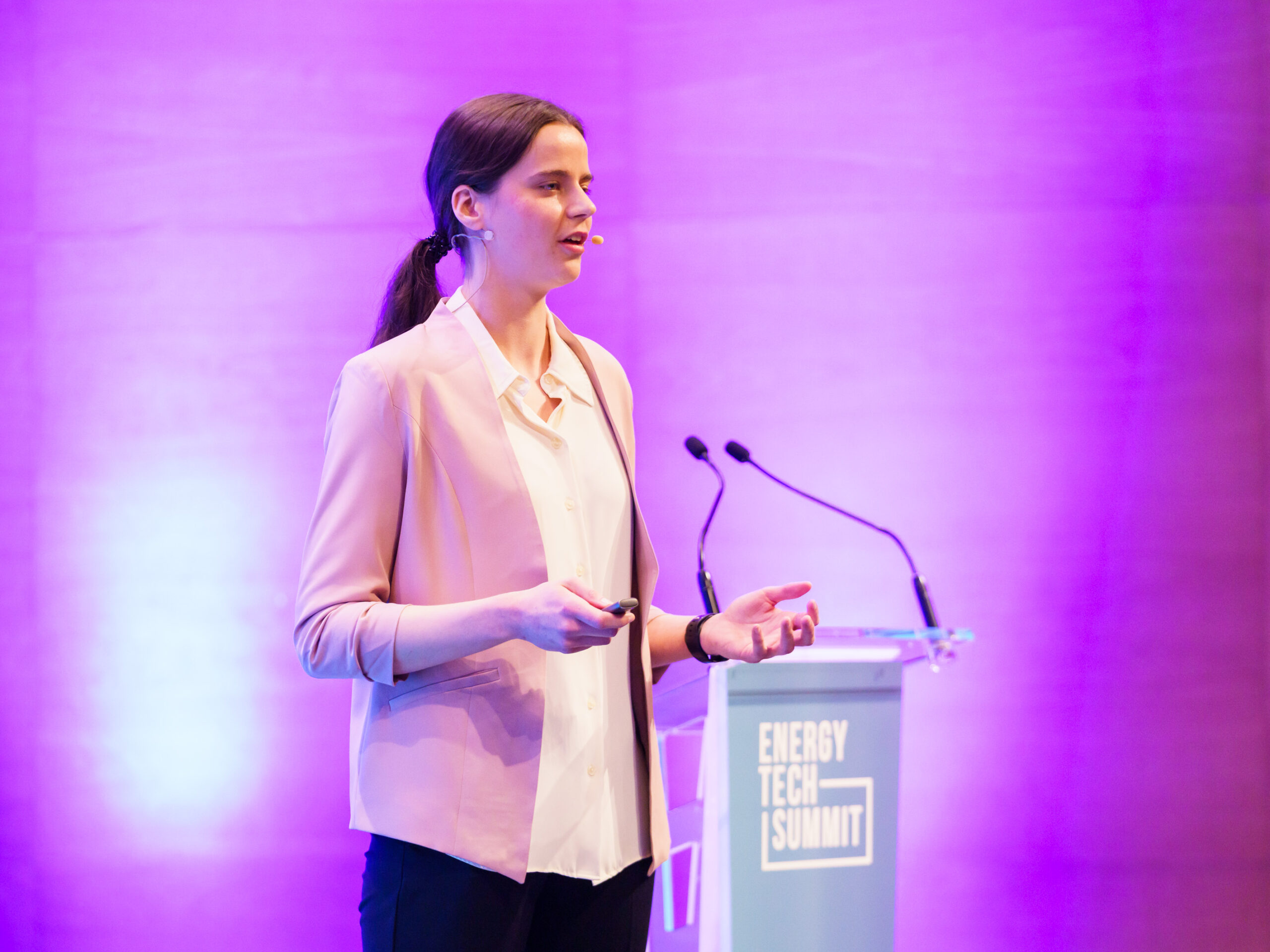
Copying the incumbent battery playbook is not working. Alteva Technologies argues that a different chemistry, built on abundant sulfur, could change the game.
Lithium-sulfur batteries look different from Asia, where most of today’s battery chain already sits. The region processes the large majority of the world’s battery materials, and its refineries produce sulfur as a byproduct in large volumes. So a chemistry built on sulfur is not a bid to escape Asian supply. Instead, it is a way to move away from mined nickel and cobalt, using an input the region already has. The keynote below was pitched at Europe. The chemistry argument, however, is not regional.
Batteries are already everywhere
Batteries already power cars, e-bikes, boats, home storage, grids and the phones in our pockets. As Ida Milow, Founder and CTO at Alteva Technologies, put it at Energy Tech Summit 2025, “batteries really already are everywhere”. In her keynote, she explained why today’s dominant chemistries fall short. She also made the case that lithium-sulfur batteries could shape the next generation.
Why copying the incumbent playbook is not working
Looking at the European battery sector, Milow admitted “it’s not looking so bright”. Several companies are trying to scale production quickly by copying what China built over two decades. However, that has proven very difficult. Instead, she suggested stepping back to ask which technologies should actually be scaled.
Most lithium-ion batteries today rely on two chemistries. NMC cells use nickel, manganese and cobalt, while LFP cells use lithium iron phosphate. Both depend on mined materials, which damage surrounding environments in a way lithium-sulfur batteries avoid. Cobalt mining in Congo is also linked to human rights abuses. “That’s not something I want to see in the future I’m trying to build.”
The supply chain adds another risk. More than 90% of battery material processing and cell production takes place in China. Such heavy dependence on a single country, Milow warned, has rarely worked out well in the past.
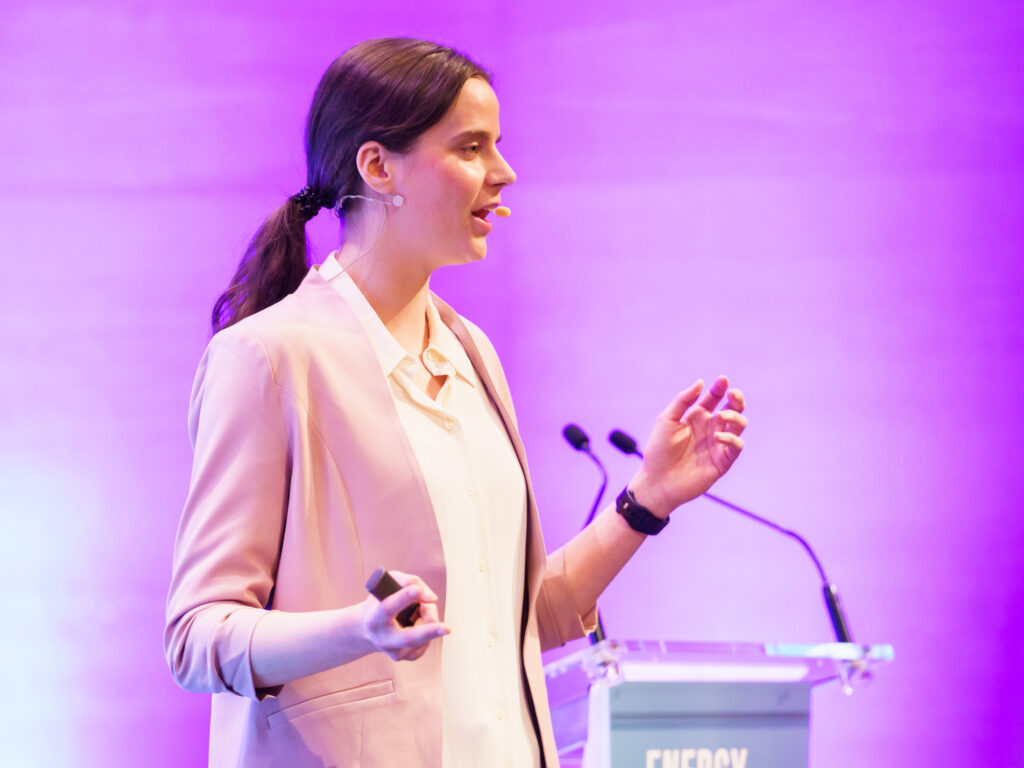
Ida Milow, Founder & CTO at Alteva Technologies
Weight and safety hold electrification back
Electric cars already work well. Yet planes, trucks, agricultural equipment and mining machinery also need to electrify, and they share one problem. “Current batteries are still way too heavy.” Flying an electric plane with today’s cells simply is not realistic.
Safety is the second barrier. Once a lithium-ion battery catches fire, it is nearly impossible to extinguish, and it can burn for a long time. In a car, drivers can pull over and get out. In an aircraft, by contrast, “that’s just a safety risk that is not acceptable.”
How lithium-sulfur batteries tick every box
So what would an ideal battery look like? Its materials would be locally available, need no mining, cost little and harm no ecosystem. The battery itself would be much lighter than lithium-ion and far safer. “It kind of sounds too good to be true,” Milow said. Nevertheless, lithium-sulfur batteries can deliver exactly that, replacing NMC and LFP materials with a sulfur composite.
Weight is the first advantage. Pick the best elements for a battery from the periodic table, and you would choose lithium and sulfur. In fact, “they make the lightest batteries possible with solid materials.” According to Milow, they weigh around one-third as much as current lithium-ion batteries. That could open the door to emission-free electric flights between cities.
Safety is the second. Lithium-ion cells burn so fiercely because they contain oxygen, which reacts violently with lithium. Sulfur cells, however, contain no oxygen. “And that makes one hell of a difference.” To illustrate, Milow showed a nail penetration test. Within seconds, the difference between a common lithium cobalt oxide cell and a lithium-sulfur cell was stark. As she told the audience, “you can choose for yourself what kind of battery you would like to have in your pocket”.
A local supply chain, wherever you are
Sulfur is also a waste product of many industries, so there is plenty of it. Consequently, no mining is required. It plays a role in many biological processes and is not toxic to the environment. Moreover, sulfur is among the most common elements on Earth, available almost everywhere.
For Europe, Milow framed that as a rare opportunity. Every material for lithium-sulfur batteries is available locally, so the region would not depend on third countries. Alteva has developed the technology and wants to build “batteries from Europe for Europe”. The company is now starting to scale production. The same logic, of course, applies to any region with sulfur on hand.
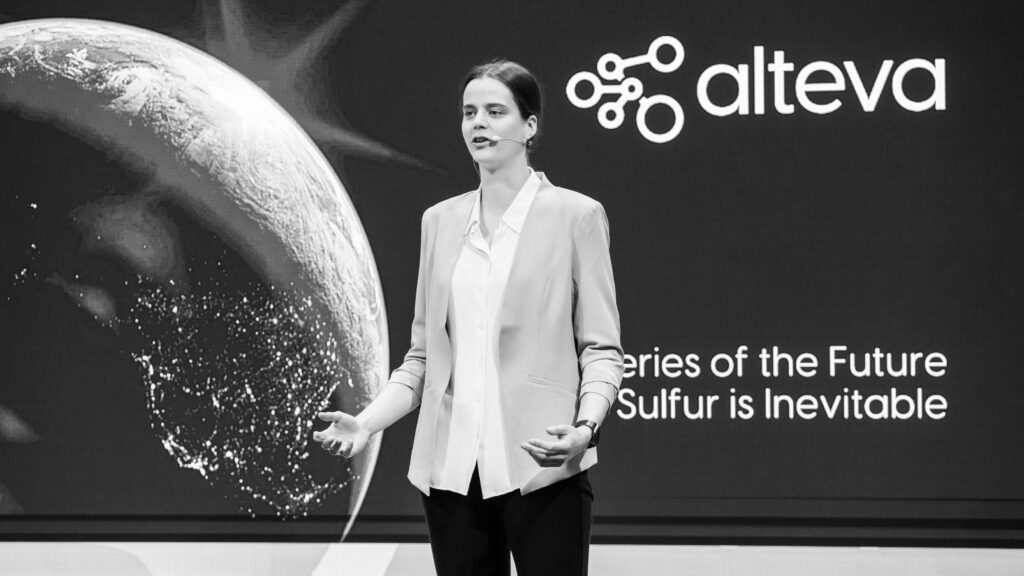
Ida Milow, Founder & CTO at Alteva Technologies
Takeaway
Nobody wins the next battery race simply by copying the last one. Lithium-sulfur batteries offer a different path. They promise lighter cells for planes and trucks, far lower fire risk, and a supply chain built on abundant materials rather than mined ones. Milow pitched that as Europe’s route to independence. For Asia, which already hosts most of today’s battery chain, the same chemistry reads less as independence and more as diversification away from nickel, cobalt and the mining behind them.
Energy Tech Summit Asia comes to Kuala Lumpur on September 29–30, in the region that builds most of the world’s batteries. Founder’s Pass is €549, fixed.