An NDA that took four months, a utility that cannot see its own low-voltage network, and a panel that agreed the bottleneck is orchestration rather than capacity.
Asia-Pacific has this problem on the tightest timeline. Much of the region’s grid infrastructure was built decades ago for one-way flows. It carried power from large thermal plants to industrial demand. Now, however, that same network has to handle hyperscale data center load. It also has to absorb fast-growing distributed solar. Some markets must link across borders as well. So the question is not only how much new capacity gets built. It is whether anyone can see and orchestrate what already exists.
That framing shaped a panel at Energy Tech Summit 2026. Andrew Beebe, Managing Director at Obvious Ventures, opened it with a question. Is the grid broken and in need of replacement? Or can the sector redesign it while it scales?
Who was on stage
Bartosz Kowalczyk is Technology Leader for Grid Digitalization and AI at ConnectPoint. There, he works on digitalization and AI technologies for utilities.
Jørgen Festervoll is CEO of Heimdall Power, a grid enhancing technology company. It provides sensors and software that give utilities situational awareness of their networks. Through dynamic line rating, that awareness squeezes more capacity out of the existing grid.
Jutta Wuebken is a Director at Stifel, a US-listed investment bank. The firm is highly active in Europe, helping companies raise money and navigate M&A. Her reason for joining the panel was straightforward. Every time she works with a company, she must assess its business model. She also has to judge its viability for investors.
Julien Cristiani is a General Partner at SE Ventures. The firm invests in energy and industrial tech companies, and Schneider Electric backs it.
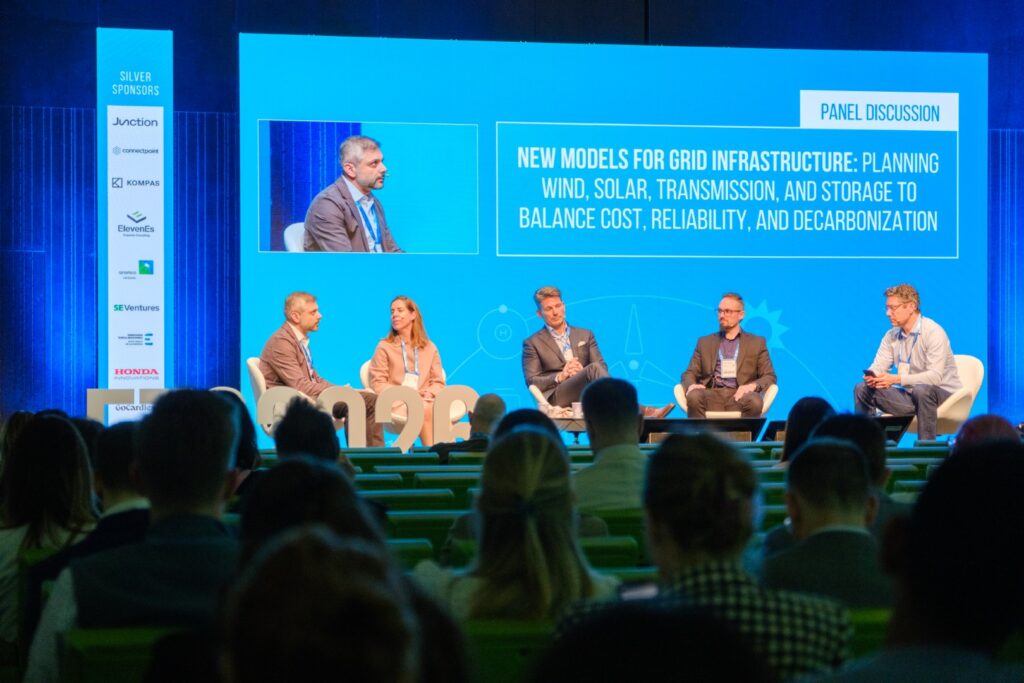
Speakers of the session at Energy Tech Summit 2026
Not broken, but badly managed
Wuebken’s answer set the frame for the session. She does not think the grid is broken or flawed. She does think, though, that it is badly managed.
A network built for one-directional flows now absorbs EVs, heat pumps and solar. On top of that, bidirectional charging is arriving. So her conclusion was blunt. The sector has to invest more and innovate more, simply to keep the grid running.
Festervoll echoed the diagnosis and then sharpened it. Engineers built the grid brilliantly for one job: centralized, one-directional flow. Now, however, it serves a 21st century energy system nobody planned for. His description: underdigitalized, under-observed and under-optimized.
The four-month NDA
Beebe asked why deployment is slow. Festervoll was emphatic that technology is not the obstacle. Sensors and software can run within days or weeks. In fact, they integrate safely into a utility’s operational technology within a couple of days. Instead, the delay comes from the thousand-page IT security questionnaire. Internal processes and institutional inertia do the rest.
His example was a US utility. To run a project, Heimdall needed line data. To get line data, both parties had to sign an NDA. Heimdall signed in 15 minutes, with no changes. After all, the document was the utility’s own. The utility took four months.
In those same four months, Festervoll pointed out, his company could do far more. It could produce a thousand sensors and install them. Then it could implement them into the utility’s SCADA system and train the operators. And it would still have time for a party. That gap is the inertia.
Kowalczyk offered the utilities’ side of it. These are critical systems, so nobody rebuilds them around untested technology. They are not greenfield sites but brownfield ones. In many cases, they still run software from the 1990s. A utility cannot simply discard that and implement something brand new. Nobody does that, which is why the decisions take so long.
What 15 years of grid investing has taught
Beebe asked Cristiani what failure rates the room should expect. His firm has invested in grid technology for more than 15 years.
It is not an easy market, Cristiani agreed. Utilities are slow to decide and slow to implement. Even so, he thinks they are realizing they have to act. That means a great deal of investment and business to do. Within utilities, meanwhile, there is design, planning, maintenance, improvement and now disaster management.
His more useful point was that the grid market is not only utilities. It also includes residential customers, commercial buildings and electro-intensive businesses like data centers. Independent power producers belong there too. In other words, it is not just DSOs and TSOs. So the opportunity is considerably wider than it first appears.
SE Ventures has invested across several of those segments. These include disaster management AI, the energy retailer Ostrom, developers in Sweden, and data center flexibility in the US.
Where the money is actually going
Beebe then asked whether adoption is stronger than 15 years ago. Cristiani saw clear acceleration, then qualified it with a warning.
More than half the money has gone into residential. Then he made the observation that mattered. The sector does not have seven or eight unicorns to show for it. So the amounts are accelerating, but the successful startups are still to come.
He sees strong acceleration among independent power producers. On top of that, a wave of startups founded in 2025 and 2026 targets data center flexibility. The dynamics are strong, yet investors must be careful where they place capital. Commercial and industrial remains challenging. After all, the savings available to a single building do not represent enough value.
Why utilities suddenly want efficiency technology
Beebe described a shift he had discussed with hyperscalers. For about 20 years, US load growth stayed roughly flat. Now forecasts point to a possible doubling of the grid. Something similar looks likely in Europe as electrification continues. His observation was cultural. Utility partners struggle because they have to cycle out a generation of executives. Fear of failing customers shaped the old mindset. The new one runs on growth.
Wuebken was positive about the sector’s capacity to handle the scale. Utilities still earn their return on capex, she pointed out. The grid is a regulated asset, so the buildout is happening. Meanwhile, the market talks of a grid super cycle drawing investment in.
Festervoll made the most consequential argument of the session. It was about incentives. The change happened in the past 12 to 24 months, he said, rather than over 15 years. So the C-suites of investor-owned utilities now see it.
Historically, dynamic line rating made a hard pitch to a utility CFO. It defers or eliminates investment, so it threatened the asset base they earn on.
Now that threat has inverted. The CFO has more projects than capital. So the technology becomes a tool for efficient capital allocation, not a competitor to it. More than that, a utility must show willingness to squeeze the last drop out of the existing grid. Only then can it rate base the buildout. “So suddenly we’re their friends,” Festervoll said.
He added a blunter version of the same pressure. Front pages are calling utility CEOs idiots over rising rates. So they could put grid enhancing technology on the media budget, he suggested. Relative to that reputational cost, it is cheap.
The physical constraints reinforce it. There are not enough people, and there is not enough capital. Meanwhile, the wait for a substation can now run to five years. So utilities cannot build their way through without digital technologies. Even so, Festervoll thinks they are moving much faster than 24 months ago.
The problem is at the low voltage end
Kowalczyk works in what Beebe called the messy middle. His answer explained where grid problems actually live.
The pylons and high voltage cables are robust and solid. Go lower, though, to the transformer stations. That is where photovoltaics and wind farms connect. In most cases, nobody knows what is happening there. So outages and blackouts do not occur in the high voltage area. They occur in the low voltage area.
One ConnectPoint customer illustrates the second half of the problem. It has built up a large amount of battery storage over years, from different vendors. As a result, its operators sit in front of multiple SCADA systems. They cannot steer the whole portfolio of flexibility capacity. ConnectPoint’s answer is a single central SCADA concept covering all those renewable assets. So a utility can arrange them as one asset inside its energy portfolio.
He was firm about what this means for founders. There are no greenfields, so every deployment is a project rather than a product. You cannot build something clever in your basement and sell it as the universal fix. Such a product simply does not exist. Each utility has its own difficulties, systems and legacy software. Instead, founders need to sit down at the table with them. Then they can work through the systems, protocols and data streams. Finally, they assemble the project from scratch.
Interconnection queues, and whether money can fix them
Interconnection queues had come up on panel after panel, Beebe noted. Every time, speakers called them neither a technology problem nor a financing problem. So he asked whether the sector can innovate or finance its way out.
Wuebken widened the question to the energy transition itself. Financing is real, in her view, where it improves unit economics. That is precisely what electrification does. It makes an existing technology better or cheaper. Where it destroys unit economics, though, financing is much more of a narrative. That tends to mean hard-to-abate sectors like very high temperature heat, steel and cement.
Her working hypothesis as an investment banker is deliberately unsentimental. Nobody pays a green premium, and nobody wants to invest very far into the future. So that thesis tells you where money flows. Hard-to-abate sectors are not impossible to finance. Even so, a structurally more expensive company will simply lose. Financing does happen there, and she pointed to a large round raised for green steel. Still, it is much harder than in electrification, EVs, heat pumps and bidirectional charging. That is where she sees capital moving.
Beebe then asked Festervoll whether anyone offers to subsidize deployment. His answer was revealing. Google would happily pay for his sensors and the subscription, and simply get it done. The problem is that the utility still has to permit installation. So the money does not speed anything up.
What he does see is a gap that somebody has to bridge. A hyperscaler asks for 300 megawatts in 12 months. The utility answers 12 years. Something has to sit between those two realities. Flexibility and digitalization, he argued, get you a long way toward it.
Cristiani turned the whole framing around. If utilities deployed capital quickly and in volume, none of them would be on that stage. There would be no business opportunity. So the startups exist precisely because utilities lack money and move slowly. Interconnection works the same way: slow, and therefore generative of new businesses.
He gave examples of what that looks like. Siting tools identify not the ideal location, but the one that can actually connect. Then there is the entire behind-the-meter data center business. It exists because of interconnection. Finally, inference optimization lifts a data center from around 30% utilization to 80%. It does so by selling cheaper capacity at higher latency. Each is a business in itself.
The trick, in his view, is having a view on what stays a bottleneck. Then you create a business that unlocks it. Even so, that business has to adopt faster than the market as a whole.
Is storage over-invested?
Beebe offered his own framing before asking. A solar panel is like a spoon, single-purpose. A lithium-ion battery, by contrast, is like a Swiss Army knife. That is part of what makes it appealing to investors. Storage, however, is location-driven and sometimes politically complicated.
Kowalczyk started from the hardware. Storage is a technically complex and expensive device. So building it at gigawatt scale is not an easy task. The better approach, in his view, is geographically dispersed storage handled as flexibility.
That opens a new branch of the market in flexibility trading. Pricing stops being tied to an hour, a day or a weekend. Instead, it becomes considerably more dynamic, potentially minute-by-minute. So the answer is both. You need battery storage, plus software capable of turning it into flexibility.
Festervoll was emphatic that the sector is not over-invested. Individual companies will go bankrupt, as they do in AI. As a technology, though, this is the starting point rather than the peak.
His concern is elsewhere. None of the companies on stage will be the solution. Neither will Google, Microsoft or Schneider. It is an ecosystem of solutions, and interoperability is what is missing. Dynamic line rating tells you the line is not static. Then comes the real question: what can that line carry tomorrow? Hand that to a hyperscaler planning flexibility 24 hours ahead, and delivery gets much cheaper.
That combination is where the multiples appear. “So 1 + 1 isn’t two, it’s six,” he said, “or eight.” The industry is not there yet. Partly, utilities need to trust that the flexibility genuinely exists. The old planning model covered every hour of the year in any scenario. That is not how the system gets built now. Instead, it is a combination of assets operating as one platform. Some of those assets the utility does not even own. His conclusion: this is no longer a capacity problem but a visibility and orchestration problem.
Cristiani agreed from the investor side. At first, batteries looked like the solution to intermittency. The idea was that storage could hold everything and restore the previous world. That is not the case, because storage is under-invested and expensive. Today it is one tool on the Swiss knife. Alongside it sit market sales, PPAs and ancillary services for the TSO. Prices are dynamic, and they will stay that way.
Wuebken added the geographic nuance from the financing side. Storage is not over-invested, but the picture is country-specific. The UK may be over-invested in battery solutions. Germany certainly has not been. Interest in the asset class stays high until something more efficient arrives.
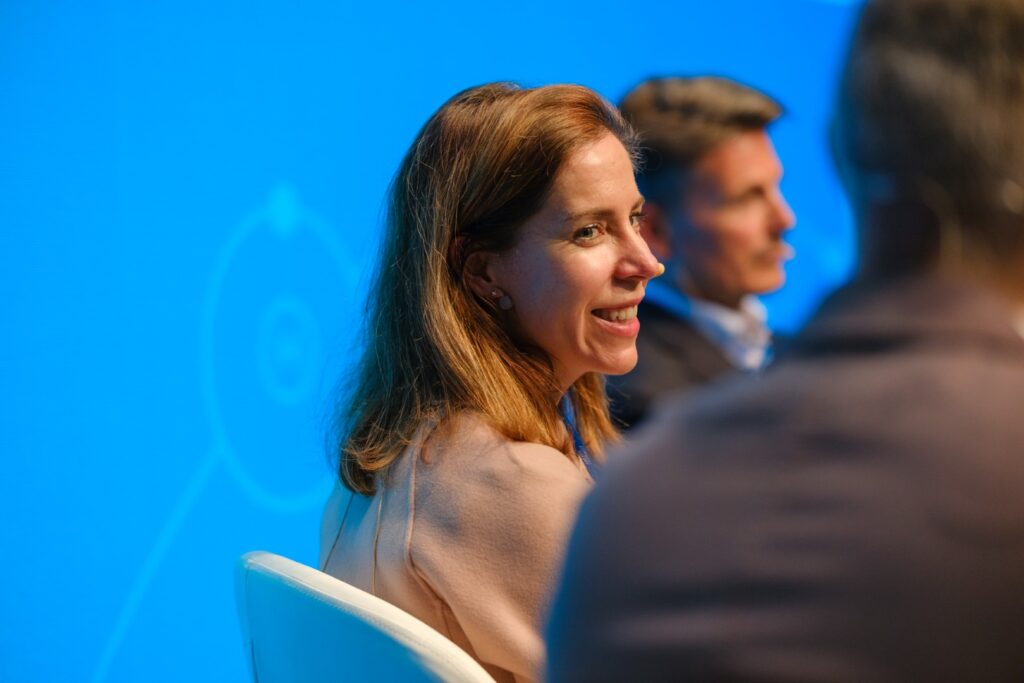
Jutta Wuebken, Director at Stifel speaking at Energy Tech Summit 2026
Lightning round: technology, policy or business model?
Beebe closed with an unprepared question. Which single factor will do most to unlock the grid and let it scale? Technology, policy change, or business model innovation? One choice each.
Cristiani picked a technology: the bidirectional charger. He admitted he picked it because he is a geek.
Wuebken agreed on bidirectional charging and added microgrids. She placed them somewhere between technology and policy. Her definition was specific. Energy communities connect houses or a village, so they can be self-sufficient when needed.
Festervoll could not name his own technology. So he argued that the technologies already exist. What is lacking is deployment and orchestration. Tweaks are possible. Even so, the biggest effect will come from deploying what exists at scale.
Pressed on whether that counts as policy, he resisted the word regulatory. He does not like putting his faith in other people’s hands. The industry can do this even if regulators do nothing, he argued. After all, it is a necessity. Standards and interoperability do need somebody to own them. Still, he expects the technology space to solve the problem.
Kowalczyk agreed on technology and added a change of perspective. Utilities have to shift away from an old comfort. Until now, a shortfall simply meant burning more coal. Batteries cannot answer that on the same terms. After all, they need wind or solar to charge. So the technology matters, but so does understanding what it can and cannot do.
The bidirectional charging question
An audience member from the UK raised the practical obstacle. Distributed storage assets should reduce the need for grid-scale storage. Bidirectional charging, however, involves five actors. They are the car manufacturer, the charger operator, the consumer, the aggregator and the grid. Each one wants a share of a payment that is not large to begin with.
Cristiani agreed that this is exactly why it does not work at scale yet. Everyone is trying to take a slice. The solution will come from the car OEMs opening up their systems, he expects. That is a decision rather than a technical problem. Some manufacturers are already doing it. So it is a business model issue, and he thinks it is on the way.
Takeaway
Beebe closed by taking license with his own lightning round. He answered none of the three options. The grid infrastructure challenge, in his reading, is a people challenge. Utility executives have to turn over to a generation that embraces new technology. Modern AI makes that more true rather than less. It is also about founders willing to work through four-month NDAs and long questionnaires. The panel had already agreed on two things. The hardware mostly exists, and the capital is arriving. So what decides the pace is different. It is whether the institutions holding the grid can move as fast as the demand hitting it.
Energy Tech Summit Asia comes to Kuala Lumpur on September 29–30. There, that question meets some of the oldest grids and the fastest-growing load anywhere.