
Wave, geothermal, gas and market intelligence on one stage, arguing over what fills the gaps solar and wind leave behind.
The 24/7 question lands differently in Asia-Pacific. The region is absorbing a growing share of new hyperscale capacity. It is doing so, however, on grids planned around industrial load and thermal baseload – not around compute that runs flat out through the night. Solar sits well against the region’s resource. So the gap hours become the problem. And what fills them depends heavily on geography: whether a market has volcanic heat beneath it, a long coastline, cheap gas, or none of the above.
That question went to a panel at Energy Tech Summit 2026. The answers came from companies sitting at very different points of the energy stack, including the corporate venture arm of Japan’s largest gas utility. Linda Nyberg, Head of Communications and Public Relations at CorPower, moderated. Five panellists then took a single question: what supplies power around the clock, and who pays for it?
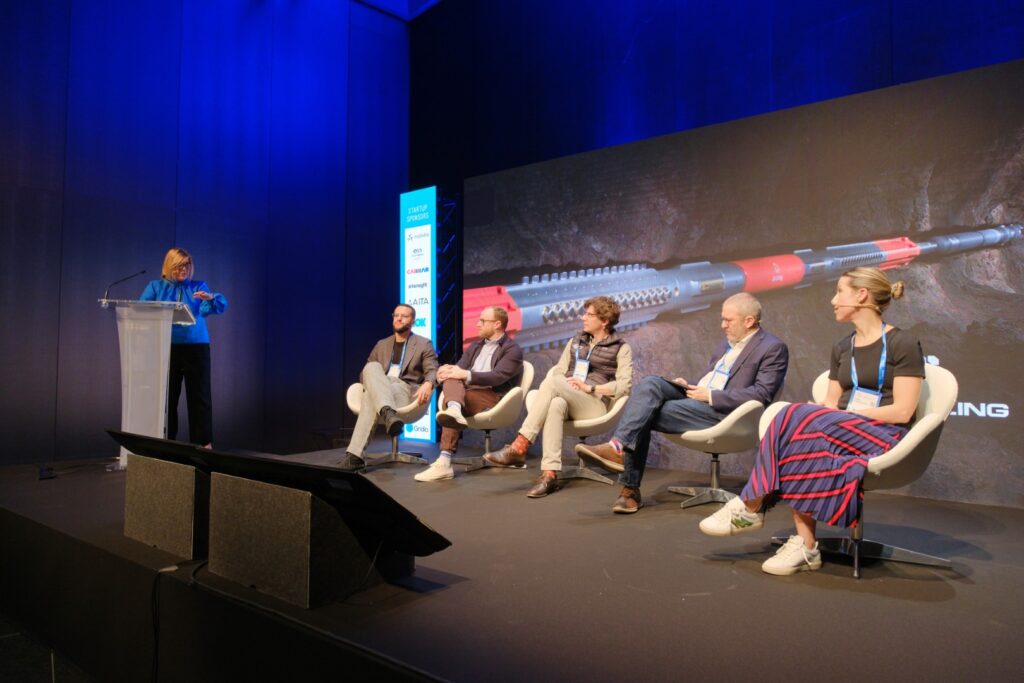
Panel at Energy Tech Summit 2026
Every energy shock has produced a technology
Mark Taylor, Co-Founder and CPO of Sightline Climate, framed the moment historically. Every energy crisis has produced a burst of new technology, he said. The oil shock of the 1970s gave France its nuclear fleet and the US its first geothermal development. Pull that thread forward, and you get solar, wind and shale drilling.
Getting power online now, in his words, has become “an all of the above times all of the above plus all of the above strategy.” He was blunt about what that means for the technologies on stage with him: “It is not written which technology is going to win yet by any stretch.”
Sightline Climate sells market intelligence for the AI era. Its clients are corporates, investors, banks and governments trying to read a fast-moving market. Most of the room knew it by another name, though: the CTVC newsletter, published since 2020. Power Stack, which covers power markets and data centers, has since joined it. About 80,000 subscribers read it every week.
The US: unprecedented capex meets a constrained grid
Nigel Carr is Investment Director at Acario, the corporate venture arm of Tokyo Gas. Tokyo Gas is the largest gas utility in Japan. It serves roughly 30% of national demand across residential, commercial and industrial customers. In addition, it runs an electric utility and operates the Octopus Energy brand locally through a JV. Acario itself owns a 500 megawatt solar facility and a 174 megawatt-hour battery system.
Carr used his own balance sheet to make the scale point. Google said it would spend $190 billion on AI infrastructure in a single year. Tokyo Gas, one of the biggest utilities in Japan, has a topline revenue of around $30 billion.
Meanwhile, the grid is answering that capex with friction. Regulators are mandating new fees for interconnection studies. They also want control over what gets built behind the meter. At the same time, generators like Acario are watching arbitrage opportunities compress. “It’s this interesting blend of stress,” Carr said. The pressure argues for new generation with localized benefits – and for watching policy closely.
Europe’s version of the problem, in Portuguese numbers
André Botelho, Principal at EDP Ventures, said Europe is lagging the US. Even so, it is heading for data centers at up to 5% of total consumption. Then he gave the anecdote that made the number concrete.
The first large data center announced in Portugal is expected to take 20% of the country’s total energy consumption. Meanwhile, the full pipeline companies have put forward now exceeds 20 gigawatts. That is more capacity than Portugal has installed today.
Botelho does not expect all of it to be built. “Part of it is hyped,” he said. Even a fraction, however, forces a system approach rather than a project-by-project one. Data centers are also only the first wave. The second one keeps getting forgotten: the electrification of industry and homes.
Portugal’s advantages are geographic. The country has a long coastline relative to its size, strong wind hitting that coast from the northwest, and energy in the currents. A heavy renewables build-out plus a wet year has given it the cheapest electricity prices in Europe. The constraint is land. After land, it is the grid. “How do we put this thing together with the grids?” he asked. “How do we reinforce this?”
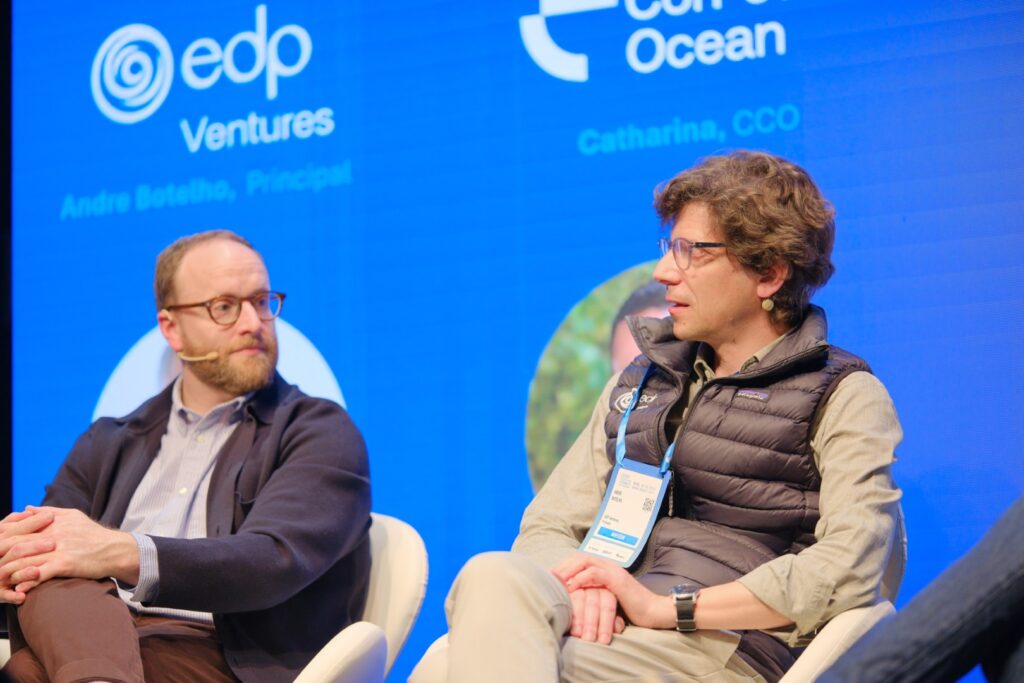
André Botelho, Principal of EDP Ventures speaking at Energy Tech Summit 2026
Geothermal borrowed a decade of drilling progress
Igor Kocis founded GA Drilling from the technology side rather than the user side. He describes more than 15 years spent learning a business that moves far slower than IT. His starting question was simple. Geothermal has worked in Iceland for decades, so why can it not be copy-pasted elsewhere?
The answer his company is built around is the cost of the subsurface. Get the same amount of energy out for less, he argued, and geothermal replicates and scales.
Energy planning is long-term. Yet the plans written 10 or 15 years ago contain nothing resembling what is happening now. Data center consumption is not linear, Kocis said. Instead, it is compounding, and the industry has not fully reacted. The bottleneck will be energy, not chips. Solar and wind do a good job on peak power. Data centers, though, need power 24 hours a day, winter and summer.
What changed recently was a transfer of technology from oil and gas into geothermal. Kocis traced it to Texas after 2010, when high-tech drilling reached depths and hard formations that had not been achievable before. That drilling stack is now moving into geothermal. The result, in his estimate, is a technology two to three times cheaper than it was 10 years ago.
Kocis was candid about the imbalance behind that. Most of the innovation has come out of the US. As a result, GA Drilling shifted there significantly, despite being a European company. The industry, the know-how and the oil and gas talent are all there. “I don’t know why we are not asking in Europe this question,” he said, “because we are in a deep trouble now.”
As proof points, he pointed to Fervo’s work in Utah and Nevada, and to Google and Meta as the first large buyers investing in geothermal. GA Drilling is also working on a project in the Netherlands with another large tech buyer. The choice of country was deliberate. Pilots need an environment where energy costs are high, because that is where customers will pay a premium for a first project.
His condition for the technology is scale rather than proof. One or two large-scale success stories at tens of megawatts, and then replication in months rather than years.
The gap wave energy says it fills
Catharina Belfrage Sahlstrand is Chief Commercial Officer of CorPower Ocean. The company has been making this case since it was doing elevator pitches 11 or 12 years ago. Her own background, however, is banking. She was in executive management at a Nordic bank. Before that, she worked in capital markets, heading sustainable finance and green bonds. “So I come from a risk background, I suppose.”
Her argument is that wave energy enables 24/7 clean firm electricity rather than adding another intermittent source. Geothermal, she added, is needed too.
The slide she brought showed a typical week in California. The sun goes up and down. Wind contributes handsomely when it blows. The gaps are obvious. Waves, however, are non-correlating with both. So the wave line runs through the chart as a steady band across exactly those gaps. If you are a data center that has pledged not to burn fossil fuels, she said, every one of those gaps is a problem unless you add something.
The hardware is small. Buoys of roughly nine meters in diameter sit in dense arrays, substantially smaller than typical offshore energy devices. Scaling from tens to hundreds of megawatts does not mean building larger devices. Rather, it means placing more of them, “like pieces of Lego.” CorPower has delivered power to the grid in Portugal and is now working in Scotland.
The cost argument follows from the production profile. Because wave output does not peak alongside everything else, a system does not need to over-install the cheapest sources for peak load hours. It also needs less storage and less grid capacity. That, in turn, improves the levelized cost of the total mix. In the optimal-mix studies CorPower has run with universities, Belfrage Sahlstrand said waves appear in every one, cutting required installed capacity by 50% and battery requirements by as much as 90%.
She also took on the preconception directly. Wave energy is often treated as a vision for the future rather than a working technology. Tried and tested over years, she argued, it can scale now – and quickly enough for hyperscaler timelines. The better question is not which single source is right: “This is an important part in filling the gaps.”

Catharina Belfrage Sahlstrand, Chief Commercial Officer of CorPower at Energy Tech Summit 2026
The policy read, and the accidental environmentalist
Asked about US policy rollbacks alongside renewed corporate clean energy commitments, Taylor warned his answer might not be what anyone was hoping for. Then: “Donald Trump is the accidental environmentalist.”
His reasoning had three parts. First, the administration has encouraged oil and gas drilling, but that drilling is market-led. Second, sunsetting the IRA tax incentives created a frenzy to get projects safe-harbored in time. So renewables investment actually rose last year, and is on track to rise again. Third, corporate sustainability targets now pale next to corporate thirst for power. Many of the solutions being picked simply happen to be clean, because they are cheaper and can get online faster than a gas turbine.
Carr built on it from the generation side. Everyone is time-to-power constrained, power constrained, or both. That is why location has become the variable for hyperscale AI data centers. It is also why developers are building behind-the-meter gas in the US, where upstream assets are everywhere and gas is cheap. Europe cannot run the same play at European gas prices.
Unlimited ability to pay does not remove grid dynamics either. Build behind the meter in Texas, and ERCOT will still set your demand charges off the single highest peak hour of the summer. Meanwhile, the assumption that gas would be overproduced for years has not survived contact with the market. Two of the world’s largest producers have gone offline in the last four years. As evidence that a mix can still be assembled at scale, Carr pointed to Google’s move into Intersect Power.
Why a Japanese gas utility backed a wave company
Nyberg named the elephant in the room herself. Acario is an investor in CorPower. Carr’s reasoning came back to diversification. Tokyo Gas has around 3 gigawatts of gas-fired generation, and wants to reach 6 gigawatts of renewable generation transaction volume over the next five years.
What it looks for is an all-of-the-above set of solutions with unique production profiles. On top of that, it wants technologies that unlock new areas and coastal resources. Speed of deployment closed the argument. If you are trying to negotiate with MHI, GE or Siemens for a turbine faster than five years from now, Carr said, “it’s not going to happen.”
What’s different in a year for 24/7 clean energy
Nyberg closed by asking each panelist what would have changed by the next edition. Carr expects most of it to be policy-driven, and would like to see examples set globally. Taylor was shorter. A set of technologies and business models on the market right now look like sugar highs, he said. For now, they function as quick solutions while everyone works out what is going on. A year from now, he expects the conversation to be about which of them last.
Takeaway
The panel never picked a winner, which was the point. Delivering 24/7 clean energy for data centers is a gap-filling problem more than a generation problem. Solar and wind cover the peaks. The disagreement is over what covers the rest: geothermal, waves, gas, batteries, or a mix that shifts with the coastline and the grid it sits on. Where the stage did agree was on timing. Demand is compounding, interconnection is not, and the technologies that win will be the ones you can build at tens of megawatts and then copy.
Energy Tech Summit Asia comes to Kuala Lumpur on September 29–30, bringing the same conversations to the region where the load is landing fastest.